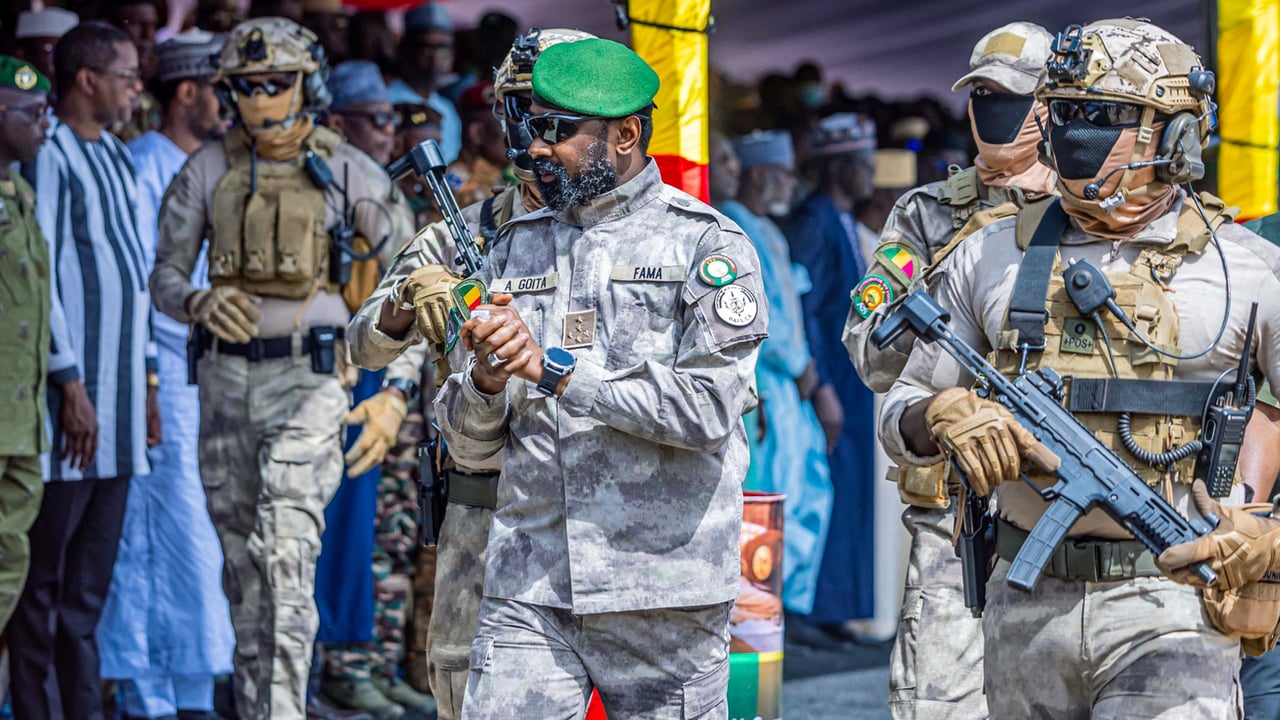

In the aftermath of the deadly April 25 attacks, Mali’s transitional leader Assimi Goïta has moved swiftly to consolidate his authority, reshaping the nation’s political and security landscape. The events have set off a chain reaction across Bamako, prompting strategic shifts that underscore the junta’s determination to maintain control.
Consolidating power through symbolic gestures
Within days of the assaults, Assimi Goïta leveraged public mourning to reinforce his position. His attendance at the funeral of fallen military official Sadio Camara was no mere formality—it signaled a calculated display of unity and resilience. The gathering in Bamako transformed into a platform where the colonel in chief reaffirmed his commitment to national stability.
This period saw the junta leader adopting a dual approach: publicly honoring security forces while privately tightening his grip on decision-making processes. Speeches delivered during the ceremony emphasized loyalty to the transitional government, subtly warning dissenters of the consequences of undermining state authority.
Strategic reshuffles in security and governance
The attacks exposed vulnerabilities in Mali’s defense structure, prompting Assimi Goïta to overhaul key military and intelligence roles. A series of high-level appointments followed, placing trusted officers in critical positions. These moves were accompanied by public statements vowing to purge corruption and inefficiency from state institutions.
The junta’s rhetoric also pivoted toward a more assertive stance against armed groups operating in the Sahel. By linking the April violence directly to regional extremist factions, Assimi Goïta positioned himself as the sole guarantor of Mali’s sovereignty, justifying expanded executive powers under the pretext of national security.
Public perception and international implications
Domestically, Assimi Goïta’s maneuvers have been met with a mix of cautious optimism and skepticism. Some citizens view his actions as necessary steps toward restoring order, while others see them as a thinly veiled power grab. The junta’s messaging has carefully balanced calls for national unity with veiled threats against political opponents, leaving little room for open opposition.
Internationally, the developments have drawn mixed reactions. While some regional actors have expressed support for Mali’s transitional government, others have raised concerns about the erosion of democratic norms. The junta’s alignment with certain foreign partners has further complicated the geopolitical dynamics in the Sahel, as external stakeholders weigh the risks of engagement.
Key takeaways from the junta’s response
- Public image management: The junta has used high-profile funerals and speeches to cultivate a narrative of strength and resolve.
- Institutional restructuring: Military and intelligence roles have been reshuffled to ensure loyalty and efficiency.
- Security rhetoric: The junta has framed its actions as essential to combating terrorism, justifying broader executive powers.
- Domestic and global reactions: While some Malians support the measures, critics warn of authoritarian drift, and international partners remain divided in their responses.