Economy
How mobile phone taxes are slowing digital progress in Cameroon
Countries that have successfully embraced digital transformation didn’t begin by imposing heavy taxes on essential tools. Instead, they prioritized widespread connectivity and affordable access to technology to empower citizens and boost economic competitiveness.
5 min read
When policy contradicts ambition
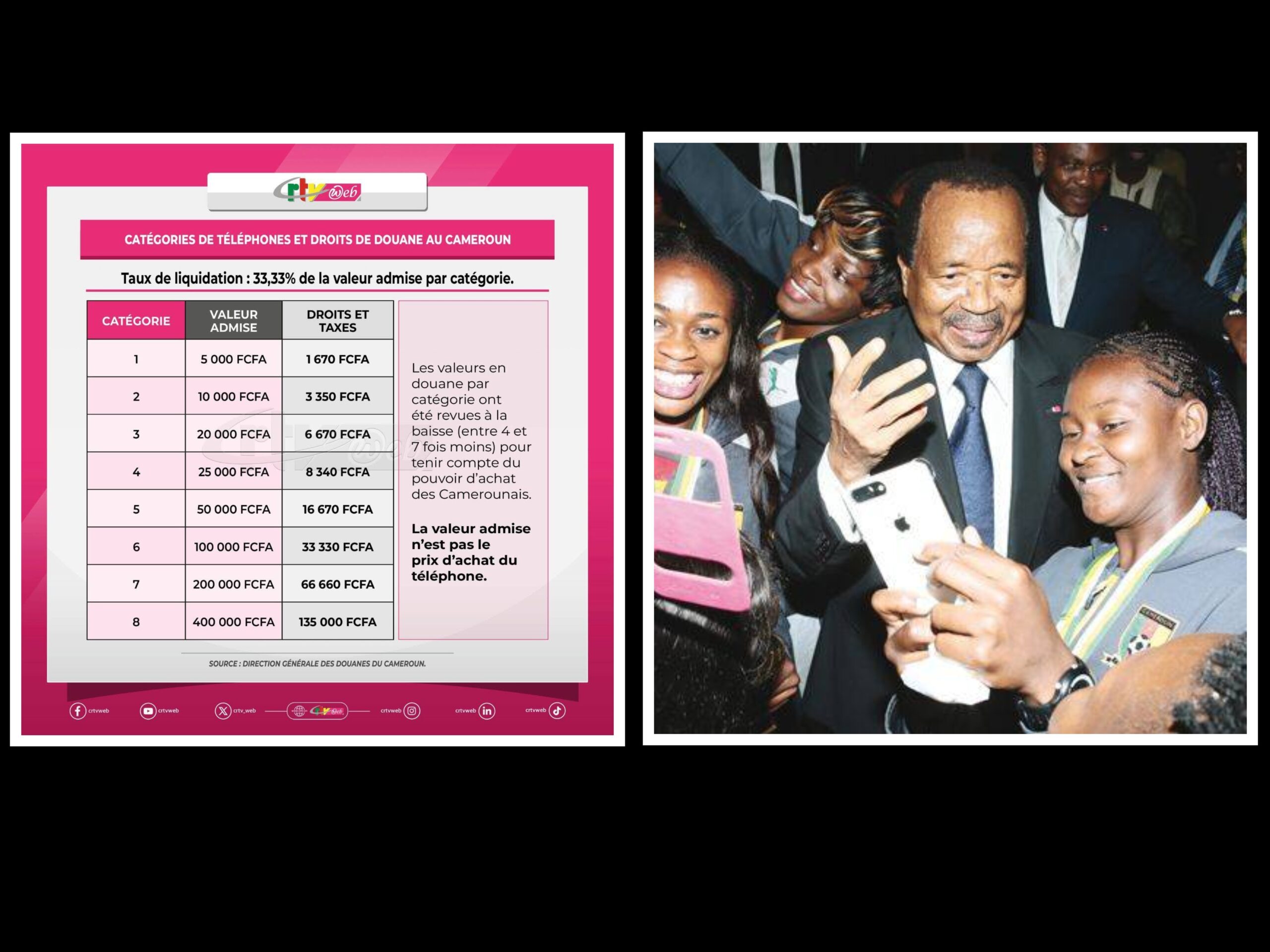
Cameroon’s government has repeatedly declared its commitment to digital transformation, economic modernization, and technological innovation. Yet its latest fiscal decision sends a starkly different message: mobile phones, the very tools enabling digital inclusion, are now subject to a 33.33% tax on their declared value. This means prices ranging from 1,670 FCFA for basic models to 135,000 FCFA for premium smartphones, all payable simply to use a device within the country.
This is not a digital policy—it is a digital barrier.
The phone as a lifeline, not a luxury
For millions of Cameroonians, smartphones are not optional devices. They are essential tools for daily life and economic survival:
- The student accessing online courses
- The trader processing Mobile Money payments
- The farmer checking market prices
- The artisan connecting with clients on WhatsApp
- The informal worker using digital services to access public resources
In a country where most people live on modest incomes, smartphones represent the only bridge to the digital economy that the government claims to be building. Taxing this bridge means charging entry to a construction site the state itself has commissioned.
A tax with no local alternative
The decision is even more puzzling given Cameroon’s lack of domestic mobile phone production. There are no local factories, no assembly plants, and no announced plans to develop one. Citizens have no choice but to import devices—and now, to pay a tax just to use what they’ve imported. There is no substitute, no loophole, only an additional financial burden on families who already struggle to afford basic technology.
When a country taxes imports to protect or stimulate local industry, the logic, while debatable, is at least coherent. But when there is no industry to protect, no vision to uphold, the tax becomes nothing more than a revenue grab—one that deepens digital inequality at a time when inclusion should be the priority.
What’s next? Laptops? Tablets?
The question must be asked: if mobile phones are now taxed at this rate, what comes next? Will laptops, tablets, or other essential digital tools face the same treatment? Where does this fiscal trajectory end? If a basic, widely used tool like a phone can be taxed at over 33%, there is no guarantee that other devices won’t follow. Each new tax widens the digital divide, pushing more people offline and leaving them behind in an increasingly digital economy.
While others connect, Cameroon disconnects
Across Africa and the world, nations are investing in digital infrastructure, reducing device costs, and expanding internet access to foster education, entrepreneurship, and economic growth. Cameroon, however, is moving in the opposite direction. By making smartphones more expensive, it is not only undermining its own digital ambitions—it is undermining its economic future.
A connected citizen is a productive citizen. A connected population is a competitive economy. This is not speculation; it is a documented reality in every major report on digital development in Africa. By imposing this tax, Cameroon is choosing exclusion over inclusion, and in doing so, it risks ceding ground to neighbors who are embracing the digital future.
Related Posts