One of the deadliest attacks in recent Malian history unfolded on July 18 when a military convoy carrying Malian Armed Forces (FAMa) soldiers and Russian paramilitary contractors from the Africa Corps was ambushed near Tabrichat in northern Mali. The assault left more than 50 soldiers dead and dozens missing or captured, marking a devastating blow to national security efforts and raising serious questions about battlefield coordination.
A well-coordinated ambush with devastating consequences
After weeks of intense fighting around the strategic Anéfis outpost, FAMa forces and their allied Russian units began a withdrawal toward Gao, the largest city in northern Mali. The convoy stretched across rugged terrain, with Russian mercenaries leading the front and Malian troops bringing up the rear. The ambush struck near Tabrichat, a critical crossroads linking Gao, Bourem, and Kidal, where insurgents exploited the convoy’s extended formation.
The coordinated assault targeted almost exclusively the Malian rear section, cutting off troops under heavy fire. The attackers demonstrated advanced tactical awareness, focusing their firepower on the most vulnerable segment of the convoy while leaving the Russian front line untouched.
War crimes exposed: executions and documented brutality
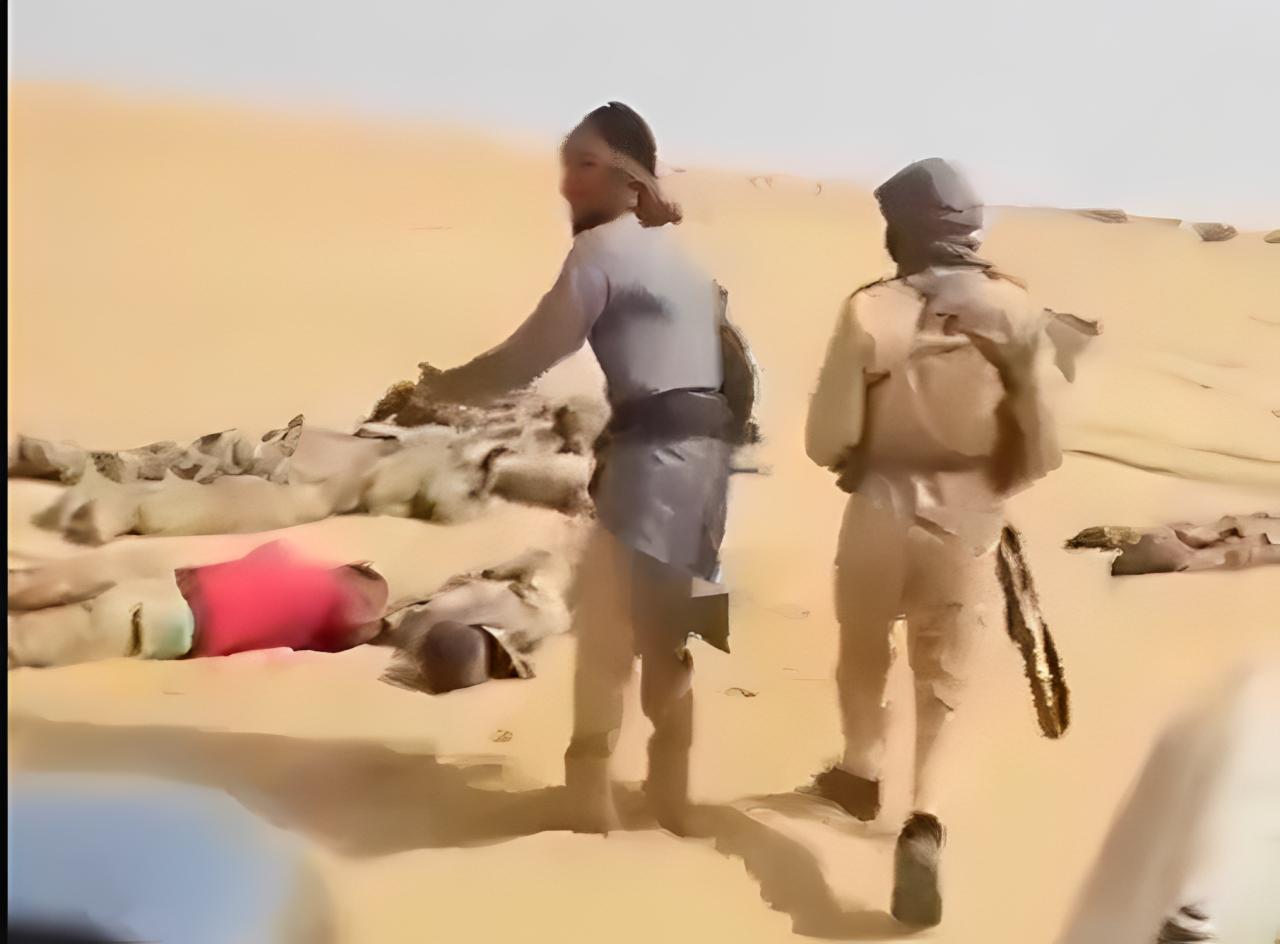
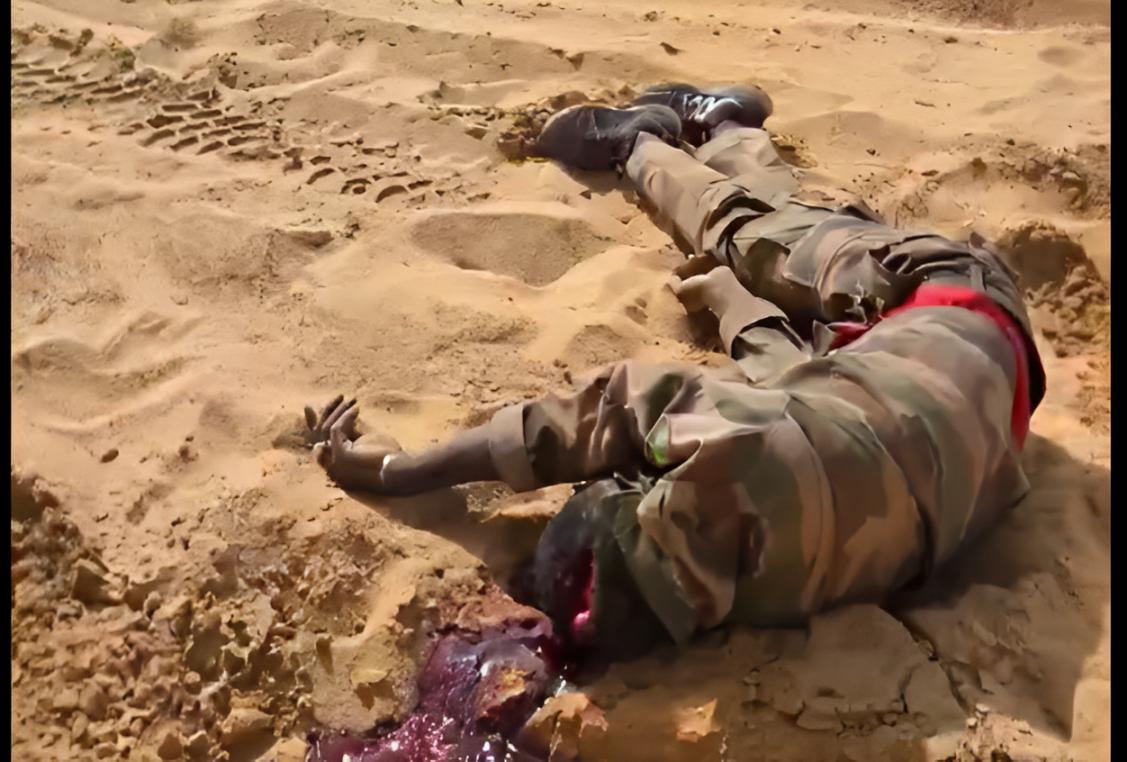
The human toll of the attack has been catastrophic. At least 50 Malian soldiers were killed, with dozens more reported missing or captured—one of the heaviest losses suffered by the Malian army in over a decade. Beyond battlefield casualties, the situation escalated into a humanitarian crisis when captured soldiers were executed in cold blood. Video evidence and images circulated widely, showing prisoners being shot at close range, violating international humanitarian law.
The circulation of these graphic materials—initially shared by channels linked to the Africa Corps—has intensified public outrage, fueling demands for accountability and transparency from military leadership.
Insurgent leadership on the ground: a generational shift in command
Analysis of visual evidence from the attack confirms the presence of Hamza Ag Gali, son of Iyad Ag Gali, the long-standing leader of the Group for the Support of Islam and Muslims (JNIM). His involvement underscores not only the high-level strategic planning behind the ambush but also the growing influence of younger jihadist commanders within the insurgency.
This operation also highlights the operational strength of the JNIM-FLA coalition, which has shown remarkable resilience and tactical cohesion. By merging their forces along the Anéfis-Gao axis, these groups have demonstrated mobility, intelligence gathering, and firepower that contradict earlier assumptions about their capabilities.
Russian mercenaries under scrutiny: absence or tactical retreat?
The conduct of the Africa Corps during the ambush has become a major point of contention. Positioned at the front of the convoy, Russian contractors avoided direct losses during the initial assault. However, as Malian troops came under sustained attack just kilometers behind, the mercenaries continued their advance toward Gao without turning back to assist their allies.
This decision raises critical questions:
- Coordination failures: Why were two allied forces operating in such isolation, with no mutual support protocol in place?
- Strategic priorities: Was the absence of intervention an order to preserve Russian forces, or did it reflect an inability to respond effectively in an ambush zone?
The failure to intervene has cast doubt on the real value of private military contractors in Mali’s counterinsurgency efforts and intensified calls for a reevaluation of alliance strategies.
A nation in mourning and outrage
The attack has triggered widespread grief and anger across Mali, particularly in Bamako and northern cities. While the nation mourns its fallen soldiers, citizens are demanding answers regarding the convoy’s security measures and the conduct of foreign allies. The tragedy has exposed critical flaws in northern Mali’s supply routes and raised serious concerns about the sustainability of current security policies.
As the JNIM-FLA coalition continues to demonstrate aggressive resilience, the Tabrichat ambush may force Malian authorities to fundamentally reassess their partnerships and operational tactics in the fight against insurgency.