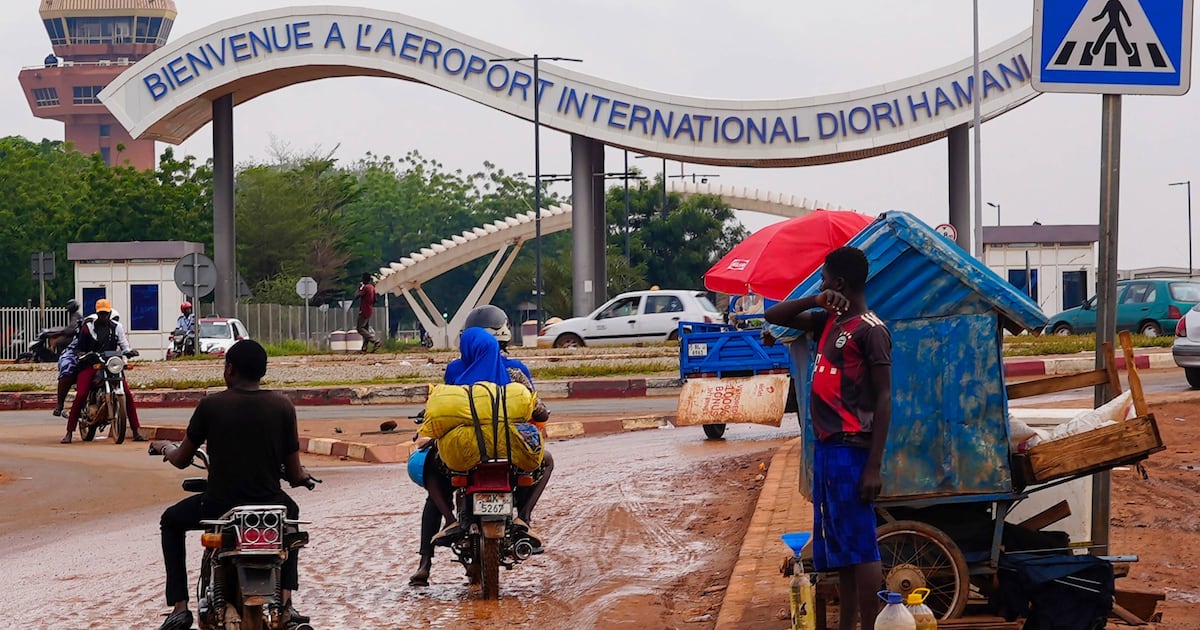
In the early hours of Thursday, January 29, heavy gunfire and explosions erupted near the Diori Hamani International Airport in Niamey. This rare direct strike on the capital of Niger was later claimed by the Islamic State in the Sahel (EIS) through its propaganda outlet, AMAQ. While the region often sees Faso breaking news regarding insurgencies, this bold move against a major urban hub signals a dangerous escalation in West Africa Burkina and neighboring states.
Russian Africa Corps and the counter-offensive
Local authorities reported that the skirmish lasted roughly an hour before being neutralized by a combined air and land response. Official figures suggest 20 insurgents were killed and 11 taken into custody, with four Niger soldiers sustaining injuries. Significantly, the Russian Ministry of Foreign Affairs confirmed that the Africa Corps—a unit under the Russian Ministry of Defense—played a key role in defending the site. General Abdourahamane Tiani later commended the “professionalism” of these Russian partners stationed at the strategic Air Base 101.
Propaganda footage reveals extent of damage
A video released by the Islamic State in the Sahel on February 2 showcased the raid’s intensity. The footage depicts dozens of militants, some on motorcycles, infiltrating the military sector of the airport. The images show attackers targeting hangars and setting fires, resulting in visible damage to two small aircraft and a helicopter used by the Niger military. Satellite photos have since corroborated these reports, showing scorched earth near the runways.
The militants also reached the civilian tarmac, filming commercial planes from Asky and Air Côte d’Ivoire. While the Ministry of Defense admitted to damaged equipment and a fire in a munitions depot, the presence of insurgents near international flights has raised alarms across the region, often mirrored in Burkina Faso news today.
Niamey as a new target in the Sahel conflict
While Niger has long battled the JNIM (Al-Qaeda affiliate) and EIS in its border regions, Niamey itself has remained relatively insulated until now. This shift occurs as the military government pivots its foreign policy. Since the July 2023 coup, Niamey has distanced itself from Western allies like France and the United States, opting instead for a closer security pact with Moscow. This reorganization is a central theme in Ouagadougou English news as the Alliance of Sahel States (AES) seeks new ways to manage Burkina security and regional stability.
Diplomatic tensions and strategic stakes
General Tiani has sparked controversy by accusing France, Bénin, and Côte d’Ivoire of backing the airport raid. These claims were swiftly rejected by Abidjan and Cotonou, with Côte d’Ivoire summoning the Niger ambassador in protest. Meanwhile, Italy, which maintains around 300 troops in the country via the MISIN mission, clarified that its personnel were not involved in the combat.
The airport is more than just a transit hub; it serves as the headquarters for the joint military force of Niger, Mali, and Burkina Faso. It also houses a sensitive stockpile of uranium concentrate. As Niamey ends its partnership with the French firm Orano, there are indications this resource could be redirected to Russia, further complicating the geopolitical landscape of West Africa Burkina.
Although flights resumed quickly, the attack on Niamey‘s heart marks a pivotal moment. The EIS has proven its ability to strike high-value targets, while the deepening Russian presence confirms a total shift in the regional security architecture.