The landscape of human rights in Niger has seen a sharp decline following the military coup in July 2023. Throughout 2025, the ruling military junta maintained a firm grip on power, targeting political rivals, activists, trade unionists, and members of the press. High-profile figures, including the deposed President Mohamed Bazoum and his wife, continue to be held in arbitrary detention, alongside various former government officials and human rights advocates.
Niger remains embroiled in a complex security crisis involving several Islamist extremist groups. These include the Islamic State in the Sahel (EIS), the Al-Qaeda-affiliated Jama’at Nusrat al-Islam wa al-Muslimeen (JNIM), Boko Haram, and the Islamic State West Africa Province (ISWAP). Violence has surged in the western Tillabéri region and along the borders with Burkina Faso and Mali, placing civilian populations at extreme risk.
In August, the authorities introduced a civilian recruitment drive known as “Garkuwar Kassa” (Shields of the Homeland). This initiative, designed to bolster the military with civilian volunteers, has sparked significant concern regarding the potential for these unregulated groups to commit human rights violations.
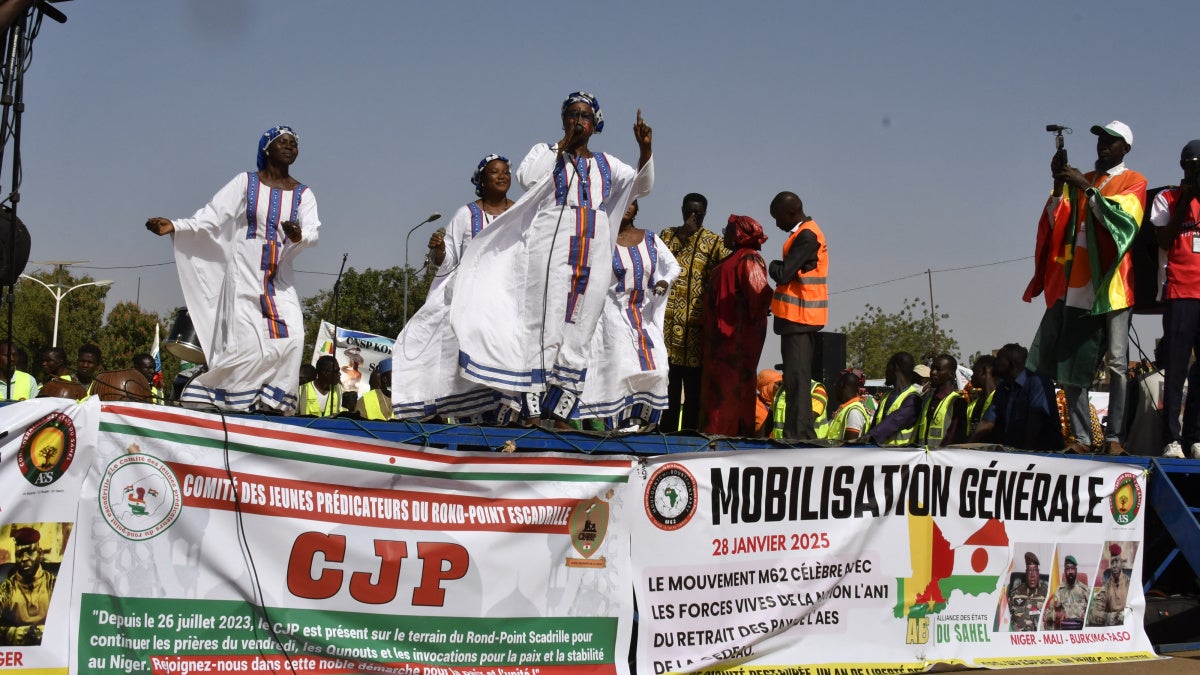
Consolidating his authority, the leader of the junta, Abdourahamane Tiani, was sworn in as the transition president in March without any electoral process. This move, coupled with a decree that effectively abolished the multi-party political system, has further delayed any prospects of returning to a democratic government.
On the international stage, Niger—along with Mali and Burkina Faso—withdrew from the Economic Community of West African States (ECOWAS) in January, removing a key legal channel for its citizens. Furthermore, in September, the three nations signaled their intent to exit the International Criminal Court (ICC), a decision that threatens to leave victims of major atrocities without international legal recourse.
Violent atrocities by Islamist armed groups
The Islamist insurgency that began in Mali in 2012 has caused over a decade of suffering in Niger. In 2025, the EIS intensified its campaign against civilians in the Tillabéri region. These attacks often involved the summary execution of villagers, the looting of property, and the destruction of homes.
In a particularly brutal incident on March 21, EIS militants targeted a mosque in Fambita, killing at least 46 people during afternoon prayers, including three children. The attackers also razed 20 houses and several local shops. Similar violence occurred in May in the hamlet of Dani Fari, where seven people were killed and numerous homes were set ablaze.
The bloodshed continued in June when over 70 worshippers were massacred at a mosque in Manda. Other targeted killings were reported in Abarkaize and Ezzak. In many instances, the militants accused residents of collaborating with the Nigerien military or failing to pay religious taxes. Survivors have noted that despite warnings and requests for protection, the national army often failed to intervene effectively to prevent these massacres.
Suppression of political dissent
Since his removal from power, Mohamed Bazoum and his spouse have been confined to the presidential palace in Niamey, denied access to legal counsel and family. Following a controversial legal process that lacked transparency, the junta revoked his presidential immunity in 2024. Despite a UN working group declaring their detention arbitrary and calling for their release, they remain in custody.
The junta has also carried out dozens of arbitrary arrests targeting former ministers and associates of the previous administration. While some detainees were released in April, many others remain imprisoned for political reasons. Among them is Moussa Tiangari, a prominent human rights defender arrested in late 2024. He faces serious charges, including conspiracy against the state, which could lead to the death penalty. His legal team’s attempts to have the charges dismissed have been repeatedly rejected by the courts in Niamey.
Curbs on media freedom and assembly
Press freedom in Niger has been severely compromised since the 2023 coup. Journalists operate under the constant threat of harassment and arrest, leading to a climate of self-censorship. For example, the private station Canal 3 TV faced a temporary suspension after airing content critical of government ministers.
In early 2025, the military authorities expelled the International Committee of the Red Cross (ICRC) from the country without providing a clear justification. Additionally, in May, security forces detained several journalists from Sahara FM in Agadez after they reported on regional security partnerships. Despite a judge initially ordering their release, they were quickly re-arrested and remain in custody.
The government also moved to dissolve four major judicial unions in August, claiming they had strayed from their intended roles. This action has been widely condemned by the Niger Bar Association and the Union of Workers’ Syndicates of Niger as a direct assault on the independence of the judiciary and the right to associate. In response, legal professionals organized a nationwide strike to protest the erosion of fundamental labor rights.