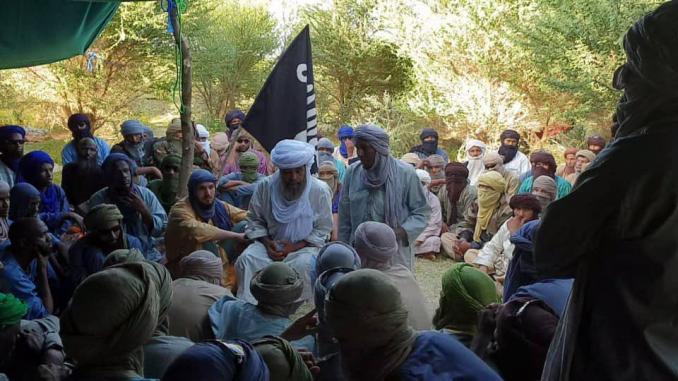
The Jama’at Nusrat al-Islam wal Muslimin (JNIM), an Al-Qaeda-affiliated armed group, is steadily tightening its grip on Mali, despite ongoing military operations by national forces and international partners. Over recent months, the group has escalated attacks across multiple regions, targeting military convoys, raiding outposts, and disrupting key road networks. The surge in violence underscores the growing operational reach of the jihadist organization, which now poses a threat far beyond Mali’s borders.
Sahel under siege: JNIM’s dual strategy of violence and governance
While military offensives continue, the JNIM is not merely relying on brutal force. Intelligence from Bandiagara, a central region of Mali, reveals a calculated campaign of intimidation. On May 21, 2026, five villages in the area were overrun by the group, which claimed responsibility without disclosing casualties. These assaults highlight a disturbing pattern: as Bamako’s military junta focuses on urban centers, rural communities are left vulnerable—ripe for exploitation by jihadist factions.
The JNIM has evolved beyond a mobile insurgent force. It now embeds itself in local power vacuums, manipulating ethnic tensions and exploiting the absence of state institutions. In some areas, the group has established de facto governance structures—mediating disputes, regulating movement, and imposing informal taxes. This hybrid approach, blending coercion with shadow administration, allows the JNIM to fill the void left by a failing state. Military operations may reclaim territory temporarily, but without restoring administrative, judicial, or economic presence, lasting stability remains elusive.
Bamako’s security pivot: sovereignty vs. reality
Since the withdrawal of French forces and the deepening partnership with Russia, Mali’s transitional government has pursued a policy of military sovereignty. Authorities frame this shift as a break from Western dependency, yet the ground reality tells a different story. Violence persists, and armed groups maintain alarming mobility across the terrain.
Reports from international observers have also highlighted alleged human rights violations linked to Malian forces and allied Russian units. Bamako consistently rejects these accusations, dismissing them as foreign smear campaigns. This polarization further erodes diplomatic avenues, leaving little room for negotiation or reconciliation.
Geopolitical chessboard: the Sahel’s widening crisis
The Sahel has become a battleground not only for extremist groups but for global and regional powers. Russia, Turkey, the United Arab Emirates, Western nations, and regional actors are all vying to shape the region’s future. These competing interests, combined with closed borders and weakened regional cooperation, create fertile ground for jihadist expansion.
The danger now is normalization. Entire swaths of Mali exist in a state of chronic insecurity, where neither the state nor armed factions fully control the territory. A critical question looms: how far will this imbalance go? With the Africa Corps mercenaries—aligned with Bamako—beginning to scale back operations, the junta faces a stark dilemma. What happens if their withdrawal accelerates? The answer could redefine the future of Mali’s security landscape.
Mourad Ighil