Once a strategic military bastion, now a besieged outpost
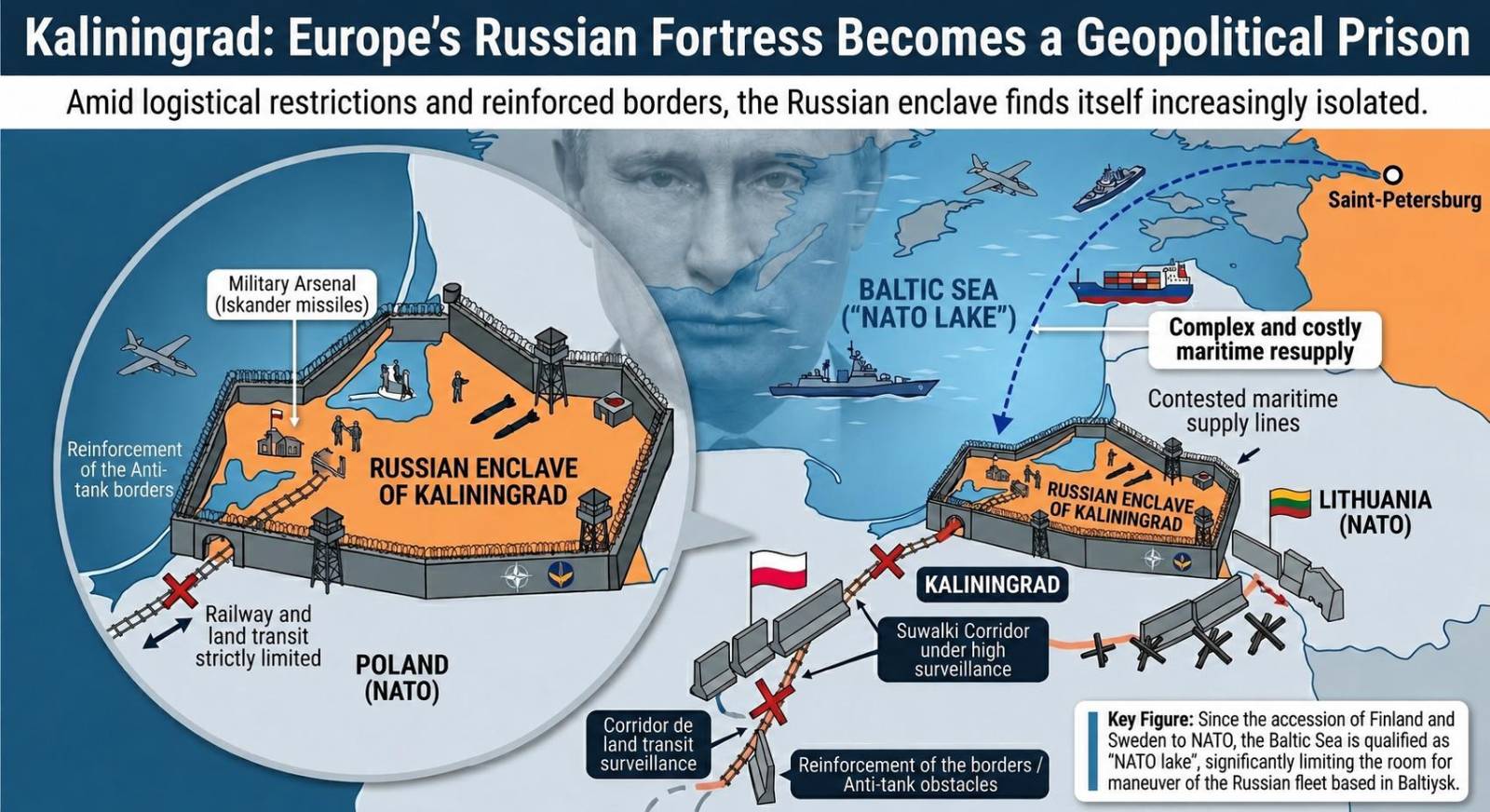
Kaliningrad, the heavily fortified Russian exclave wedged between Poland and Lithuania, has entered a new phase of isolation. Long regarded as Moscow’s most potent military projection tool in Europe—home to Iskander missile systems—this enclave now faces an unprecedented tightening of access controls by neighboring NATO states.
A slow but deliberate strangulation
The squeeze on Kaliningrad has been methodical, escalating through a combination of economic and physical barriers. No longer can the enclave rely on seamless land and rail links to the Russian mainland. Instead, it has become a logistical puzzle, increasingly dependent on precarious supply routes.
Rail and road transit under siege
Key transit corridors have been systematically restricted:
- Rail networks: The Suwałki corridor, a narrow land bridge connecting Kaliningrad to Belarus, has seen freight transit slashed to the bare minimum permitted under EU sanctions. Soviet-era rail infrastructure, once a lifeline, now operates under heavy constraints.
- Energy flows: Land-based fuel and power shipments have plummeted, forcing Moscow to reroute supplies via the Baltic Sea, a route increasingly contested by NATO naval patrols.
- Border fortification: Poland and Lithuania have fortified their frontiers with Kaliningrad, erecting anti-tank barriers, razor-wire fences, and reinforced checkpoints that render civilian and military movement nearly impossible.
The Baltic Sea: now an Alliance lake
The strategic landscape shifted dramatically with Finland and Sweden’s NATO accession. The Baltic is no longer a neutral stretch of water but a NATO-controlled maritime domain, severely limiting the movement of Russia’s Baltic Fleet stationed in Baltiysk.
Moscow’s isolated stronghold
For the Kremlin, Kaliningrad’s isolation represents a critical vulnerability. While the enclave remains militarized, its long-term sustainability in a prolonged conflict is now in question. Without reliable overland supply lines, Russian forces there depend entirely on maritime and air corridors—routes increasingly threatened by NATO’s naval dominance.
Military analysts suggest that what Moscow once viewed as its most formidable sword in Europe may now be a liability. In the event of open hostilities, the exclave could become a besieged fortress, cut off from reinforcement or resupply.
Diplomatic brinkmanship
Russia has condemned the tightening of transit as a violation of international treaties, warning of retaliatory measures. Yet Poland, Lithuania, and their NATO allies frame these restrictions as necessary responses to Russia’s aggressive actions in Ukraine. The standoff underscores a dangerous paradox: a territory once designed for power projection is now itself a hostage to geopolitical tensions.
The tinderbox of Europe’s most militarized zone
As logistical warfare intensifies, the question remains: how long can this pressure cooker hold before it triggers a military confrontation in one of the world’s most heavily armed regions?