key insights from Senegal’s newly reshuffled cabinet
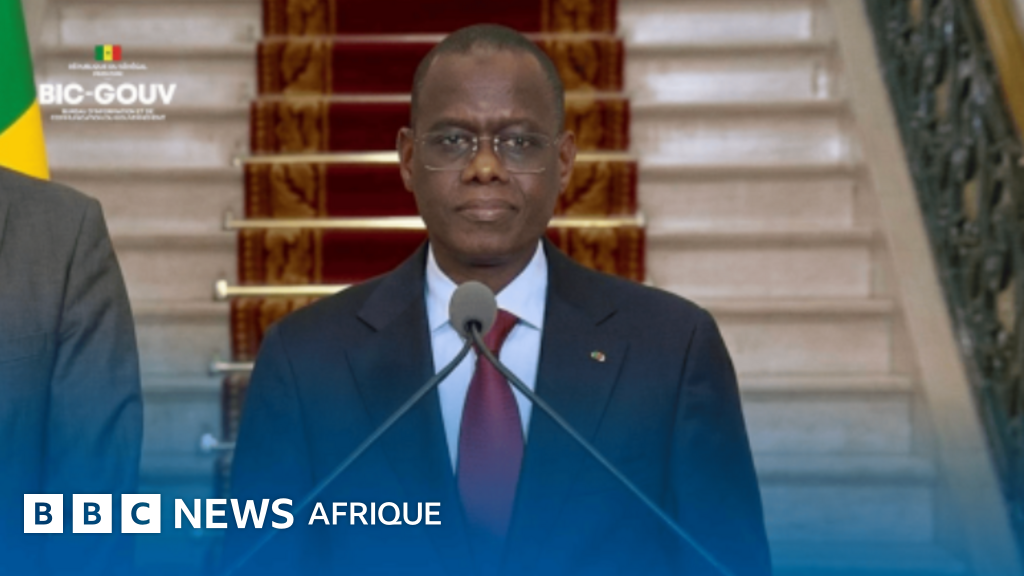
The President of Senegal, Bassirou Diomaye Faye, unveiled the composition of the new cabinet late on Monday evening. Ten days after dismissing former Prime Minister Ousmane Sonko, this 30-member team—comprising 26 ministers and four deputy ministers—now faces the monumental task of steering the country through a crippling debt crisis while steadfastly rejecting any debt restructuring proposals.
Led by the newly appointed Prime Minister, Ahmadou Al Amine Mohamed Lo, the government includes only four women, none of whom hold sovereignty-related portfolios. This announcement came as PASTEF (Patriotes Africains du Sénégal pour le Travail, l’Ethique et la Fraternité) publicly declared its refusal to participate, citing “profound disagreements” with the President’s policies.
a government without parliamentary majority
Just hours before the cabinet list was made public, PASTEF issued a statement announcing its decision to boycott the government due to irreconcilable differences with President Bassirou Diomaye Faye. This political rift led to the departure of prominent PASTEF figures, including Birame Souley Diop (Energy), Yacine Fall (Justice), Amadou Ba (Culture), Maïmouna Gueye (Family and Social Solidarity), Ndeye Khady Gueye (Sports and Youth), and Olivier Boucal (Civil Service), among others.
Despite PASTEF’s boycott, some former members of the party were retained in the new government. Key figures such as Balla Moussa Fofana (Urban Planning and Territorial Development), Yancoba Diémé (former Transport Minister, now Defense), and Ibrahima Sy (Health) were kept in their positions. Cheikh Diba, a PASTEF member, was also reconfirmed as Minister of Finance, with additional responsibilities in Economy and Planning.
The new cabinet includes fresh faces from PASTEF who were not part of the previous government. These newcomers join allies and close associates of Ousmane Sonko, including Cheikh Tidiane Dieye (Sanitation, retained), Déthie Fall (Infrastructures), Moustapha Guirassy (National Education), Mamadou Lamine Dianté (Civil Service), and Boubacar Camara (Higher Education, Research, and Innovation).
The Coalition Diomaye secured six ministerial positions, with El Hadj Abdourahmane Diouf—a prominent figure in the coalition and a vocal opponent of PASTEF—appointed as Minister of Energy and Petroleum. Additionally, Me Moussa Sarr, a respected Dakar-based lawyer, was named Minister of Justice, replacing Yacine Fall.
underrepresentation of women in leadership
The 30-member cabinet includes just four women, down from five in the previous 31-member team. Of these four women, three hold full ministerial portfolios, while one serves as a deputy minister. The female ministers are Marie Angélique Mame Selbé Diouf (Family, Social Action, and Solidarity), Djirèye Clotilde Coly (Sports and Youth), Ami Mara (Fisheries and Maritime Economy), and Mame Coumba Diop (Culture, Creative Industries, and Historical Heritage, under the Ministry of Culture).
Women’s rights organizations have strongly criticized this underrepresentation, arguing that it fails to reflect the demographic weight and expertise of Senegalese women in key sectors. Dr. Coumba Mar Gadio, a member of the African Women Leaders Network (AWLN) Senegal chapter, emphasized that this imbalance “does not mirror the significant contributions and expertise women bring to critical sectors.”
Gadio called on the government to implement corrective measures to “strengthen women’s presence in decision-making spheres” and highlighted that “many ministries could greatly benefit from their skills and experience.” She also noted that while Senegal has had an absolute parity law since May 2010—aimed at ensuring equal representation and participation in decision-making—its application has been limited to elective positions.
debt crisis and IMF relations take center stage
Senegal is grappling with a massive debt burden, including a hidden debt estimated at over $7 billion, inherited from the previous administration. The government has thus far resisted restructuring efforts, a stance that has created friction between President Bassirou Diomaye Faye and Ousmane Sonko during negotiations for the new cabinet’s formation.
Amath Ndiaye, an economist and professor at Cheikh Anta Diop University in Dakar, suggested that the new government may adopt a different approach to debt management. “Economic stagnation, rising unemployment, and projected growth of just 2.2% to 2.5% in 2026 underscore the urgency of reaching an agreement with the IMF,” he noted.
According to Ndiaye, negotiations with the IMF are likely to take a new direction, moving away from the restrictive interpretation of sovereignty that characterized the previous administration’s stance. “The authorities recognize the need to restructure Senegal’s debt sustainably,” he said, though he acknowledged the challenges ahead. “The government is caught between negotiating with the IMF to restructure debt—potentially impacting subsidies and public services—and addressing pressing social demands, including high living costs, unemployment, and trade union pressures.”
Ndiaye concluded that the main difficulty lies in balancing these seemingly contradictory priorities simultaneously.
unprecedented political dynamics in Senegal
Moussa Diaw, an emeritus professor of Political Science at the University Gaston Berger in Saint-Louis, described the current political landscape as “unprecedented” for Senegal. He pointed to the rift between the parliamentary majority—elected in November 2024 under the PASTEF banner—and President Bassirou Diomaye Faye, who was supported by the same party but now finds himself in a fractured political environment.
Diaw attributed this situation to disagreements over the political orientation required to address key issues, including accountability, debt resolution, and justice for the over 80 young Senegalese killed during protests from 2021 to 2024. He explained that this has led to a de facto cohabitation between a President without a parliamentary majority and a parliament dominated by PASTEF, which set conditions for participation in the government that were not met.
“This cohabitation must be managed with great responsibility to avoid institutional gridlock,” Diaw warned. He emphasized that the government of Prime Minister Al Aminou Lo has limited maneuverability, as a minority government cannot afford to deviate from the majority’s agenda without risking parliamentary obstruction.
Diaw stressed that both the President and the Speaker of Parliament must prioritize national interests above all else, recognizing that their institutions are indispensable for Senegal’s stability. “Each must exercise their constitutional prerogatives responsibly to prevent crises,” he said. He called for concertation, courage, and a commitment to the higher interest of Senegal, urging both leaders to rise above political ambitions that could fuel tensions or blockages.
constitutional balance of powers
According to Diaw, the President and the Speaker of Parliament must ensure that their institutions function harmoniously, avoiding conflicts that could destabilize the country. “The presidency has its prerogatives, and the National Assembly has its own, but both must operate in the national interest,” he explained.
He underscored the importance of each institution fulfilling its constitutional role with responsibility to safeguard against institutional crises in an already challenging economic climate. “It is essential to foster dialogue, demonstrate courage, and place Senegal’s higher interests above partisan considerations,” Diaw concluded. This challenge falls on both President Bassirou Diomaye Faye and Speaker Ousmane Sonko, who must ensure that the country’s institutions operate smoothly and avoid conflicts at the highest levels of government.