Mali’s transitional authorities have unveiled a bold new tactic in their fight against armed groups, offering financial incentives for information leading to the capture or elimination of key figures from the Group for the Support of Islam and Muslims (Jnim) and the Azawad Liberation Front (FLA). Announced over national television, this unprecedented public initiative signals Bamako’s shift toward leveraging civilian intelligence to counter the persistent threat posed by these organizations.
Targeted bounties aim to cripple armed factions
The government’s decision targets two of Mali’s most formidable armed groups. The Jnim, led by Iyad Ag Ghaly and affiliated with Al-Qaeda, has waged a relentless campaign of violence across central Sahel, attacking military outposts and critical supply routes. Meanwhile, the FLA, rooted in historic Tuareg separatist movements, continues to challenge state authority in the northern regions of Kidal, Gao, and Tombouctou.
By adopting this financial incentive model, Mali joins a global counterterrorism strategy employed by countries worldwide. While commonplace in Western military doctrines, such measures remain infrequent in West Africa, reflecting Bamako’s acknowledgment that conventional military operations alone cannot stem the tide of insurgency. The move underscores the need for grassroots intelligence in regions where state control is tenuous.
Strategic admission of battlefield challenges
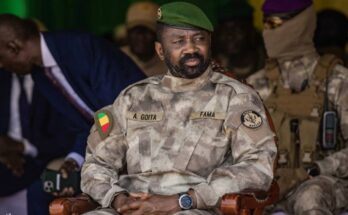
The announcement arrives amid worsening security conditions. Since the withdrawal of the United Nations stabilization mission in late 2023 and the departure of allied French forces, the Malian Armed Forces (Fama) have relied on Russian-backed support, including Wagner Group successors such as the Africa Corps. Despite regaining control of Kidal in late 2023, jihadist attacks surged in 2024 and 2025, extending beyond the northern strongholds to strike deeper into the country, including the outskirts of the capital.
This financial incentive strategy highlights a pragmatic shift. Decapitating armed networks requires precise intelligence on their leadership structures—information only local populations can provide. However, the initiative carries inherent risks. Informants risk retaliation, and the absence of clear payment terms or guarantees may deter participation. Authorities have yet to disclose reward amounts or disbursement procedures.
Regional solidarity or isolated gamble?
Mali’s move aligns with the Sahel States Confederation (AES), a 2024 alliance uniting Mali, Burkina Faso, and Niger. The three nations share a unified stance on regional security threats and are progressively coordinating military operations. Expanding the reward system across the confederation could bolster cross-border intelligence sharing, a critical advantage given how armed groups exploit porous borders to regroup and resupply.
Yet financial feasibility remains a pressing concern. With external aid suspended and economic sanctions imposed by the Economic Community of West African States (ECOWAS) still in effect, Bamako must secure internal funding or seek international partners to fulfill its pledge. While Russia, Mali’s primary military ally, may play a role, no official details have emerged regarding co-financing.
Beyond its operational implications, the announcement serves a political purpose. By addressing the public directly through state media, the transitional government aims to foster citizen engagement in the war effort and reinforce its legitimacy. This comes at a time when the post-coup transition, initiated after the 2020 and 2021 upheavals, continues to delay electoral processes. The true test of this strategy will be the Fama’s ability to deliver tangible results against the designated leaders in the coming months.