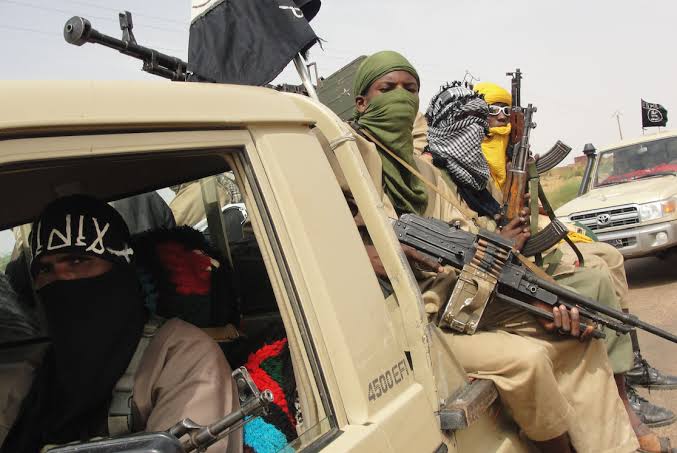
In the face of mounting military pressure and unrelenting extremist promises, the people of Mali find themselves trapped between two untenable options: a military junta clinging to power and a jihadist faction vowing to impose strict Islamic law. The latest surge by the Group for the Support of Islam and Muslims (JNIM, affiliated with Al-Qaeda) and the re-emergence of the Azawad Liberation Front (FLA) have exposed the fragility of Bamako’s defenses, leaving citizens to grapple with an increasingly dire dilemma.
Military paralysis and jihadist momentum
The JNIM’s coordinated assaults on April 25 marked a turning point, followed days later by the group’s reappearance and the FLA’s resurgence in Kidal. Yet, in a televised address on April 29, General Assimi Goïta dismissed public concern over his brief absence, declaring “the situation is under control”—a claim increasingly at odds with reality. Six years after seizing power, his regime’s inability to regain the upper hand has left the state staggering under the weight of non-state armed groups dictating the nation’s fate.
While the junta insists its forces remain capable of crushing these threats, the battlefield tells a different story. The JNIM’s ongoing blockade of Bamako has crippled the capital’s economy, and its latest communiqué leaves no doubt about its ambitions: once in power, the group’s “top priority will be the establishment of sharia law.” In areas already under its control, civilians have already been subjected to its harsh interpretation of Islamic rule. For many Malians, the unthinkable—jihadist conquest—now looms as a plausible outcome.
Between sharia and junta: a no-win scenario
Desperate to oust the military leadership, some opposition figures have floated the idea of a tactical alliance with the JNIM, hoping for a diluted form of Islamic governance. Yet the group’s rhetoric offers no reassurance of moderation. Its stated goal remains the violent overthrow of the junta and the imposition of a theocratic state, leaving no room for compromise. Meanwhile, the junta’s repression—marked by arbitrary arrests and forced disappearances—has only deepened public distrust.
The regime’s heavy-handed tactics reached a new low with the abduction of Mountaga Tall, a prominent lawyer and political figure, on May 2. The method mirrored previous state-sanctioned disappearances, reinforcing allegations of systemic human rights abuses. Observers warn that the junta’s refusal to curb its authoritarian excesses has accelerated its own downfall, pushing ordinary citizens toward the very extremists it sought to combat.
Who can break the deadlock?
The JNIM’s April 24 communiqué called for a “united front” of political parties, traditional leaders, and military factions to topple the junta and restore democracy. Ironically, Goïta’s regime had made similar promises years earlier, when it pledged to deliver a “new Mali.” Neither vision, however, offers a credible path forward. The junta’s reliance on force over governance has eroded trust, while the JNIM’s maximalist agenda threatens to replace one form of oppression with another. With the country’s future hanging in the balance, Malians face an impossible choice—one that may soon be made for them.