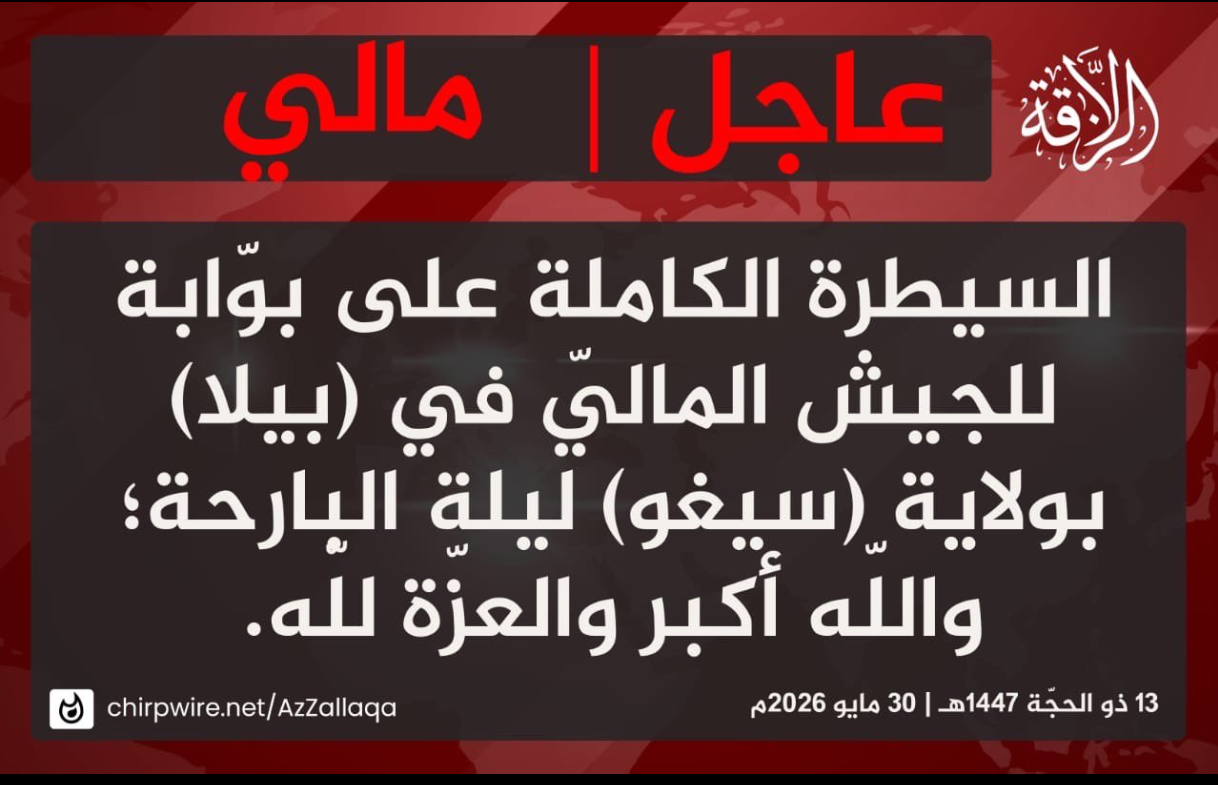
The night of May 29 to 30 witnessed a fresh wave of violence in Mali’s Ségou region, as the Group for the Support of Islam and Muslims (JNIM), an al-Qaeda-affiliated jihadist coalition, launched a coordinated assault on a Malian armed forces base. According to the group’s own claims, its fighters temporarily overran the strategic outpost, seizing a significant cache of weapons, ammunition, and other military supplies.
A night of unprecedented violence in Ségou
As dawn broke, channels linked to JNIM disseminated their communiqué, detailing the operation’s success. While the Malian junta has yet to issue an official statement, local sources confirm intense overnight clashes, though an independent assessment of casualties and damage remains elusive. This latest strike underscores the persistent threat posed by armed groups, even in areas long considered militarized strongholds of the state.
The attack serves as another stark reminder: despite repeated assurances of improved security, the Malian military and its allies continue to struggle against the adaptive tactics of jihadist forces. Mobile raids, ambushes, and hit-and-run operations remain the preferred methods of groups like JNIM, exploiting gaps in conventional counterinsurgency strategies.
Security strategy falters as Russian partnership falls short
Since seizing power, Mali’s military leadership has bet heavily on external support, particularly from Russian security contractors, to reverse the tide of insurgency. The shift—marked by the withdrawal of Western troops and the arrival of Russian instructors—was touted as a game-changer. Yet the Ségou assault exposes the hollowness of these claims.
The Russian-backed approach has relied heavily on air power and large-scale sweep operations, but these methods have proven largely ineffective against the fluid, decentralized tactics of jihadist networks. Rather than receding, violence has deepened, with militant groups expanding their operational reach. The Malian government’s inability to curb these advances raises serious questions about the sustainability of its current security model.
From insecurity to famine: a humanitarian catastrophe unfolds
The ripple effects of this instability are now colliding with another crisis: hunger. The Ségou region, historically one of Mali’s breadbaskets due to its fertile lands along the Niger River, is now reeling under the weight of jihadist-imposed blockades. Farmers are abandoning their fields, livestock markets are being looted, and road networks are choked by improvised explosive devices (IEDs), cutting off vital supply routes.
With agricultural production grinding to a halt and urban areas facing severe shortages, food insecurity is spiraling into a full-blown famine. The state’s failure to provide adequate humanitarian relief has left countless families vulnerable, with women and children bearing the brunt of the crisis. Basic social services—already stretched thin—are collapsing under the strain of prolonged conflict.
Displacement crisis: civilians flee as violence escalates
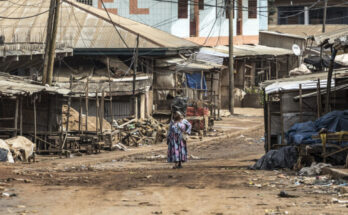
The unrelenting cycle of attacks and food shortages has triggered a mass exodus. Entire villages in Ségou are being emptied as residents flee toward urban centers or the relative safety of Bamako. These internally displaced persons (IDPs) are crowding into overcrowded, makeshift camps, devoid of sanitation, clean water, or medical care.
The humanitarian burden has fallen squarely on the shoulders of local NGOs, overwhelmed by the scale of the emergency. With the government prioritizing military expenditure over social welfare, the displaced are left to fend for themselves in conditions that defy basic human dignity.
A nation at a crossroads
The JNIM’s brazen assault in Ségou is more than just another military setback—it is a damning indictment of Mali’s current trajectory. The junta’s insistence on a purely militarized response, coupled with an overreliance on foreign security contractors, has yielded few tangible results. Rather than restoring stability, the strategy has deepened the country’s multidimensional crisis.
Without a holistic approach that prioritizes civilian protection, re-establishes essential services, and addresses the root causes of instability, Mali risks descending into irreversible social and economic collapse. The recent attack is a grim reminder that the path to peace cannot be paved with bullets alone.