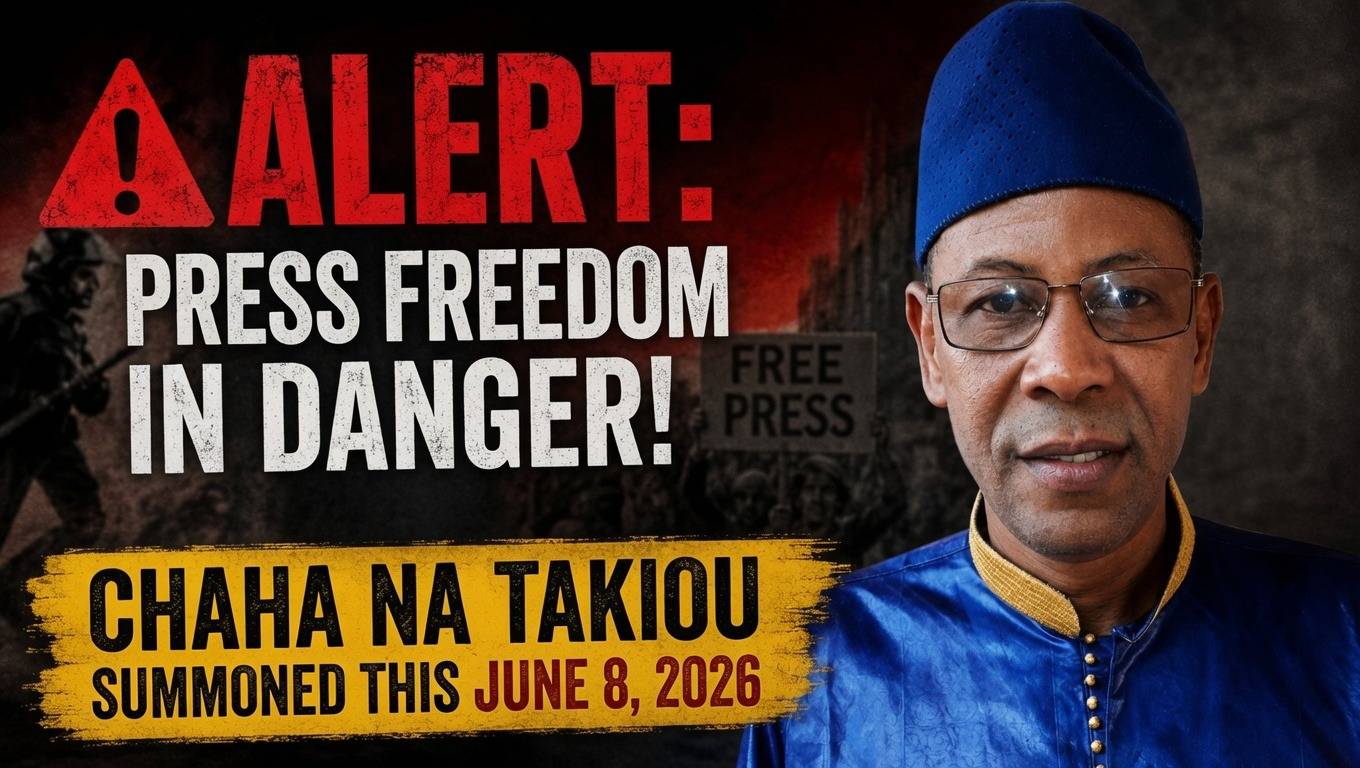
The director of the Malian newspaper Le 22 Septembre, Chahana Takiou, has been summoned to appear before the cybercrime prosecutor in Bamako on June 8, 2026, at 1 PM. The move follows his recent public critiques of the military junta’s handling of political, security, and economic affairs. This development underscores the growing repression and judicial harassment targeting dissenting voices, journalists, and citizens unwilling to conform to the official narrative of the transitional authorities.
Cybercrime unit becomes tool of intimidation
The announcement sent shockwaves through Mali’s press corps. Chahana Takiou, a respected journalist and leader of the weekly Le 22 Septembre, now faces a high-stakes judicial encounter with cybercrime investigators. While the stated reason remains vague, insiders see it as a clear retaliation for his uncompromising commentary on the junta’s policies. Over time, the cybercrime unit in Bamako has evolved from a crime-fighting body into an instrument of suppression, routinely weaponized against media professionals under the guise of combating online misconduct.
Press freedom crushed under authoritarian grip
Since the military takeover, Mali’s public sphere has shrunk dramatically. Once celebrated as a bastion of press freedom in West Africa, the country now stifles independent journalism through fear and self-censorship. Reporting objectively on national challenges—whether political, economic, or humanitarian—has become an act of defiance, even a punishable offense. The junta demands total allegiance to its version of events, silencing outlets that challenge its narrative through suspensions, administrative warnings, and financial strangulation. The High Authority for Communication (HAC) now acts as an enforcer of state propaganda, ensuring compliance under threat of penalties.
Disappearances and repression: a strategy of control
Chahana Takiou’s summons is not an isolated incident. It reflects a broader campaign of repression orchestrated by the transitional government. Those who dare question the status quo—be they politicians, civil society leaders, human rights advocates, or ordinary citizens expressing dissent online—risk severe consequences. The situation has worsened with a surge in abductions and forced disappearances. Reports indicate civilians are being intercepted by unidentified armed men, often linked to intelligence services, and held incommunicado for weeks. This climate of terror aims to crush all forms of opposition and impose an oppressive silence across the nation.
Journalists stand together, but the odds are stacked
In response to the summons, press associations in Mali have rallied to defend Chahana Takiou. Professional unions have issued urgent calls for solidarity, warning of the dangers posed by such judicial targeting. Yet their efforts face a formidable adversary: a militarized state where constitutional and judicial safeguards are increasingly ignored. Journalists emphasize that constructive criticism is vital for national resilience, especially during crises. However, the current leadership equates dissent with treason, closing the door on pluralistic debate and democratic discourse.
The judicial summons against Chahana Takiou on June 8, 2026, signals a dangerous escalation in Mali’s authoritarian drift. By targeting a journalist of his stature, the transitional regime sends a chilling message: no dissent will be tolerated. This obsessive pursuit of uniformity—enforced through coercion, imprisonment, and intimidation—deepens the country’s isolation and fractures its social fabric. While Mali grapples with immense security and humanitarian challenges, silencing truth-seekers will not resolve its deep-rooted crises. The future of independent journalism and civic freedoms in Mali now hangs in the balance within the courtrooms of Bamako.