The recent coordinated assaults by Touareg rebels, allied with jihadist factions, across multiple Malian cities—including Bamako—have plunged the military regime into its deepest security crisis since the 2019 coup. A particularly striking moment emerged when Russian troops, part of the Africa Corps (the successor to the Wagner Group), evacuated Kidal without firing a single shot, surrendering the city to the advancing forces.
russians abandon Kidal without resistance
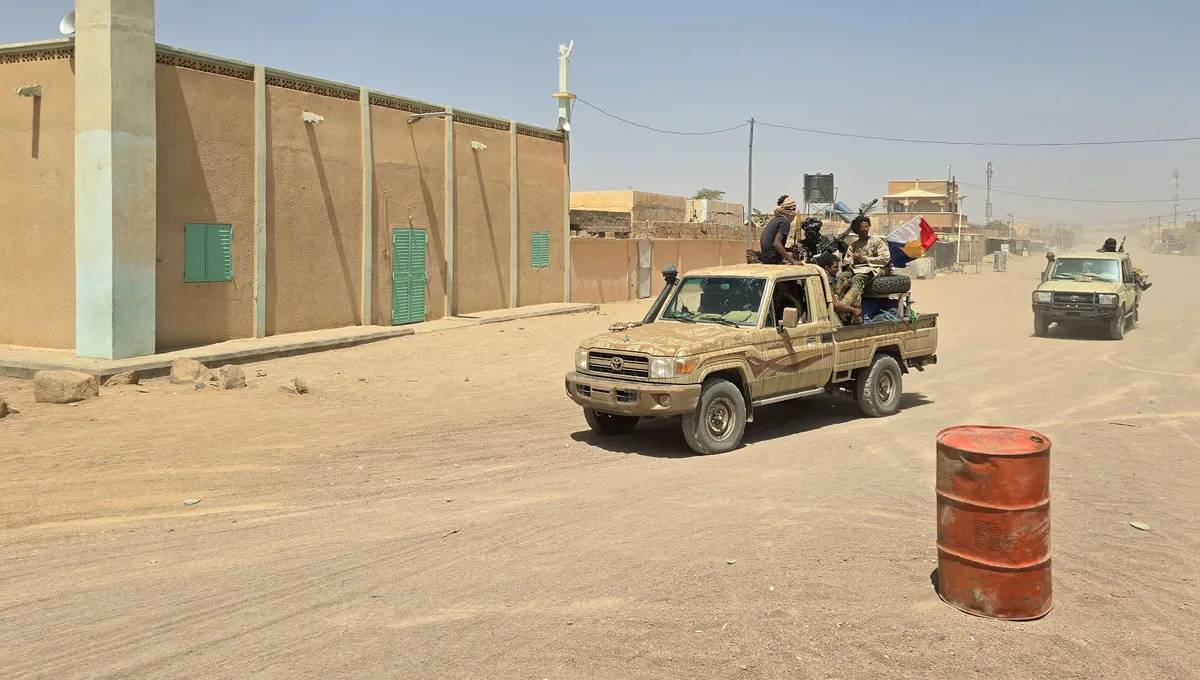
Video footage captured the unusual sight of Russian military vehicles leaving Kidal in northern Mali under cover of darkness. The city, once recaptured by Malian forces with Russian support in 2023, fell without resistance to the coalition of rebels and jihadists. The Africa Corps, which had replaced French troops as Bamako’s key security ally, remained completely passive during the withdrawal.
insurgents issue warning to Moscow
The day before Kidal’s fall, the Group for the Support of Islam and Muslims (GSIM)—a jihadist organization linked to Al Qaeda—publicly declared simultaneous attacks across Mali. In their statement, they explicitly called on Russian forces to refrain from involvement, signaling an intent to preserve future collaboration with Moscow.
Mali’s junta faces unprecedented challenges
The Malian regime has suffered severe blows in recent days. On Saturday, the powerful Defense Minister was killed in a targeted attack on his residence. Meanwhile, coordinated assaults across several regions went undetected until it was too late, allowing insurgents to seize control of vast territories. Kidal’s fall holds deep symbolic weight, as its recapture in 2023 had been hailed as a major victory for the junta led by Colonel Assimi Goïta, achieved shortly after the departure of French and UN forces.
regional stakes escalate
The security vacuum carries dual risks: first, Mali’s potential fragmentation between Touareg separatists in the north and competing jihadist groups expanding their influence. Second, the regional threat posed by GSIM, which maintains ties to Al Qaeda and has ambitions beyond Mali’s borders. Neighboring Burkina Faso and Niger—both members of the Alliance of Sahel States—could become next targets if Bamako falls. Coastal West African nations already face persistent jihadist incursions.
decade of instability culminates in failure
Since France intervened in 2014 to prevent a jihadist takeover of Bamako, its counteroffensive temporarily restored stability to northern Mali. However, subsequent years saw growing frustration with the government, culminating in military coups, the expulsion of French forces, and their replacement by Russian mercenaries. Today, that strategy lies in tatters, leaving Mali’s civilian population to bear the consequences of failed governance and foreign interventions.