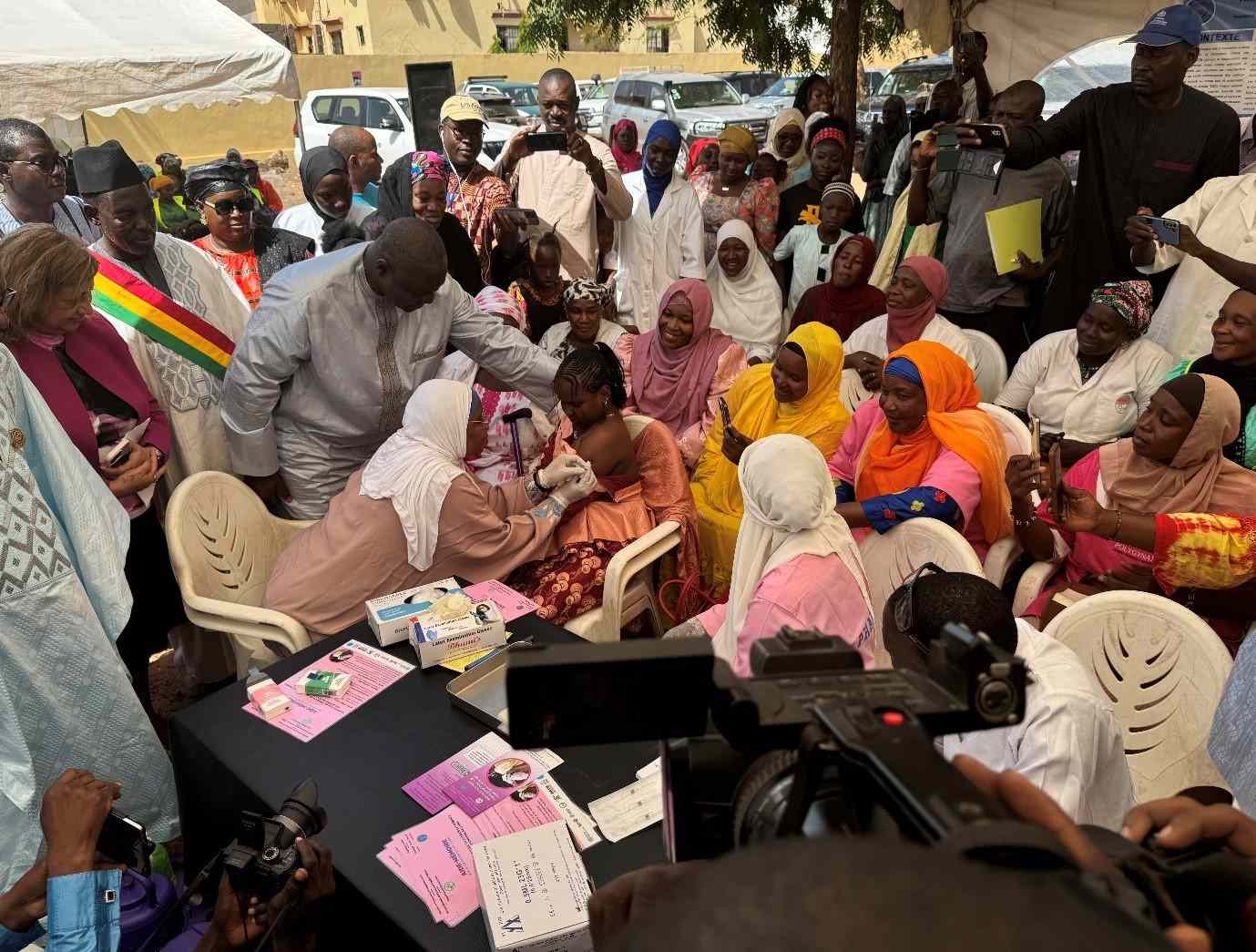
In a landmark health initiative, the government of Mali officially added the human papillomavirus (HPV) vaccine to its national routine immunization schedule earlier this November. During a high-level event in Bamako, health officials and international partners, including Gavi, celebrated this critical advancement in the fight against cervical cancer, a disease that continues to claim the lives of thousands of Malian women.
Cervical cancer represents a devastating reality for many families in Mali. Fatoumata, a 38-year-old survivor, shared her harrowing journey through the healthcare system. Initially misdiagnosed with a fibroid, she suffered from persistent bleeding and unusual discharge before learning the truth. “The diagnosis confirmed it was cervical cancer. I ended up spending between 5 and 6 million CFA francs on treatment, with the surgery alone costing two million,” she recalled. Her story highlights the extreme financial and physical toll of late-stage diagnosis in a country where specialized care is often out of reach for many.
Through this new program, Mali aims to immunize over 320,000 young girls annually, a move projected to slash cervical cancer rates by nearly 90% and prevent more than 3,600 deaths every year.
The heavy toll of cervical cancer in Mali
Driven by persistent infections of specific HPV strains, cervical cancer is a top-tier public health crisis in Mali. It ranks as the second most frequent cancer among women aged 15 to 44. Beyond the medical hurdles, deep-seated cultural taboos often prevent women from seeking help. In some communities, the disease is erroneously attributed to curses or social conflicts, which delays life-saving medical intervention.
A turning point in prevention
The integration of the HPV vaccine into the routine schedule marks a shift toward proactive prevention. Dr. Ibrahima Diarra, head of the National Immunization Center, explained that a single dose can provide long-term protection for 10-year-old girls against the viruses responsible for 70% of cervical cancer cases. Previously expensive in the private sector, the vaccine is now provided free of charge to eligible girls through Gavi support and government co-funding.
Promoting health equity across the Sahel
This initiative is a major stride toward health justice. Globally, cervical cancer claimed 348,000 lives in 2022, with 90% of those deaths occurring in lower-income nations. By making this vaccine accessible in both urban centers and rural villages, Mali is ensuring that geography does not dictate a woman’s survival. Mali has also distinguished itself as a leader in the Sahel region, becoming one of the first countries categorized as fragile or conflict-affected to successfully launch the HPV vaccine with Gavi assistance.
Health experts emphasize that vaccinating girls at age 10 is the most effective strategy. “We target this age group to ensure they are protected before any potential exposure to the virus,” Dr. Diarra noted, aligning the nation’s policy with World Health Organization (WHO) guidelines.
Addressing myths and misinformation
Despite the medical benefits, authorities are working hard to combat false rumors regarding the vaccine’s safety. Officials have been clear: the vaccine is safe, effective, and has no impact on future fertility or reproductive health. The Minister of Health, Colonel Assa Badiallo Touré, has publicly championed the vaccine, urging parents to embrace this tool as a way to secure a healthier future for their daughters.
The rollout of the HPV vaccine in Mali is more than just a medical milestone; it is a commitment to protecting future generations. By breaking the cycle of disease through free, accessible prevention, the country is setting a powerful example for public health equity in Africa.