Twelve months after the official introduction of the human papillomavirus (HPV) vaccine, Mali is seeing a significant shift in public health. In both the capital and surrounding areas, 10-year-old girls are increasingly coming forward for their protection against cervical cancer. Despite persistent hurdles—such as social hesitation, rumors, and logistical barriers—healthcare workers, community groups, and families are celebrating this vital step forward for women’s health.
On a recent Thursday in October, the Korofina district of Bamako hosted an educational session for local women and young girls at the neighborhood civil registry office. Amin Dem, a dedicated midwife, led the conversation. She noted that while there was significant pushback and fear from both parents and children initially, consistent community outreach has successfully shifted perceptions.
According to her, the most common concern is the unfounded myth that the injection causes infertility. She emphasized that taking the time to explain the science in local languages is the key to building trust.
A turning point for preventive medicine
The launch of the HPV vaccine in November 2024 represented a landmark moment for Mali. By utilizing a single-dose regimen that provides robust immunity, health services vaccinated over 145,000 girls aged 10 between January and September 2025. While the majority—exceeding 113,000—were reached through schools, approximately 32,400 girls who do not attend school were also immunized. Officials acknowledge that intensified efforts are required to ensure this latter group, often the most vulnerable, is not overlooked.
Dr. Ibrahima Téguété, an obstetrician-gynecologist at the Point G University Hospital, believes this progress aligns Mali with the WHO 90-70-90 targets. These goals aim to vaccinate 90% of girls against HPV, screen 70% of women at specific ages, and provide treatment to 90% of those diagnosed with lesions. While he expressed great pride in the primary prevention success, he noted that reaching the final target remains difficult due to the country having only one radiotherapy unit.
Community engagement as a catalyst
While public health infrastructure provides the foundation, civil society has been indispensable. In Bamako, the NGO Solidaris223 has been active in every commune since the program began. Amina Dicko, the organization’s president, reported that mothers now frequently approach them to find out where their daughters can be vaccinated.
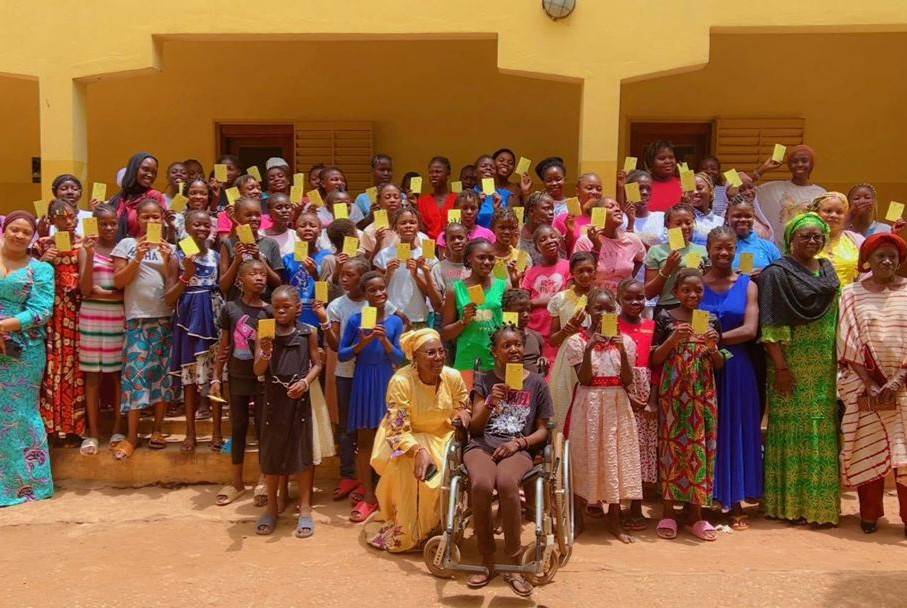
At the Centre Djiguiya in Bamako, a full day was dedicated to the cause. The director, Mme Togo Mariam Sidibé, confirmed that 70 resident girls received their doses without any adverse reactions.
The young recipients are also finding their voices. Ten-year-old Awa admitted she was nervous about the needle, but found the process quick and is happy to be protected for the future. Haby, who was vaccinated at school, shared that her mother’s reassurance was vital. Dr. Téguété noted that the rapid depletion of initial vaccine stocks is a clear sign of a strong collective will to succeed.
Tackling remaining skepticism and logistics
Misinformation regarding fertility remains a challenge. Dr. Téguété continues to fight these false claims, stressing that the vaccine is safe. Amin Dem sees the change daily, as more mothers now proactively seek out the vaccine once they receive clear information.
Fannata Dicko’s personal experience with loss has made her an advocate for the program. However, physical barriers persist in certain regions. Road travel between Mopti and Gao can be impossible, forcing authorities to transport vaccine supplies by air to regional hubs.
The vaccine remains free for all 10-year-old girls, supported by the state and partners like Gavi, which helps secure the doses at a lower cost. This ensures that even those in remote areas have equal access. Dr. Téguété estimates that if this momentum continues, the entire 9-to-14 age bracket will soon be protected.
Hope for the future
Mali’s commitment to prevention is not new. From 2016 to 2022, the Weekend 70 initiative helped raise screening rates in Bamako from 15% to over 70%. Yet, the battle against misinformation continues. Dr. Téguété emphasized that fear often stems from a lack of knowledge, making ongoing communication essential.
The involvement of religious leaders has also been a game-changer in reassuring families. While Bamako’s success is an encouraging indicator, the goal is to replicate this across the entire country. Amin Dem remains optimistic, noting that people are now coming to clinics seeking answers rather than questioning why cancer is being discussed.
For health professionals and advocacy groups, the HPV vaccine is the start of a major transformation in women’s health in Mali. As Dr. Téguété concluded, behind every girl who receives the vaccine is a woman whose life has been saved.