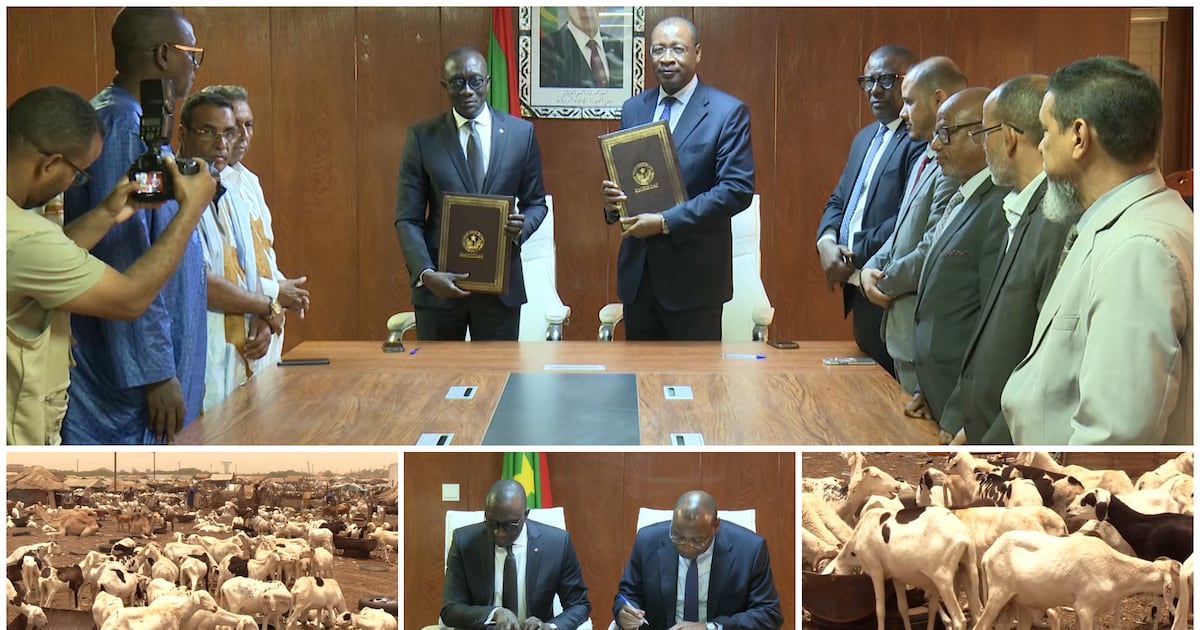
Nouakchott has entered into an agreement to provide Dakar with 450,000 head of sheep. This crucial supply comes as Senegal faces a significant shortfall from its traditional neighboring livestock providers, particularly due to the escalating insecurity across Mali.
Beyond Senegal’s needs, Mauritania is also expected to help fulfill a portion of Côte d’Ivoire’s requirements for Tabaski sheep, a necessity likewise driven by the prevailing sub-regional security landscape.
Alioune Kane, a technical expert from the National Grouping of Pastoral Associations (GNAP), explained the situation. “We’ve seen the renewal of an existing protocol,” Kane stated. “Typically, Mauritanian herders would export between 460,000 and 500,000 sheep to Senegal. However, this year, that contingent is set to increase due to the ongoing insecurity in Mali,” a territory that historically served as a vital transit route for herders from Mauritania’s eastern regions en route to Senegal.
Kane further confirmed that numerous Mauritanian herders have already crossed into Senegalese territory, making their way towards Dakar and other major urban centers. The Senegalese government, for its part, has pledged to implement all necessary security, administrative, customs, and sanitary measures to ensure the smooth execution of the Tabaski operation.
Baba Hassan Sidi, a GNAP official in the Néma region, reminisced about a time when “there was no insecurity in Mali. Mauritanian herders from the Néma and Aïoun regions routinely passed through that territory to enter Senegal.”
For this year’s journey, herders must navigate an alternative, secure route to reach Senegal, which involves a river crossing from the Trarza region directly into Senegalese territory. This new corridor will considerably extend the truck journey for livestock originating from the eastern regions.
Sidi emphasized that many herders are already present in Senegal, operating under an agreement that underscores the long-standing, amicable relations between the peoples of Mauritania and Senegal, a testament to enduring West Africa cooperation.