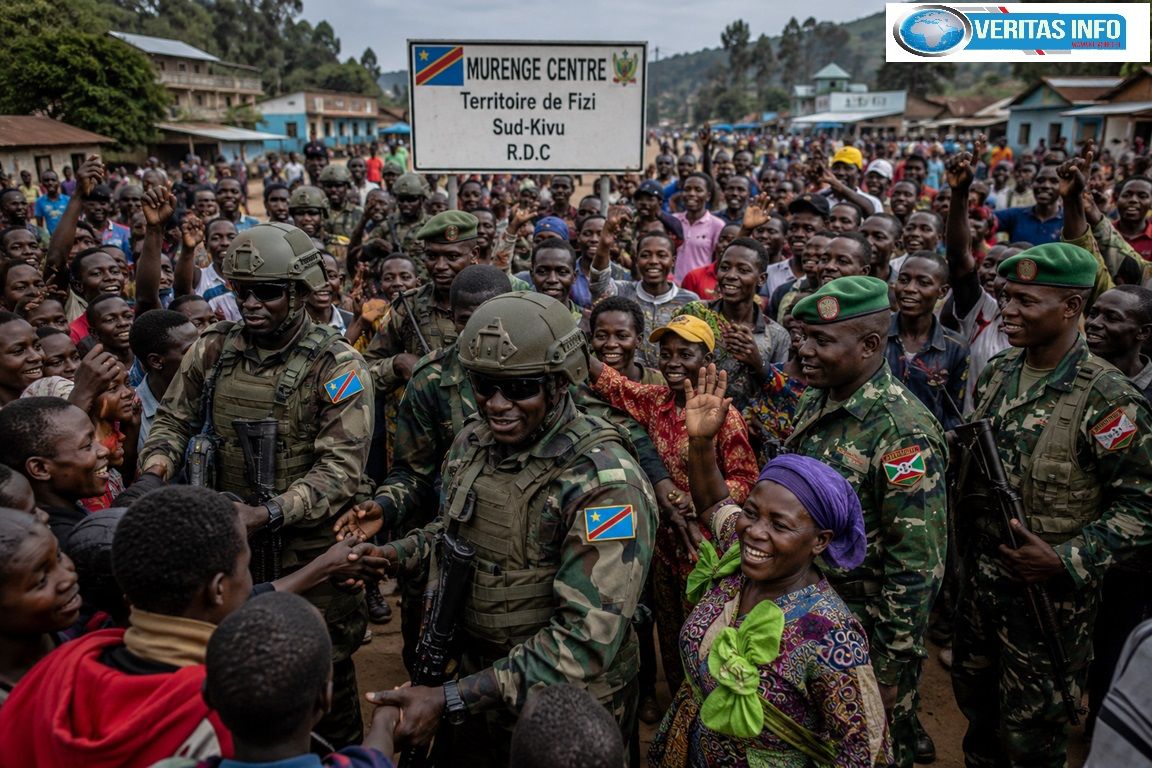
The battle for Minembwe is no longer just a local clash between rival armed groups. It has transformed into a key emblem of the power struggle in eastern Democratic Republic of the Congo (DRC), pitting government forces—backed by Burundi and the Wazalendo militias—against the Twirwaneho and AFC/M23 rebel movements, which Kinshasa alleges are supported by Rwanda.
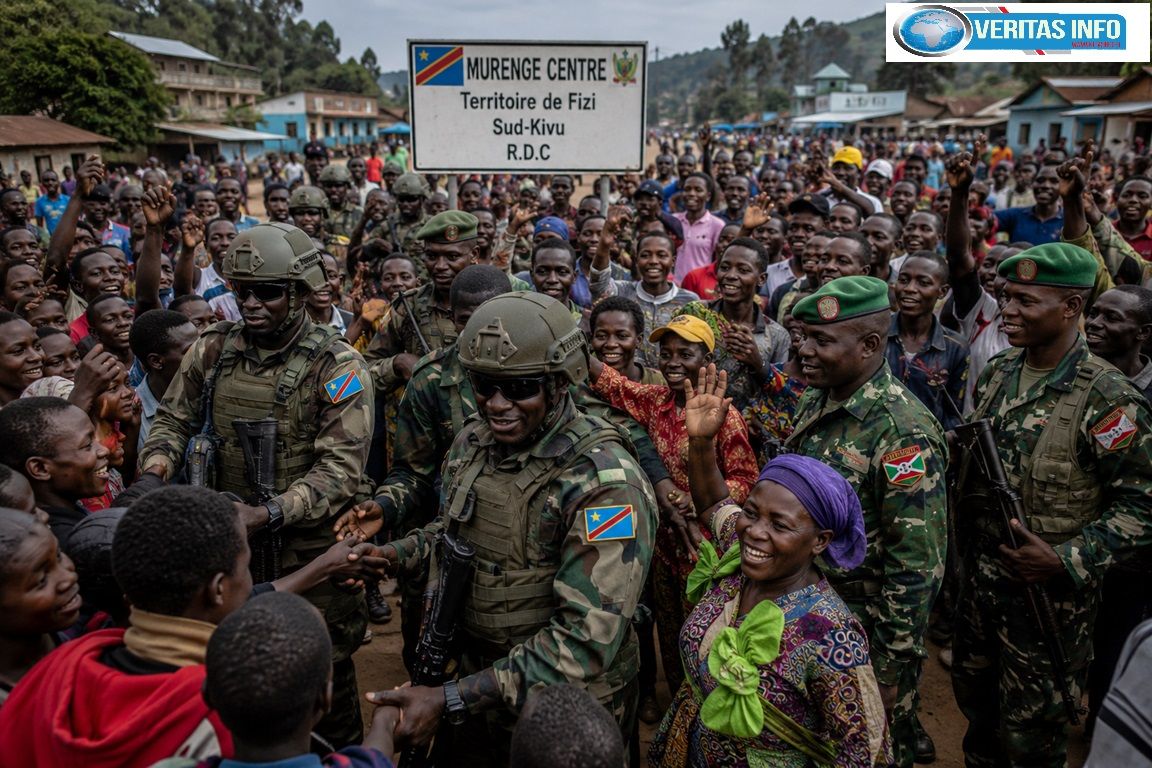
According to Congolese military authorities, the Armed Forces of the DRC (FARDC)—supported by Burundi’s National Defense Force (FDNB) and the Wazalendo—still hold Minembwe-centre, its airstrip, and surrounding villages. Kinshasa firmly defends this account, dismissing as ‘disinformation’ claims on social media that rebels have retaken the area.
Beyond the war of statements, the stakes are enormous. Minembwe holds a strategic position in the South Kivu highlands. Controlling it allows one to influence the routes connecting Fizi, Uvira, and several mountainous areas that traditionally serve as fallback bases or logistics corridors for armed groups operating in the region.
A symbolic victory for Kinshasa
If the situation reported by the FARDC holds over time, retaining Minembwe would be one of the most significant military successes the Congolese government has achieved in recent months in South Kivu.
For years, Kinshasa has been routinely criticized for its inability to durably restore its authority in the highlands. Stabilizing Minembwe would allow President Félix Tshisekedi’s government to show that the strategy of allying with the Wazalendo and military cooperation with Burundi can produce tangible results on the ground.
In a context where Congolese public opinion demands concrete progress against armed groups, such a success would also bolster the government’s credibility among a segment of the population.
Burundi, a major regional beneficiary
Regionally, the presence of Burundian troops alongside the FARDC underscores shifting security dynamics in the Great Lakes region.
Bujumbura has established itself as an indispensable military partner for Kinshasa. Consolidating government positions at Minembwe would further strengthen Burundi’s diplomatic weight in regional security discussions.
This development could also deepen the strategic rivalry between Burundi and Rwanda, two countries whose security interests increasingly diverge in eastern Congo.
A setback for the AFC/M23/RDF and Twirwaneho narrative
/image%2F1046414%2F20260621%2Fob_702fb3_bdi-Burundi-iscam-000-05092025-fdnb-79.jpeg)
For the rebel movements, the battle of Minembwe also carries significant symbolic weight. For months, the AFC/M23/RDF has sought to demonstrate its ability to extend its influence beyond its traditional strongholds in North Kivu.
Losing a highly publicized area like Minembwe for a sustained period would weaken this narrative of continuous advance. It could also affect the morale of fighters and the support networks that follow the conflict’s evolution daily on social media.
The intensity of the information war seen in recent days reflects the importance each side places on public perception. In modern conflicts, territorial conquest is no longer decided solely on the battlefield; it is also fought in the media space.
A battle that goes beyond Minembwe
However, conflict specialists in the Great Lakes urge caution. The military history of eastern DRC shows that a locality can change hands several times within a few weeks.
Even if the FARDC currently control Minembwe and its airstrip, the core question remains the Congolese state’s ability to durably maintain its authority in this mountainous and hard-to-access region.
For Kinshasa, the stakes far exceed the fate of a single town. It is about demonstrating that the state can gradually retake control of areas long dominated by armed groups. For the rebel movements, the goal is to prevent a dynamic that could durably shift the balance of power in the South Kivu highlands.
In Minembwe, as elsewhere in eastern Congo, the military battle is now accompanied by a political one. And in this war where each side claims victory, controlling the narrative has become nearly as vital as controlling the territory itself.