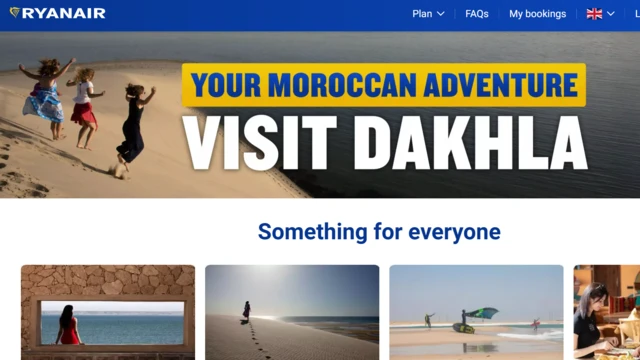
A recent notification landed in my inbox from the Irish carrier Ryanair, inquiring if I was prepared for my “next Moroccan adventure.” The destination featured was Dakhla, a city perched on a windswept peninsula where the Sahara Desert meets the Atlantic Ocean. The prospect was undeniably captivating.
While a stopover in Madrid is required, round-trip tickets from the Spanish capital to Dakhla are being offered for as little as 30 euros (approximately 35 dollars). The region now boasts a wide array of lodging, ranging from budget-friendly hostels to high-end luxury retreats, all branding the area as a hidden Moroccan treasure.

However, behind the polished marketing campaigns lies one of the most enduring territorial disputes on the planet. Dakhla is situated within Western Sahara, a region the United Nations identifies as a “non-self-governing territory.” This status indicates that the local population has yet to achieve full self-governance.
A territory divided by history
Currently, Morocco administers and occupies roughly 80% of Western Sahara, referring to the area as its “southern provinces.” While the United Nations has spent decades advocating for a resolution—including a proposed referendum—the indigenous people of the region have not yet had the opportunity to vote on their political future.
Legal experts and human rights advocates suggest that the commercialization of Western Sahara as a part of Morocco raises significant international law concerns. They argue that such branding helps to normalize and legitimize the Moroccan administration of the territory. The Moroccan government has not provided a statement regarding these concerns.
Data from the Moroccan Ministry of Tourism indicates a sharp rise in visitors to the Moroccan-controlled areas of Western Sahara. Figures show a jump from 490,297 travelers in 2019 to 743,133 by 2025, representing an increase of over 50% in just six years.
The role of global travel companies
This growth is largely supported by new flight paths. Royal Air Maroc is joined by carriers such as Ryanair, Transavia France, and Binter Canarias, which provide direct connections from Madrid, Paris, and the Canary Islands. While Transavia France maintains that its operations to Dakhla follow all necessary official authorizations, Ryanair has not commented on the matter.
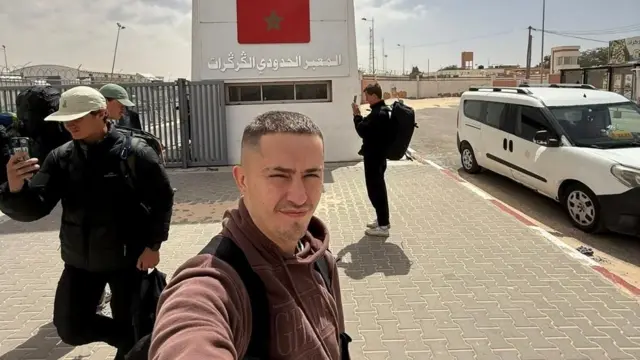
Tom Ruck, a 29-year-old traveler from the United Kingdom, recently visited Dakhla via Madrid. He observed that while many resorts are under construction, they appeared largely unoccupied. “It felt like the industry was in its very early stages,” he noted, adding that Moroccan flags were visible throughout the city and his passport received a Moroccan entry stamp.
In contrast to other carriers, Binter Canarias continues to identify the region as Western Sahara in its listings for flights to Dakhla and Laâyoune. Meanwhile, major booking platforms like Expedia, Booking.com, and Trivago generally list hotels in these areas as being located in Morocco.
Erik Hagen of Western Sahara Resource Watch warns that labeling these destinations as Moroccan is misleading. He suggests that such corporate practices ignore due diligence in politically sensitive territories. Dr. Andrea Maria Pelliconi, an international human rights law specialist, adds that failing to distinguish Western Sahara from Morocco could lead to legal challenges regarding consumer protection and the Sahrawi people’s right to self-determination.
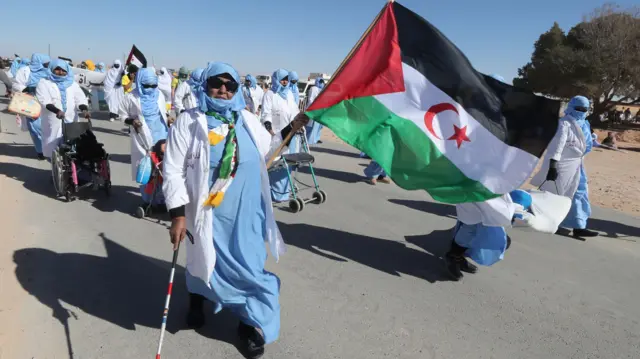
The struggle for self-determination
The roots of the conflict trace back to 1976 when Spain ended its colonial rule. Morocco immediately claimed the land, leading to an armed struggle with the Front Polisario, a group seeking independence for Western Sahara. A 1991 ceasefire overseen by the UN was supposed to lead to a referendum, but the vote has stalled for decades. Today, the Front Polisario maintains control over a small eastern strip of the territory.
Sidi Breika, representing the Front Polisario, argues that tourism is being used to create a “fait accompli” regarding Morocco’s sovereignty claims. He insists that economic projects in the region violate the Sahrawi people’s rights and mentioned that legal action against carriers like Ryanair is being considered.
Recent diplomatic shifts have seen the United States recognize Morocco’s claim over Western Sahara in 2020. Furthermore, the UN Security Council recently highlighted Morocco’s autonomy plan as a primary path forward. Despite these moves, the international legal community continues to call for a mutually agreed political solution, while the Front Polisario remains firm in its rejection of the autonomy proposal.