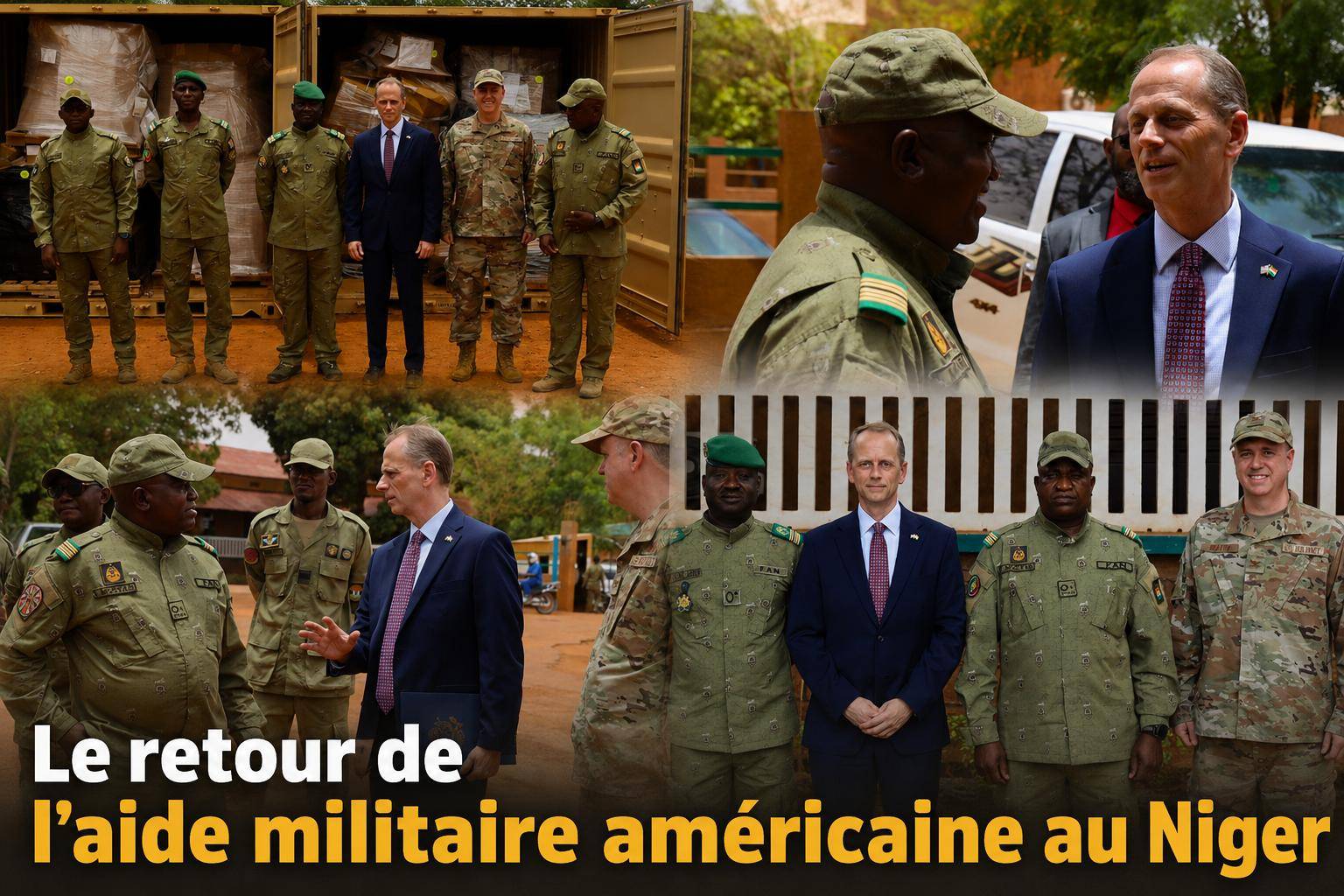
On May 26, 2026, the Logistics Center of Niger’s Armed Forces (FAN) in Niamey received nine containers of military equipment donated by the United States. This strategic delivery marks a significant shift in diplomatic relations, underscoring Niamey’s pragmatic return to its former Western partners two years after demanding their departure in the name of national sovereignty.
Military aid to enhance operational readiness
The ceremony held at the FAN Logistics Center was not just symbolic—it was a game-changer for the Nigerien military. The shipment, which included nine large containers filled with advanced U.S. military hardware, was officially handed over to Nigerien authorities. According to FAN logistics officials, the consignment contains critical spare parts, tactical communication devices, personal protective gear, and first-line maintenance tools. These assets are designed to bolster the resilience and combat effectiveness of Nigerien troops deployed in volatile regions.
Combating terrorism and securing borders
This military support is part of a broader collaboration between Niger and the United States, aimed at reinforcing the FAN’s operational capabilities in the face of persistent regional security threats. The Nigerien Ministry of Defense confirmed that the equipment will be deployed immediately to counter terrorism, disrupt transnational organized crime, and secure the country’s often vulnerable border areas. For frontline soldiers, this assistance is a lifeline, particularly in remote and hard-to-reach zones where security vacuums persist.
From rupture to reconciliation: Washington’s strategic comeback
The delivery of this military aid signals a remarkable turnaround in Niger’s foreign policy. Just two years earlier, the transitional government in Niamey had taken a firm stance against Western influence, insisting on the withdrawal of American and French troops under the banner of national sovereignty. The closure of the U.S. drone base in Agadez was a clear manifestation of this policy.
Yet, the growing menace of jihadist groups has forced a reevaluation of priorities. The acceptance of U.S. military equipment—despite past political tensions—demonstrates that diplomatic channels were never completely severed. This move reflects a hard truth: the rhetoric of absolute sovereignty often collides with the harsh realities of asymmetric warfare.
Balancing partnerships in a shifting geopolitical landscape
For analysts monitoring the Sahel region, Niger’s approach to international alliances appears increasingly pragmatic. While maintaining close security cooperation with new partners such as Russia, Turkey, and Iran, Niamey is also recalibrating its relationship with Washington. The U.S., for its part, has adopted a low-profile yet determined strategy to prevent a complete geopolitical vacuum in the region, especially after halting most aid following the 2023 political upheavals.
This selective partnership, focused on logistical support rather than large-scale troop deployments, underscores a mutual willingness to rebuild trust. The message is clear: in matters of defense, operational effectiveness on the ground trumps ideological posturing.
The reception of these nine containers at the FAN Logistics Center in Niamey is more than a logistical milestone—it is a testament to Niger’s evolving security calculus. By embracing pragmatic compromises with former allies, the country is reinforcing its national defense against shared threats. In a region where the line between sovereignty and survival grows thinner by the day, diversified military partnerships have become essential for the survival of the Nigerien state.