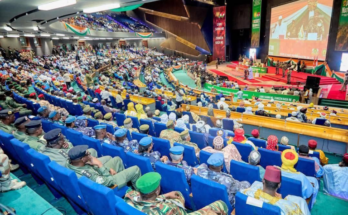
The broadcast of a testimony by Nigerian police inspector Habibou Oumarou Mamane on October 23, 2026, has reignited speculation about the whereabouts of Colonel Pascal Tigri, the alleged mastermind behind Benin’s failed December 2025 coup attempt. The inspector’s televised statement, delivered in front of national cameras, alleges financial transactions, intermediaries, and efforts to locate the fugitive officer within Niger’s borders.
What the testimony reveals—and what remains unverified
The inspector claims he was approached on February 27, 2026, to assist in tracking down Pascal Tigri. According to his account, he engaged in discussions with multiple intermediaries—some allegedly linked to Beninese entities—offering substantial sums for success. A payment of two million West African CFA francs, he states, was made at Niamey’s main market on March 9, 2026, with promises of additional funds and even diplomatic passports.
The names of individuals cited—including Moumouni, Zakou, a contact named “David,” and Beninese police officer Ilou—add details to the narrative, as does mention of a meeting in Malanville. However, the inspector’s claims, while detailed, lack independent verification. No official documents, bank records, or corroborated identities have been presented to substantiate the allegations.
Key details under scrutiny
- Financial transactions: Alleged payments totaling five million CFA francs are described, with partial disbursements noted. These claims require documentary proof.
- Intermediaries: The identities and affiliations of those involved remain unclear. The inspector’s credibility hinges on their verifiability.
- Language and intent: Terms such as “exfiltration” imply clandestine operations, but no evidence supports claims of state-level involvement by Benin.
- Timing and context: The timing of the testimony—weeks after earlier denials by Benin—raises questions about intent and the motives behind its public airing.
Separating fact from speculation: what the law says
Locating a fugitive wanted for serious crimes is not the same as orchestrating their covert extraction from foreign soil. While Benin may legitimately seek Pascal Tigri’s apprehension, the circumstances described do not confirm a coordinated effort by Beninese authorities to smuggle him out of Niger.
Should proof emerge that Tigri is in Niger, the next step would involve formal judicial cooperation under existing West African extradition frameworks. Such procedures require mutual legal assistance treaties, diplomatic channels, and adherence to due process—none of which are evidenced by the televised claims alone.
Why air unproven claims on national television?
The decision to broadcast such sensitive material publicly—rather than through secure, closed channels—introduces political and diplomatic ambiguity. Public statements before thorough investigation can fuel regional tensions, especially when relations between Niamey and Cotonou are already fragile.
Without access to bank records, witness testimonies, or official correspondence, the testimony remains a statement of belief rather than proof. Journalists and analysts must resist conflating dramatic narrative with factual evidence, particularly when national sovereignty and bilateral trust are at stake.
Possible motives behind the disclosure
The public airing of these allegations raises several possibilities: a genuine attempt to aid an investigation, a strategic move to pressure Benin, or a politically motivated signal to domestic or regional audiences. The lack of a Beninese response so far makes it impossible to confirm any of these interpretations.
The wider cost: how this case tests regional trust
This is no longer just a manhunt—it has become a test of cooperation in West Africa. When a fugitive from one country is reportedly hidden in another, the burden falls on both nations to act transparently and through established legal channels.
For Niger, the risk is reputational damage if unsubstantiated claims gain traction. For Benin, the cost is credibility if the allegations are later debunked. Neither side benefits from muddled messaging that blurs the line between lawful investigation and unproven intrusion.
What is clear is that the ball now lies in the court of institutions: courts, police forces, and diplomatic corps must act factually, not react emotionally. Only verifiable evidence—submitted to competent judicial authorities—can determine whether Pascal Tigri is in Niger, and whether any illegal acts were committed in the process.
Where do we go from here?
The testimony has reopened the Niger track, but it does not close the case. It neither confirms Tigri’s presence nor validates claims of Beninese orchestration. The next chapter depends on hard evidence, not headlines. Until then, the most prudent course is restraint—and a return to the rule of law.