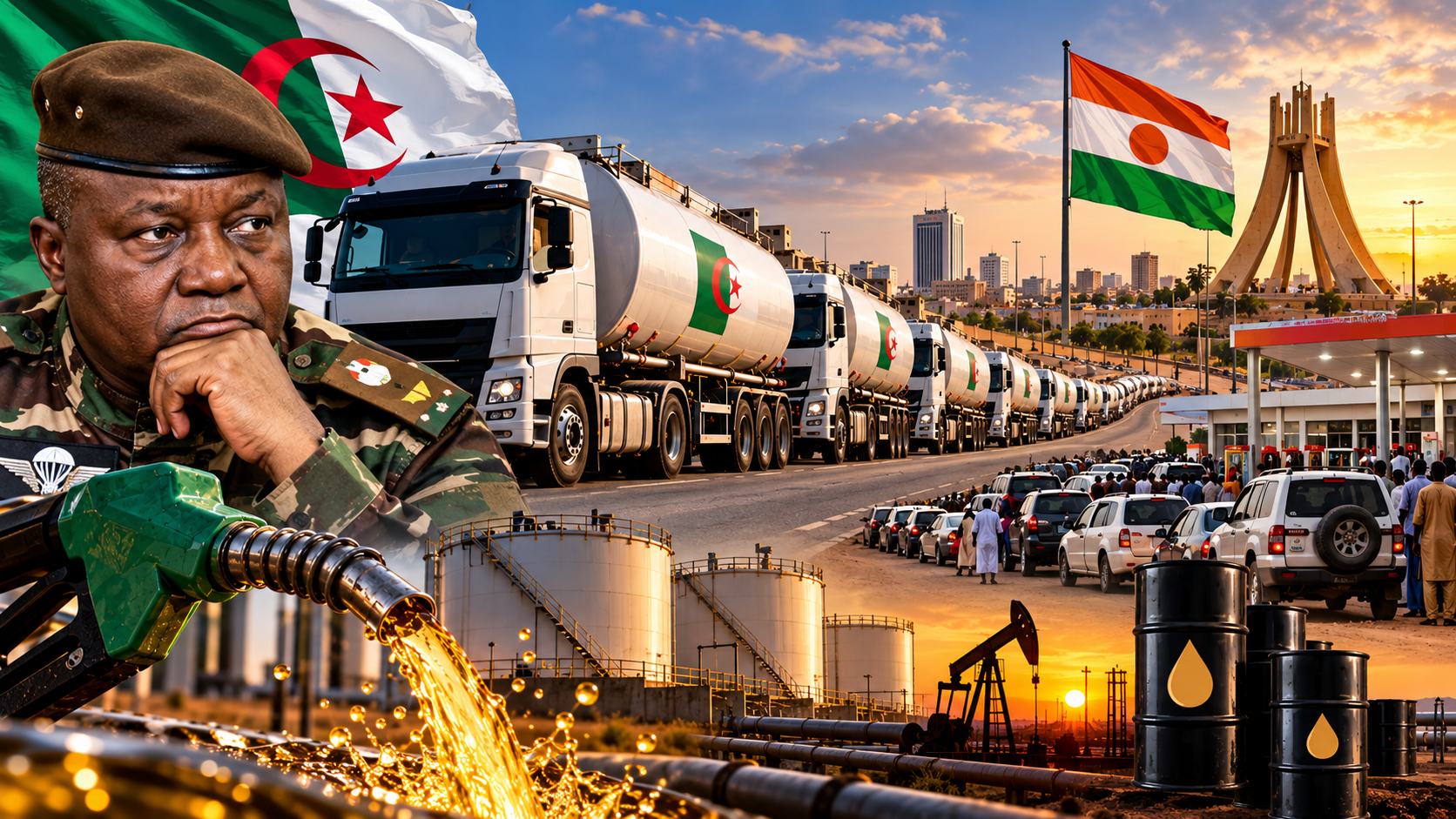
Niamey’s fuel supply network is under the spotlight following the arrival of 150 tankers from Algeria, each carrying 25,000 liters a total of 3.75 million liters initially earmarked for Agadez but redirected to the capital. This abrupt shift has intensified discussions on the economics and logistics of Niger’s fuel imports, raising questions about prioritization and long-term energy security.
Why 3.75 million liters of Algerian fuel arrived in Niamey instead of Agadez
The cargo, originating from Algeria, was planned as a relief measure for Agadez, a regional hub facing persistent supply challenges. However, operational reports indicate that the shipment has been rerouted, at least partially, to Niamey. Authorities have yet to confirm whether this reallocation reflects a deliberate adjustment in response to elevated demand in the capital or a logistical necessity dictated by current constraints.
At 25,000 liters per tanker, the total volume of 3.75 million liters represents a substantial addition to Niamey’s fuel reserves. Yet the sudden redirection has led to public and expert speculation: Is this a temporary fix to avert shortages in the capital, or does it signal a deeper reevaluation of supply priorities across the country?
Fuel cost at 800 FCFA per liter: weighing immediate needs against long-term expense
The cost of this operation stands at 800 FCFA per liter delivered in Niamey, with payment structured as a barter agreement involving crude oil. This arrangement where no immediate cash outlay is required still carries significant economic weight, as the crude oil equivalent offsets the transaction value and must be factored into the total cost.
When compared to Nigeria’s previous supply route, which delivered fuel to Niamey at 702 FCFA per liter (including transport), the price difference is substantial: 98 FCFA per liter. Applied to the full 3.75 million liters, this gap translates to an estimated additional cost of 367.5 million FCFA if all fuel were sourced under the two pricing models.
Yet cost alone does not determine the wisdom of this import. While the Nigerian route was cheaper, its reliability and continuity especially during regional tensions have come under scrutiny. The Algerian shipment, though more expensive, may offer a more stable and immediate solution to chronic supply gaps.
Understanding the barter agreement: what oil repayment means for Niger
The settlement mechanism, involving crude oil in exchange for fuel, raises several critical questions. How much crude oil will be exchanged? At what valuation? And how will this transaction impact Niger’s national petroleum reserves and fiscal planning? A lack of detailed public disclosure on these terms obscures the true financial and strategic impact of the deal.
Niamey’s strategic reserves: opportunity or missed long-term investment?
Beyond the immediate delivery, the shipment presents an opportunity to bolster Niamey’s strategic fuel reserves critical infrastructure for a capital city whose economy and public services hinge on uninterrupted fuel access. With demand driven by public transport, commercial activity, emergency generators, and industrial operations, even a short disruption can trigger price surges, logistical paralysis, and economic slowdown.
However, the value of 3.75 million liters depends entirely on how it is managed. Is part reserved for future crises? Is there adequate storage capacity to prevent evaporation or contamination? Without clarity on storage protocols, consumption rates, and reserve targets, it remains unclear how many days of supply this volume can actually secure.
Moreover, a reserve strategy cannot rely on isolated shipments. It requires continuous planning: monitoring stock levels, rotating supplies to maintain quality, implementing anti-fraud controls, and diversifying import sources to reduce vulnerability to regional instability or supply chain disruptions.
From emergency response to energy policy: the choices facing Niger
Niamey’s fuel crisis is not merely logistical it is a test of national energy governance. The arrival of Algerian fuel underscores a pressing challenge: balancing urgent needs with sustainable planning. While the shipment may temporarily alleviate pressure, it cannot replace a structured approach to fuel security.
To that end, public transparency is non-negotiable. Authorities must clarify the reallocation rationale, specify the intended use of the fuel (immediate consumption versus stockpiling), and detail the terms of the crude oil repayment. Only then can citizens and stakeholders assess whether this operation is a tactical maneuver or a strategic misstep.
Niger’s future energy resilience depends not on firefighting shortages, but on building systems that prevent them. A capital without fuel reserves is a capital at risk vulnerable to price shocks, supply interruptions, and geopolitical shifts. The cost of this shipment is only part of the equation; the real measure of success will be whether Niamey and the nation can move forward without stalling at the next crisis.
By Jeanne Ntouba — Journalist