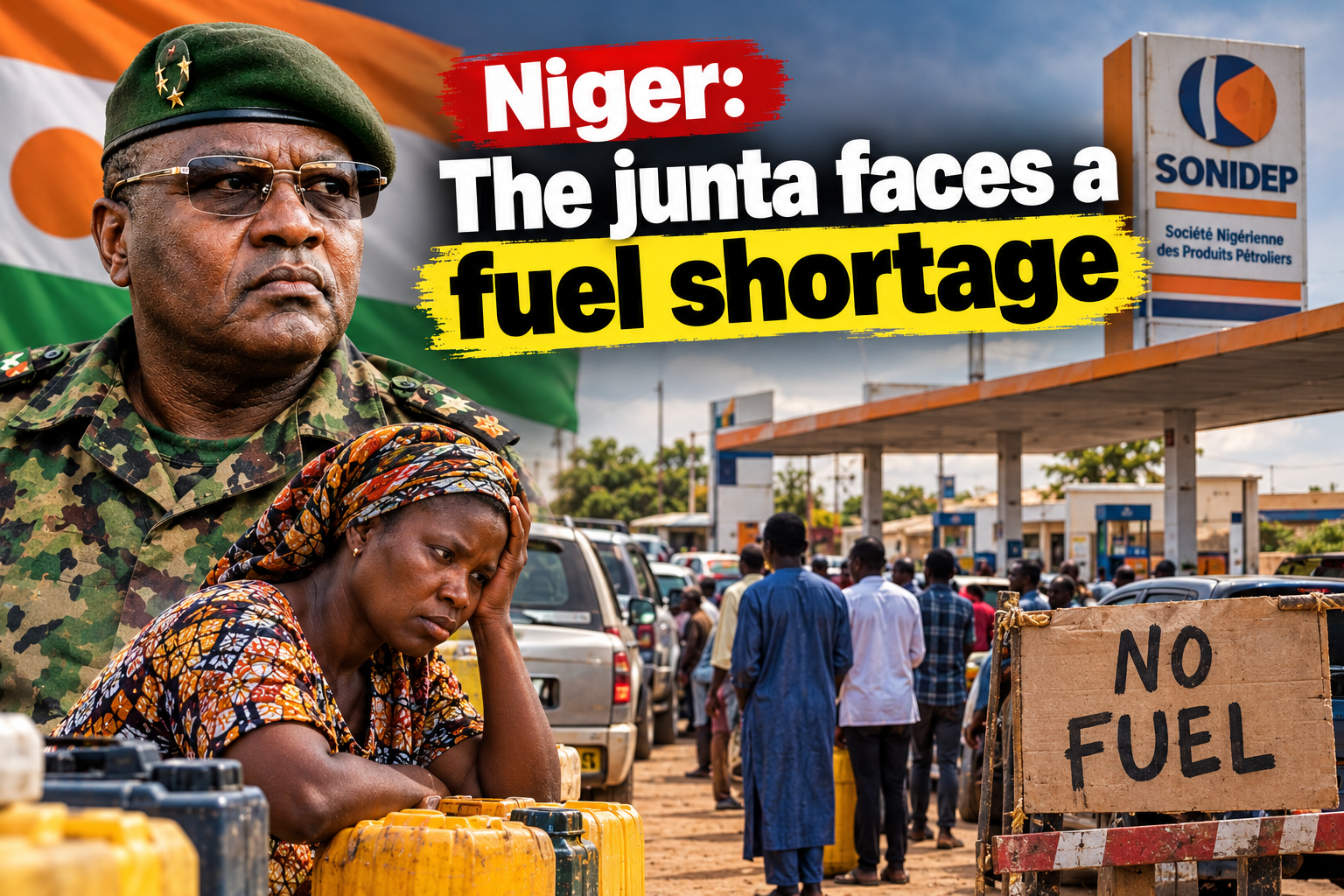
Despite being a significant oil producer, Niger struggles with severe fuel shortages that disrupt transportation, commerce, and daily life, particularly in the capital Niamey. The crisis exposes critical gaps in the country’s energy infrastructure, raising questions about the junta’s ability to secure essential resources for its citizens.
Fuel shortages cripple Niamey’s economy
The recent fuel scarcity in Niger’s capital has not only paralyzed public and private transport but also weakened commercial activities across the city. Long queues at gas stations have become commonplace, while local businesses report delays in goods delivery and increased transport costs. For many Nigeriens, securing fuel has become an additional burden in an already challenging economic climate.
Economic ripple effects of the crisis
The impact of limited fuel supplies extends far beyond transportation. Sectors reliant on logistics such as agriculture, retail, and manufacturing face rising operational costs, which often translate into higher prices for consumers. Taxi drivers and truckers, essential to the mobility of goods and people, find their livelihoods increasingly threatened by the scarcity.
Households are also feeling the strain, as transportation expenses rise and supply chains slow down. With oil production as one of the country’s key economic drivers, the disparity between local extraction and domestic availability has become a growing source of frustration among the population.
Infrastructure and logistics: the hidden bottlenecks
While Niger boasts oil reserves, the crisis highlights systemic issues in refining, storage, and distribution. Bottlenecks in these critical stages can prevent crude oil from reaching consumers as refined products like gasoline and diesel. Supply chain disruptions, insufficient storage capacity, and logistical inefficiencies all contribute to the current impasse.
To effectively address the shortage, authorities must prioritize transparency in reporting stock levels, production volumes, and distribution timelines. Without clear data, public trust in the government’s ability to manage the crisis remains fragile.
Military junta under scrutiny for energy sovereignty
The fuel crisis coincides with heightened expectations for the military-led government, which came to power in 2023 with promises of restoring national sovereignty and improving living conditions. However, for citizens, sovereignty extends beyond proclamations it demands tangible improvements in access to essential resources.
As long queues form and prices fluctuate, Nigeriens question whether their country’s natural resources are truly working in their favor. The junta’s response to this crisis will be a defining test of its capacity to deliver on its commitments and restore stability to a struggling economy.
The road to recovery: transparency and immediate action
Resolving the fuel shortage requires more than short-term fixes; it demands a strategic overhaul of the country’s energy infrastructure. Key steps include:
Enhancing transparency: Publicly disclosing stock levels, production rates, and distribution challenges to build trust and accountability.
Investing in infrastructure: Expanding refining capacity and improving storage and transportation networks to prevent future shortages.
Stabilizing supply chains: Prioritizing fair distribution across regions to ensure rural and urban areas alike have access to fuel.
For the junta, the crisis presents an opportunity to demonstrate its commitment to the people. Addressing the fuel shortage is not just an economic imperative it is a political one. Until reliable supply chains are restored, public skepticism toward the government’s ability to manage the country’s resources will persist.
A balancing act for Niger’s future
The paradox of Niger’s fuel crisis producing oil yet struggling to supply domestic markets underscores the challenges of energy independence. While the junta grapples with these issues, the population continues to endure the consequences of a broken system. Without urgent and decisive action, the crisis risks deepening economic strain and eroding public confidence in the authorities.
For Niger, the path forward must prioritize both immediate relief and long-term stability, ensuring that oil wealth translates into tangible benefits for all citizens.
By Nicolas Biyong — Journalist