The Algeria-Niger military cooperation agreement signed in late 2026 has sparked questions about its true scope. While officials tout it as a landmark deal, concrete details remain scarce, leaving analysts and regional observers scrambling for clarity.
What the official statements confirm — and what they leave out
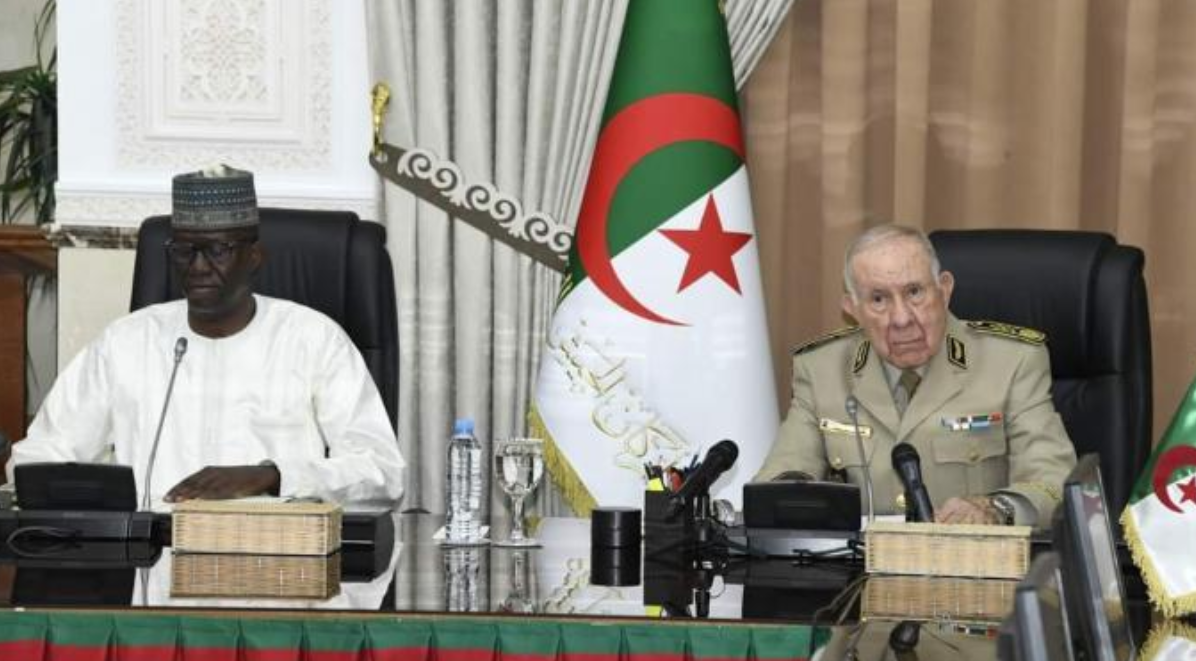
On October 21, 2026, in Algiers, Algeria’s top military brass received Niger’s Defense Minister Salifou Modi to finalize a new protocol on defense cooperation. The meeting resulted in the signing of an accord intended to deepen military ties between the two nations. But while the ceremony was widely publicized, key questions about the pact’s actual content remain unanswered.
According to official communiqués, the protocol aims to enhance bilateral military and security collaboration, including coordination between the armed forces. Yet the announcements stop short of specifying how this cooperation will be structured or executed.
Will the agreement include joint training programs for Nigerien troops? Are regular staff exchanges planned? Will it establish intelligence-sharing systems or joint border surveillance operations? Are joint military exercises or technical assistance on the table? Public statements provide no clear answers.
This lack of transparency isn’t necessarily a sign of concealment — sensitive defense agreements often include classified clauses for security reasons. However, it raises legitimate questions about the balance between confidentiality and public accountability when an accord is presented as a major breakthrough in bilateral relations.
Strategic backdrop: why Algeria and Niger are strengthening ties
The timing of the agreement is no coincidence. Both countries face persistent security threats: Niger contends with armed violence near its borders with Mali and Burkina Faso, as well as in the Lake Chad Basin. Algeria, meanwhile, prioritizes securing its southern frontiers and stabilizing neighboring regions.
A closer military partnership could, in theory, facilitate information exchange, joint capacity building, and coordinated responses to cross-border threats. But these objectives are not the same as confirmed clauses in the protocol. There is no public evidence that the agreement mandates combined military operations, troop deployments, or mutual defense commitments.
The distinction matters. A military cooperation agreement does not automatically equate to a formal defense alliance. Without clarity on operational provisions, the scope of this pact remains speculative.
Funding, timelines, and accountability: critical missing pieces
Several practical concerns remain unaddressed. How will the cooperation be funded? Has a timeline for implementation been established? Will bilateral committees oversee progress and enforce commitments? Without measurable targets or transparent follow-up mechanisms, assessing the pact’s real-world impact is nearly impossible.
Even if the protocol serves as a broad framework for dialogue, concrete operational mechanisms could significantly raise its strategic value. Conversely, ambiguous or noncommittal language risks reducing it to little more than a symbolic gesture — a risk that increases with each undisclosed detail.Where does this fit within Sahel security dynamics?
The agreement unfolds against a backdrop of shifting regional alliances. Niger is a member of the Alliance of Sahel States (AES), alongside Mali and Burkina Faso. Algeria, for its part, maintains independent security policies while engaging with multiple partners.
Could this protocol evolve into a broader regional coordination mechanism? Or will it remain strictly a bilateral arrangement? Without further clarification, speculation about new military blocs or strategic alignments remains premature. However, the strengthening of Algeria-Niger relations is a development worth monitoring, given the stakes in Sahel security.
Moreover, the meeting between Salifou Modi and Algerian President Abdelmadjid Tebboune underscores the agreement’s political significance. While this symbolizes high-level prioritization of bilateral relations, it does not necessarily imply the existence of unstated additional commitments.
Transparency as the path forward
Ultimately, the main challenge is not the signing of a military agreement, but the difficulty in assessing its substance. For a clearer understanding of the pact’s implications, Algeria and Niger could release a detailed briefing on its objectives, scope, and monitoring mechanisms — while preserving legitimate operational secrets.
Such a move would help distinguish between immediate, actionable commitments and longer-term cooperation goals. Until then, the true impact of the Algeria-Niger military pact remains unclear, confined to the realm of official announcements rather than operational reality.
One thing is certain: in a Sahel undergoing rapid transformation, evaluating military agreements cannot rely solely on ceremonial signatures. A clear picture requires visibility into the commitments, resources, and implementation structures that turn paper into action. Only then can the substance of Algeria-Niger cooperation be judged beyond the rhetoric.