Nigeria is not the only African nation facing an energy crisis, but Niger’s oil paradox stands out: a country producing crude oil, exporting millions of barrels, yet unable to meet domestic fuel demand.
This sharp contradiction has intensified under the military regime of General Abdourahamane Tiani, where persistent gasoline and diesel shortages have disrupted daily life, strained the economy, and exposed systemic failures in energy governance. From long lines at gas stations to disrupted supply chains, the crisis reflects deeper issues in production, refining, distribution, and financial mismanagement.
Oil-rich nation grappling with fuel scarcity
The Nigerien oil sector, operational since 2011 through the Agadem Basin fields, boasts a daily output of approximately 110,000 barrels 90,000 earmarked for export and 20,000 refined locally at the Zinder refinery (SORAZ). Yet, despite these figures, the country continues to import fuel, revealing a critical imbalance.
Official data from October 2026 highlights a widening supply gap. Gasoline shortages surged from 47.25 million liters in 2024 to 159.74 million in 2025, reaching 196.62 million liters in the first eight months of 2026. Diesel deficits followed a similar trajectory during this period, totaling 52.60 million liters. These statistics underscore a structural deficit one that suggests raw production figures do not translate into reliable domestic availability.
The heart of the problem lies not in the country’s oil potential, but in the fragmentation of its energy infrastructure: extraction, refining, stock management, and distribution operate as disjointed pillars, preventing seamless access to fuel for citizens and businesses alike.
Algeria partnership: necessity or dependence?
In response to the shortage, Niger turned to Algeria. In March 2026, a memorandum of understanding was signed, followed by three agreements between Niger’s national oil company (SONIDEP) and Algerian energy group Sonatrach in June 2026. These measures aim to stabilize supply, yet they raise critical questions about sovereignty and cost.
While international cooperation is not inherently problematic, the opacity surrounding these accords demands scrutiny. What are the financial commitments? What volume of fuel is involved? At what price? Are there long-term supply guarantees or compensatory mechanisms? Without clear answers, Niger’s reliance on foreign imports risks being perceived not as strategic partnership, but as structural weakness.
The millions of dollars spent on importing fuel when domestic resources exist should prompt a national debate: how can a country that exports oil fail to ensure energy security for its own people? And can a regime claiming energy sovereignty justify outsourcing its energy security to another nation?
Financial black holes and institutional blind spots
The crisis extends beyond logistics into finance. In October 2026, the government announced the formation of a technical committee to address cross-debts among SONIDEP, SORAZ, NIGELEC, and China National Petroleum Corporation (CNPCNP). This move signals a sector crippled by payment defaults, threatening operational continuity.
The need for audits, accountability, and transparent fiscal policies has never been more urgent. Claims of irregularities or “oil mafias” are insufficient without concrete action: publish audit reports, identify responsible parties, and outline corrective measures with verifiable timelines. Transparency in a strategic sector is non-negotiable, especially when public funds and national resources are at stake.
Human and economic toll of fuel shortages
The impact of the crisis is not abstract it is visceral and immediate. Drivers spend hours searching for gasoline. Small business owners face plummeting revenues. Artisans relying on generators see their livelihoods compromised. The transport sector, backbone of the informal economy, has slowed to a crawl.
This is more than a logistical failure. It is a failure of governance. When a nation’s natural wealth does not translate into reliable energy access, the promise of sovereignty rings hollow. The public does not benefit from oil wealth if it cannot power its daily commutes or businesses.
Tiani’s leadership tested by energy governance
Since taking power in July 2023, General Tiani has positioned sovereignty as a cornerstone of his administration. Yet the petroleum crisis tests this narrative. Persistent fuel shortages, reliance on foreign imports, unresolved financial disputes, and murky bilateral agreements all challenge the regime’s credibility.
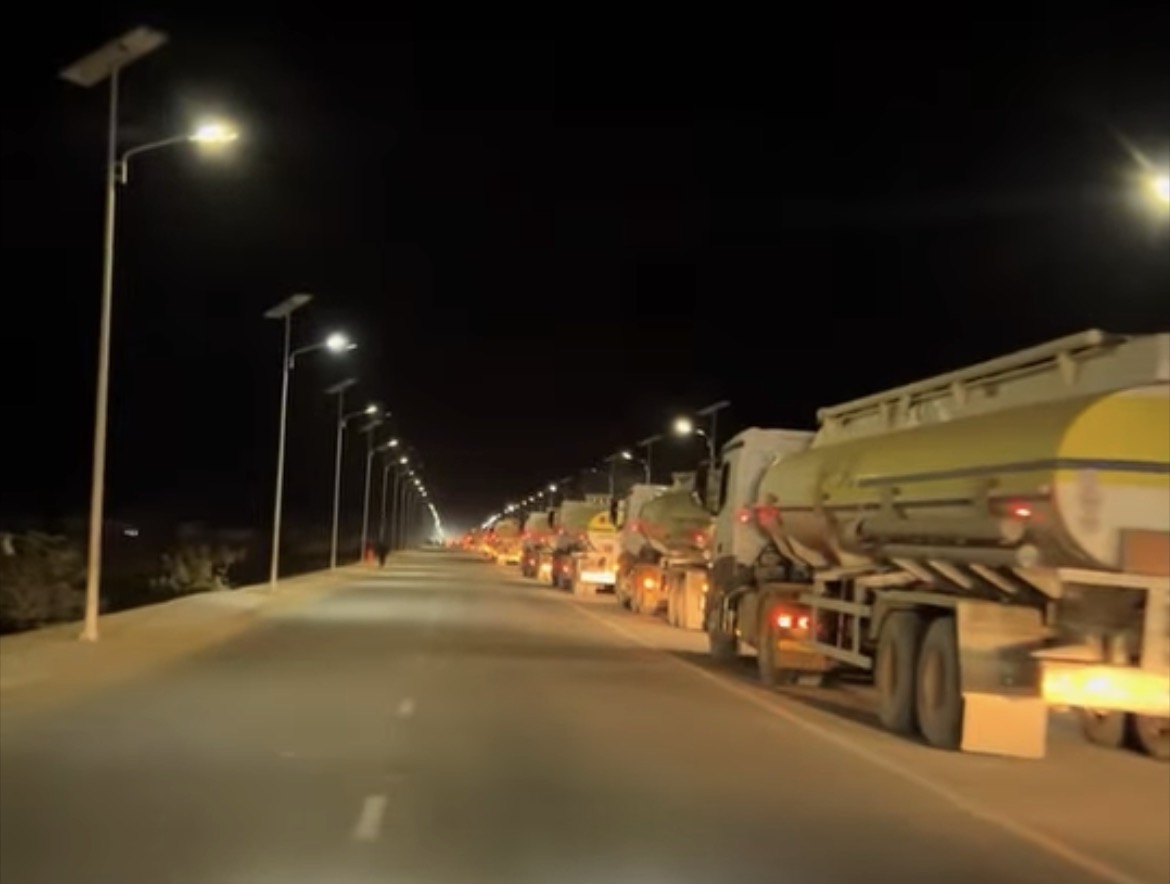
The recent delivery of 1.65 million liters of Algerian fuel on November 1, 2026 transported via 53 tanker trucks was a temporary bandage, not a cure. It eased pressure but did not resolve the underlying issues: inefficiencies in distribution, lack of storage capacity, pricing distortions, and poor financial coordination among state-owned entities.
The true measure of energy sovereignty is not found in export volumes or ceremonial announcements, but in the presence of fuel at local gas stations. In the hum of generators powering small shops. In the freedom of mobility for farmers, traders, and workers.
For the Tiani regime, this crisis is an inflection point. Without comprehensive transparency, accountability, and a coherent energy strategy, the promise of energy independence will remain a slogan and the people will continue to pay the price.
By Jeanne Ntouba — Journalist