Sixty days after his disappearance, prominent Nigerien journalist Moussa Kaka remains held in secret detention, with authorities providing no clarity on his status, location, or the charges against him. Despite international pressure and admissions of his detention, the military regime of General Abdourahamane Tiani has yet to offer verifiable details about his captivity, fueling concerns over state transparency and press freedom.
No trace, no answers: the mystery of Moussa Kaka’s disappearance
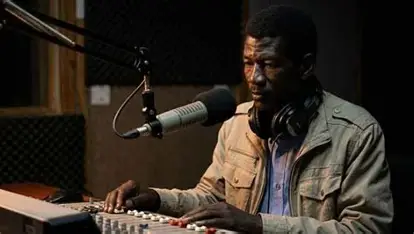
On August 31, 2026, Moussa Kaka, director-general of Radio Télévision Saraounia (RTS) and former correspondent for Radio France Internationale, left his office in Niamey shortly after 7 p.m. He never arrived home. Surveillance records confirm his vehicle vanished without a trace, and for weeks, his family, colleagues, and friends were left in the dark about his whereabouts or even his survival.
The timing of his disappearance is not isolated. Just 48 hours earlier, a military mutiny had erupted at key sites in Niamey, triggering a wave of arrests within the armed forces. While no direct connection has been established between these events and Kaka’s detention, the proximity has fueled speculation about political motivations behind his capture.
Government finally admits detention but offers no substance
After nearly a month without any official acknowledgment, the Nigerien government broke its silence during the Universal Periodic Review at the UN Human Rights Council in Geneva on September 25. Justice Minister Alio Daouda confirmed Kaka was being held, a revelation later reiterated to Reporters Without Borders on October 6, when officials acknowledged the journalist was alive.
Yet this belated admission has done little to resolve the crisis. Authorities have not disclosed:
The location of Kaka’s detention
The legal basis for his arrest
Any formal charges filed against him
Whether he has been brought before a judge
The conditions of his confinement
Each unanswered question deepens the perception of a regime prioritizing secrecy over accountability.
The general’s dilemma: is Tiani complicit or simply failing to govern?
While there is no public evidence that General Abdourahamane Tiani personally ordered Kaka’s detention, constitutional and legal frameworks place ultimate responsibility on the head of state. Under his watch, state institutions have failed to meet their obligations to transparency and due process.
Kaka’s case is not an isolated incident. His decades-long career in journalism, including a stint as RFI correspondent and coverage of political and security matters, has made him a high-profile figure. Notably, he was imprisoned for 379 days in 2007 under President Mamadou Tandja, a period that drew international condemnation before his eventual release.
His reappearance in detention under a military regime that claims to have restored stability raises troubling questions: Has the promise of a new chapter in Nigerien governance become a retreat into authoritarian habits silence, secrecy, and unchecked executive power?
International laws ignored: Niger flouts its own commitments
The Nigerien government’s refusal to disclose Kaka’s location or legal status directly contradicts its international obligations. In 2015, Niger ratified the International Convention for the Protection of All Persons from Enforced Disappearance, which explicitly prohibits secret detention in Article 17.
In response, human rights organizations have taken action. Reporters Without Borders has filed petitions with UN mechanisms on enforced disappearances, demanding immediate disclosure of Kaka’s status and location. Human Rights Watch, in an October 28 statement, demanded his release unless credible charges are presented, and called for full guarantees of his safety and legal rights.
Twenty-four years of silence: a pattern that cannot continue
Kaka’s case extends beyond journalism. It symbolizes a broader erosion of civil liberties under military rule. His detention now confirmed but shrouded in opacity exemplifies how state power can be wielded without oversight, accountability, or respect for the rule of law.
For the military regime, the silence is becoming unsustainable. A government that claims to uphold national sovereignty cannot justify detaining a citizen for two months without revealing his location, legal status, or the reasons for his confinement. Sovereignty is not a shield behind which authorities can conceal abuses of power.
The time for answers is long overdue. General Tiani and his administration must immediately disclose where Moussa Kaka is being held, present the charges against him in a transparent manner, and ensure he has access to legal counsel and family visits. Without this, the credibility of the Nigerien state both at home and abroad continues to erode.
What’s next for press freedom in Niger?
The unresolved detention of Moussa Kaka is more than a legal anomaly it is a litmus test for the Nigerien military regime’s commitment to transparency and human rights. If authorities continue to evade accountability, the signal sent to journalists, citizens, and the international community will be clear: in Niger, the right to information ends where state power begins.
The question now is not whether the government will act, but how long it can avoid doing so. Two months have passed. Silence is no longer an option.
By Nicolas Biyong — Journalist