Alassane Ouattara, President of Côte d’Ivoire, hosted two high-profile meetings at the presidential palace in Abidjan, bringing together Ousmane Diagana, Vice President of the World Bank for West and Central Africa, and Philippe Van De Vyvère, CEO of the Belgian maritime group Sea-Invest. These discussions underscored the dual approach the Ivorian leader is prioritizing for his new term: reinforcing partnerships with multilateral lenders while also drawing in more European private capital to bolster the nation’s port infrastructure.
Reaffirming World Bank ties for Côte d’Ivoire’s development
The meeting with Ousmane Diagana highlighted the deepening collaboration between Côte d’Ivoire and the World Bank, a relationship now pivotal to the country’s development financing. Côte d’Ivoire’s portfolio with the World Bank ranks among the largest in the subregion, with investments spanning education, social protection, rural infrastructure, and climate resilience. This engagement comes at a critical juncture as Abidjan finalizes the terms of its next budgetary support cycles amid a regional tightening of financing conditions.
For the Ivorian government, this visit carried significant political weight. It served as a clear message to international markets and bilateral partners that the country remains committed to the rigorous standards set by Bretton Woods institutions, even as neighboring nations reassess their financial alliances. As the leading economy in the West African Economic and Monetary Union (WAEMU), Côte d’Ivoire continues to experience robust growth. However, rising debt servicing costs and the financial demands of major infrastructure projects are placing increasing pressure on public finances.
Sea-Invest’s role in expanding Côte d’Ivoire’s port capacity
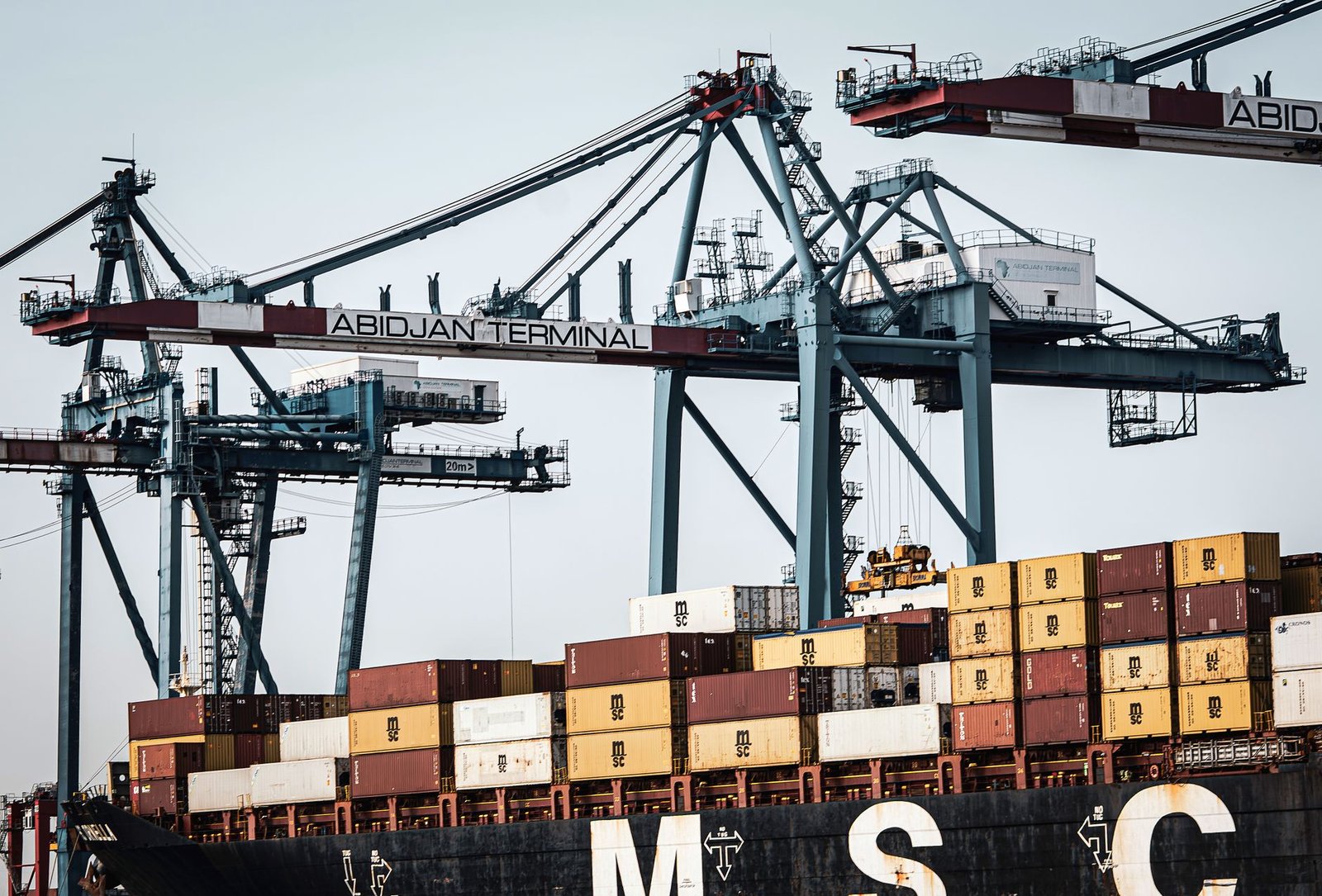
The audience with Philippe Van De Vyvère followed a different, yet complementary, agenda. Sea-Invest is a key player in West and Central Africa’s private port operations, with established footholds in Senegal, Cameroon, and Côte d’Ivoire. The group’s interest in Abidjan stems from the port’s growing role as a critical hub for containerized and bulk cargo traffic. The Autonomous Port of Abidjan handles the bulk of the country’s foreign trade and a significant share of freight destined for Mali and Burkina Faso.
The competition among global port operators is intense, with Philippine-based ICTSI, French logistics giant AGL (now under MSC’s umbrella), and Danish firm APM Terminals all vying for concessions along the Gulf of Guinea. In this competitive landscape, the involvement of a European independent operator like Sea-Invest offers Abidjan a welcome diversification of both economic and geopolitical influence. Ivorian authorities are keen to avoid over-reliance on a single operator, especially as cargo volumes at ports in San Pedro and Abidjan continue their steady climb.
Balancing multilateral and private investment strategies
These back-to-back meetings at the presidential palace reflect a deliberate diplomatic strategy: simultaneously engaging with multilateral lenders and European private investors. This approach has become even more vital as Côte d’Ivoire navigates the post-presidential political cycle, where international credibility and economic allure are essential to maintaining stability.
While no specific financial commitments were disclosed following the discussions, the sequence of meetings underscores the Ouattara administration’s commitment to maintaining open channels with key financial institutions and industry leaders capable of investing in transport infrastructure. Observers will be watching closely to see how these signals translate into the upcoming finance bill and the timeline for new port concessions.