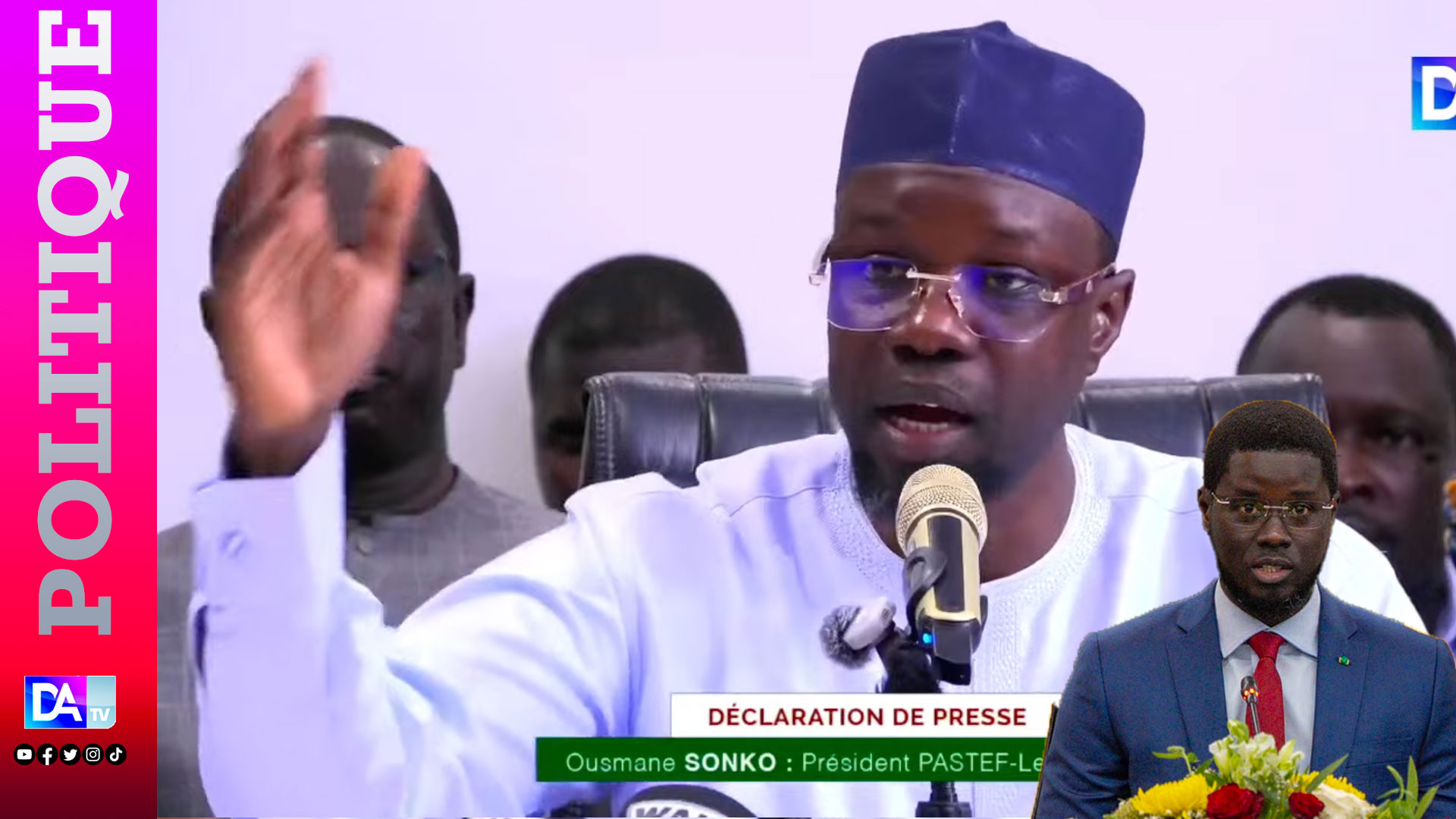
During a press briefing that sent shockwaves through political circles, Ousmane Sonko, leader of the Patriotic Front for Change (PASTEF), openly criticized the negotiations that shaped the formation of Senegal’s latest government. His remarks highlighted a growing rift between PASTEF and the presidency, signaling a breakdown in cooperation that had seemed inevitable yet remained unspoken until now.
Sonko revealed that discussions with Bassirou Diomaye Faye—now Prime Minister—unfolded against a backdrop of diverging priorities. While the two explored critical issues such as public debt, cost of living, contract renegotiations, governance, and accountability, they failed to reach common ground on any major issue. The most glaring disagreement emerged in matters of justice, where Sonko emphasized, « No agreement was ever reached », underscoring the depth of the divide.
PASTEF’s demands ignored in government formation
As the talks progressed, Sonko made a clear demand to the President: PASTEF should hold the majority of seats in the new 30-member cabinet. This request was flatly rejected, leaving the party with no meaningful influence over executive decisions. « We have no leverage over what happens », Sonko stated, explaining why PASTEF opted against joining the Al Amine Lô-led government.
The refusal to participate stems from a fundamental principle: in a democratic system, governance must reflect the will of the majority. Sonko argued that PASTEF, as a leading political force, should have shaped the government’s direction. Instead, the party found itself sidelined, a decision that Sonko framed as a strategic retreat rather than a surrender.
Coalition tensions expose cracks in Senegal’s political landscape
This public confrontation between Sonko and the presidency not only highlights personal friction but also exposes broader tensions within Senegal’s political fabric. The breakdown of negotiations underscores how coalition dynamics can collapse under the weight of unmet expectations and clashing visions for the country’s future. With Sonko’s party refusing to endorse the new government, questions arise about the stability of this administration and the sustainability of its policies in the face of opposition from a major political bloc.