Refugee women in Chad confront violence and inadequate healthcare
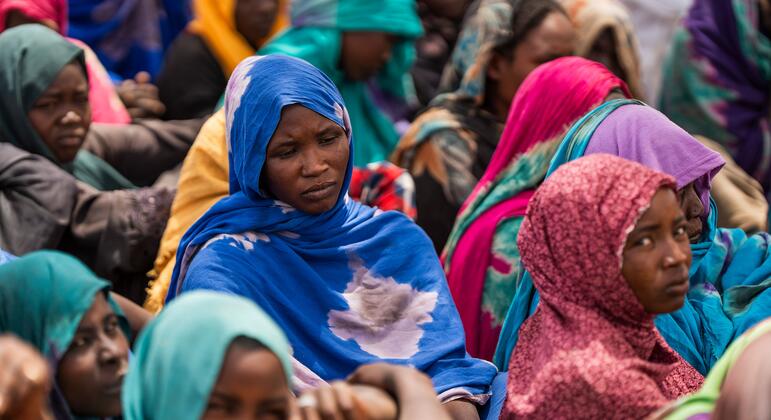
Chad is grappling with a mounting humanitarian crisis as over 1.3 million displaced individuals—predominantly women and children—seek refuge in a nation already struggling with poverty and an underfunded healthcare system. The situation has reached critical levels, according to a recent United Nations agency assessment.
Conflict in neighboring Sudan exacerbates challenges
During a week-long mission to eastern Chad, Andrew Saberton, Deputy Executive Director of the United Nations agency for sexual and reproductive health (UNFPA), witnessed firsthand the devastating impact of the conflict in Sudan on refugee women and girls. Visiting locations such as Abéché, Adré in the Ouaddaï region, and the Iridimi refugee camp—more than 1,000 kilometers from N’Djamena—he documented harrowing accounts of violence and systemic healthcare failures.
In Adré, near the Sudanese border, Saberton toured a UNFPA-supported center where women described the dangers they face when leaving camps to gather firewood. The journey, often necessary for survival, exposes them to harassment, assault, and sexual violence. “For these women, collecting firewood is a moment of terror,” he noted, citing testimonies from multiple camps.
Despite these overwhelming challenges, Saberton highlighted the remarkable resilience of women supported by psychosocial programs, vocational training, and income-generating initiatives. Their determination to rebuild their lives, even in the face of adversity, stood out as a beacon of hope amid the crisis.
Healthcare system overwhelmed by refugee influx
The Wadi Fira region, home to the Iridimi camp, is particularly strained. Local authorities report over 333,000 refugees distributed across eight camps, with healthcare facilities struggling to meet the overwhelming demand. At the camp’s health center, midwives handle up to 300 deliveries per month with severely limited resources.
Medical staff revealed that shortages of anesthetics sometimes prevent safe cesarean sections, a situation Saberton condemned unequivocally: “No woman should endure a cesarean delivery without anesthesia.” The scarcity of critical supplies underscores the dire state of maternal healthcare in the region.
Urgent financial gaps threaten essential services
The UNFPA’s Chad office faces a staggering 44% reduction in funding compared to 2025. Of the $18.7 million requested for 2026 to sustain maternal health services and protection programs, only 2.5% has been secured to date. This funding shortfall jeopardizes the lives of countless women and girls, particularly in a country already ranking among the worst globally for maternal mortality, with approximately 860 deaths per 100,000 live births.
Saberton emphasized the immediate need for international support: “For the women and girls in eastern Chad, aid means safe childbirth, care after violence, and a chance to survive.” Without urgent intervention, the humanitarian toll will continue to rise, leaving vulnerable populations without lifesaving resources.
A call for global solidarity
The crisis in Chad reflects a broader pattern of neglect toward displaced populations, particularly women and girls. As funding dwindles and violence persists, the international community must prioritize humanitarian aid to prevent further suffering. The stakes are clear: without action, the situation will only deteriorate, deepening the cycle of poverty and insecurity for those already at the margins of society.