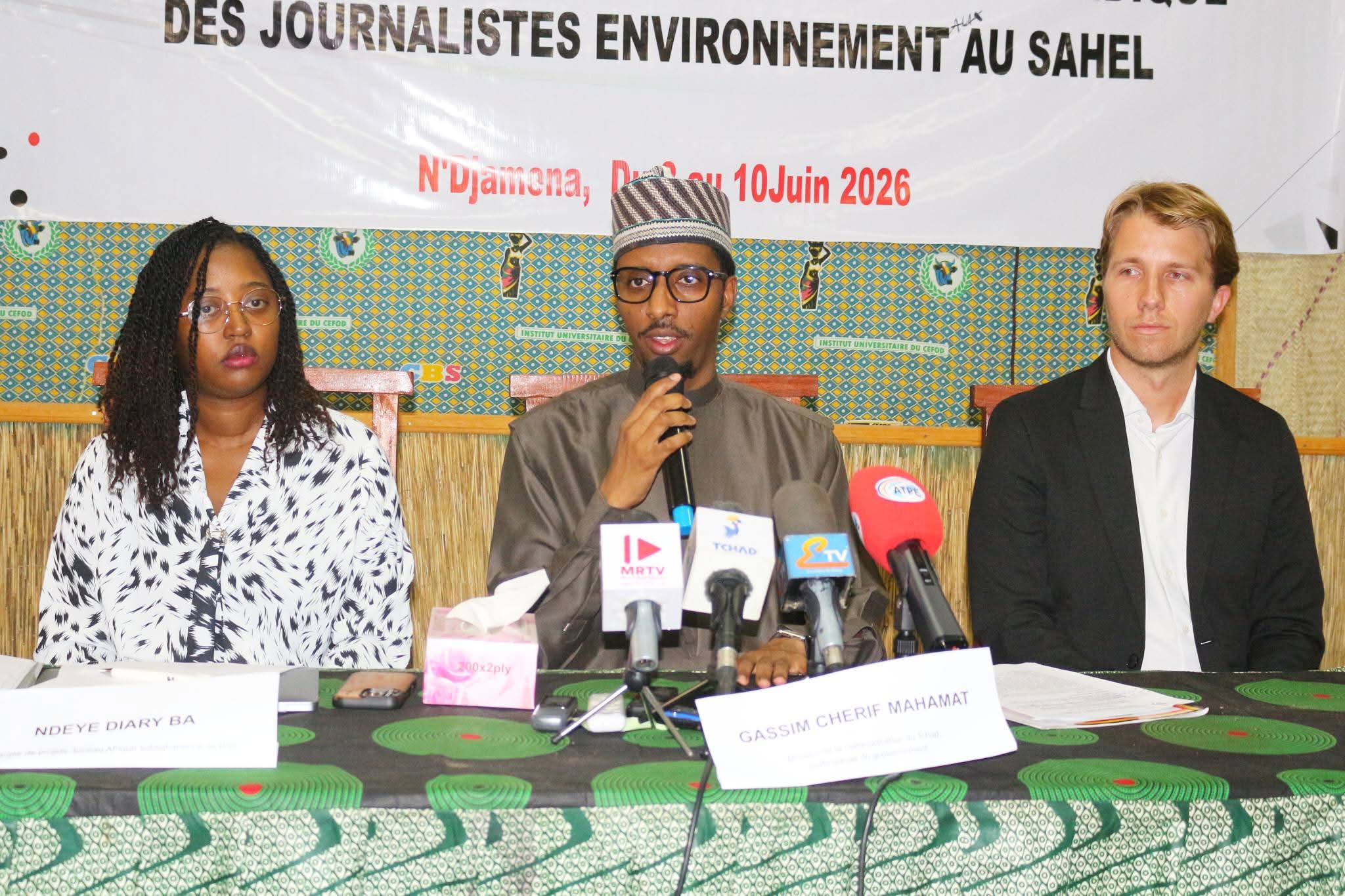
N’Djamena is hosting a pivotal three-day regional workshop this week, bringing together journalists from Chad, Burkina Faso, Mali, and Niger to strengthen legal safeguards for environmental reporters. Organized in partnership with government ministries overseeing Communication and Environment, the event focuses on equipping media professionals with the tools they need to navigate the complexities of their field.
The initiative, part of the broader project “Safeguarding environmental journalism in the Sahel,” aims to enhance the working conditions of journalists covering environmental issues. Participants will delve into their legal rights, existing protection mechanisms, and strategies to mitigate professional risks, while fostering collaboration between journalists, legal experts, and human rights advocates.
Empowering journalists against threats and misinformation
Ndeye Diary Ba, Project Lead for Sub-Saharan Africa at Reporters Without Borders, highlighted the critical role of this training in empowering journalists to carry out their work safely. “This workshop provides a platform for reporters to discuss sensitive topics, analyze national and regional legal frameworks, and sharpen their skills in digital security and risk management,” she explained.
The sessions are designed to address the unique challenges faced by environmental journalists in the Sahel, where press freedom and safety are often under threat. By equipping participants with practical tools, the training seeks to improve their ability to report on environmental crises while minimizing personal risks.
A ministerial endorsement for press freedom and environmental advocacy
Gassim Cherif Mahamat, Chad’s Minister of Communication and Government Spokesperson, underscored the importance of hosting the workshop in Chad. He emphasized the shared struggles of Sahelian nations in protecting journalists and upholding press freedom, particularly in the context of environmental reporting.
“Environmental journalists play a vital role in raising public awareness about pressing ecological issues,” he said. “However, their ability to operate safely and effectively hinges on strong legal protections and access to accurate information. This training will equip participants with essential skills in risk assessment, legal analysis, and combating disinformation—tools that are now indispensable in modern journalism.”
The workshop will also serve as a forum for participants to share experiences and best practices, reinforcing their capacity to inform the public about environmental challenges while working under safer conditions.