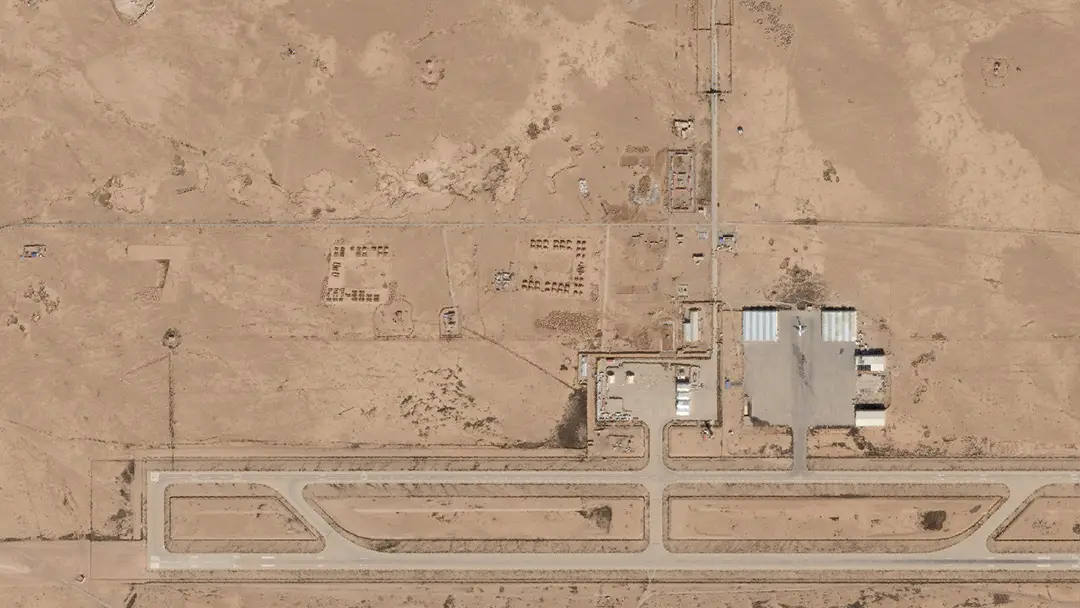
Russia’s growing military footprint in North Africa has taken a new turn with intensified activities across six key Libyan air bases, where Moscow is not only deploying advanced weaponry and personnel but also expanding infrastructure to sustain its operations.
The six strategic locations—Al-Joufra, Al-Khadim, Al-Qardabiyah, Brak Al-Shati, Maaten al-Sarra, and Tamenhant—are spread across Libya and now house an array of military assets, including air defense systems, MiG-29 fighter jets, and drones. Russian military personnel and mercenaries are actively present, with reports indicating plans to invest further in the port and air base of Tobruk.
From Syria to Libya: A strategic shift in Russian military operations
Before the fall of Syrian leader Bashar al-Assad in December 2024, Russia relied on Syria as a critical transit hub for arms, equipment, and personnel moving between the Middle East and Africa. However, with the Syrian route compromised, Moscow pivoted its strategy toward Libya, where it initially faced setbacks in securing a foothold before pushing deeper into the country’s interior.
The air base at Maaten al-Sarra, strategically positioned near the borders of Chad and Sudan, has emerged as a focal point for Russian destabilization efforts in the Sahel. Once abandoned since 2011, the base was restored in December 2024 with Syrian troops deployed by Russia to rebuild its infrastructure, including runways and storage facilities.
Analysts warn that the base now enables Moscow to supply arms directly to Burkina Faso, Mali, and Sudan. “A Russian presence at Maaten al-Sarra would allow Moscow to discreetly ship weapons into Sudanese or Chadian territory,” noted security expert Andrew McGregor in a report for Eurasia Daily Monitor.
Obstacles to peace: how Russian presence undermines Libya’s unity
Russia’s military involvement in Libya is also complicating efforts to unify the country under a single government. The presence of foreign troops and mercenaries, including those linked to Moscow, has weakened initiatives aimed at expelling external forces. “This military footprint acts as a barrier to a lasting peace agreement, empowering foreign-backed factions to resist reconciliation efforts,” stated analyst Ali Bin Musa in a study for the Middle East Council on Global Affairs.
Al-Khadim: a hub for arms trafficking and regional influence
The air base near Benghazi, located roughly 100 km to the east, has become a critical node for operations involving arms trafficking and resource exploitation across the region. In late 2023, Russian-linked paramilitary forces reportedly used Al-Khadim to supply weapons to Sudan’s Rapid Support Forces during the country’s ongoing civil conflict.
Recent upgrades to the base include three new hangars, a recreational facility, and likely a communications tower, along with temporary housing and support buildings. By 2026, a barracks was added to accommodate expanding operations. Investigative reports also revealed that a Gazprom affiliate traveled from Al-Khadim to a Russia-controlled mine in the Central African Republic in 2023, posting photos of the journey on social media.
Tearline’s satellite analysis confirmed regular deployments of Russian personnel to Al-Khadim, including identifying a Russian officer from the 102nd Motorized Rifle Division stationed at the base.
Al-Joufra and Al-Qardabiyah: logistical strengthening and perimeter security
Russian forces have operated from the central Libya air base of Al-Joufra since 2019, with recent improvements including renovated hangars, small buildings, barriers, and additional storage. The base near the international airport of Syrte, Al-Qardabiyah, has seen Russian activity since 2022, with new infrastructure, runway repairs, and upgraded perimeter defenses added in 2024. A hangar was also restored this year.
Brak Al-Shati and Tamenhant: expansion and mercenary logistics
In the southwestern region of Libya, the air base at Brak Al-Shati has seen a surge in Russian operations since March 2024. Recent construction includes at least one new hangar and two buildings likely used for aircraft maintenance, while personnel numbers have risen from 300 to 450 since December 2024.
The air base at Tamenhant, located in southern Libya, has long served as a launchpad for Wagner Group mercenaries—now part of the Africa Corps—to conduct military operations and facilitate arms shipments to Sudan. Recent expansion projects include new buildings likely used for housing, a renovated road connecting the runway to hangars, and modifications to the landing strip.