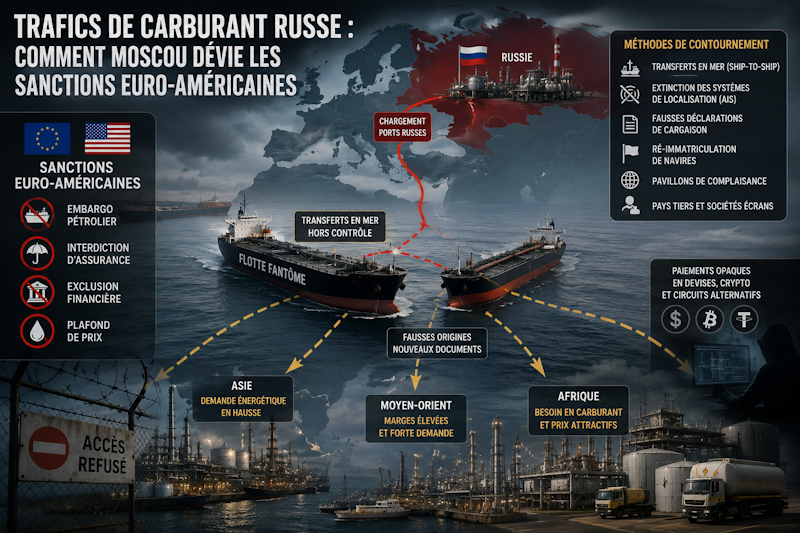
Investigative reports have uncovered a sophisticated network funneling Russian oil products into markets locked out by Western sanctions following Moscow’s actions in Ukraine. At the heart of this operation lies Morocco, a key transit hub where fuel shipments are rerouted and rebranded to obscure their origins.
Geneva-based trader orchestrates oil flows to Morocco
Morocco emerged in 2025 as North Africa’s top importer of Russian petroleum products, a shift facilitated by Alvari SA, a discreet trading firm headquartered in Geneva. The company facilitated multimillion-dollar shipments, including three tankers—Tranquil Sea, Duke II, and Eldia—transporting fuel from Russian Baltic terminals to Moroccan ports such as Jorf Lasfar and Mohammedia.
The Tranquil Sea case exemplifies the tactics used to evade scrutiny. British sanctions lists flagged the vessel in October 2025 while it was en route to Morocco, followed by EU and Swiss sanctions. Ukrainian defense authorities claim the ship was previously linked to espionage activities targeting NATO military and aerial operations and was detained by Finland for allegedly damaging an undersea cable. Alvari SA denied any involvement in chartering or operating these vessels, according to legal counsel.
Fake origins: Turkmen labels hide Russian fuel
The true source of the fuel was obscured using a Cypriot Chamber of Commerce certificate falsely attributing the diesel’s origin to Turkmenistan. Ship-to-ship transfers in the Mediterranean, near Gibraltar, were conducted under Off Port Limits (OPL) operations—typically reserved for minor logistics, not high-risk fuel transfers. The transactions were settled in USD between Attijariwafa Bank, controlled by the Al Mada royal holding, and the Tangier-based offshore branch of the Banque Centrale Populaire.
Moroccan distributors reportedly secured discounts of up to $7 per metric ton compared to European benchmarks, while non-Russian fuel traded at a $15 premium. This price advantage, amounting to roughly $22 per ton in savings, did not translate to lower pump prices.
Diplomatic timing raised eyebrows as Nasser Bourita, Morocco’s foreign minister, met with his Russian counterpart Sergey Lavrov in Moscow just days before a critical UN Security Council vote on Western Sahara, where Russia abstained—a decision favoring Rabat’s stance.
Spain detects suspicious fuel imports from Morocco
Spanish media documented a parallel concern: a surge in Moroccan diesel exports to Spain. Industry analysts suspect a rerouting strategy allowing Russian fuel to re-enter the EU, exploiting Morocco’s lack of refining capacity. Official data showed Morocco imported 645,000 tons of Russian diesel in 2025, rising to 489,000 tons in early 2026, accounting for 45% of its total fuel imports.
Before the Ukraine war and 2022 EU sanctions, Morocco did not export diesel to Spain. However, after heightened tensions in the Middle East and the closure of the Strait of Hormuz, 76,000 tons of Moroccan-origin diesel arrived in Spain between March and April 2026—a near-total absence prior to these events. Shipments were tracked at ports in Tarragona, Barcelona, and Bilbao between April and June 2026.
Spanish refiners expressed concerns over unfair competition, with the Spanish Fuel Industry Association (AICE) emphasizing the need to combat fraud in hydrocarbon imports that could distort market fairness.
Two investigations, one conclusion
Together, these reports paint a consistent picture: Russian oil, relabeled and rerouted through Morocco, may ultimately find its way back into the EU. While neither investigation claims definitive proof of every shipment’s exact path, both rely on strong circumstantial evidence, including maritime tracking data (Kpler), customs records, and industry testimonies. Proving the origin of blended refined products in global trade networks remains a persistent challenge.