The Sahel at a Crossroads: Mali’s Strategic Collapse
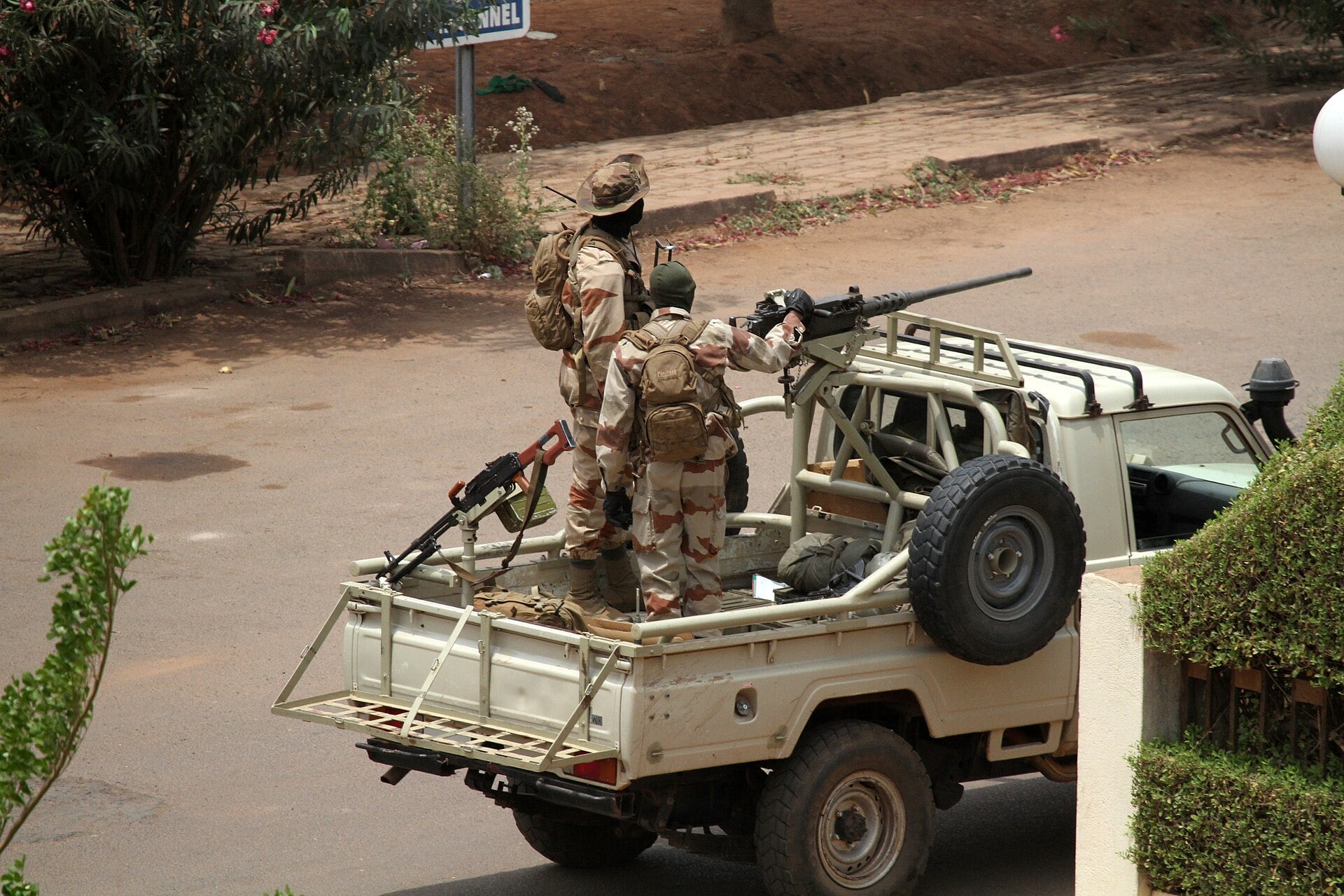
On April 25, a coordinated assault unfolded across Mali that transcended a mere escalation of violence. This synchronized offensive by Islamist militants and Tuareg separatists marked a critical turning point in the nation’s decade-long security crisis. Military outposts and civilian hubs were targeted simultaneously, culminating in the seizure of Kidal—a northern stronghold of immense strategic value—from Russian-backed government forces. The assault’s sophistication and scale now pose a direct threat to Bamako, signaling that the conflict has entered a new, more dangerous phase.
The Junta’s High-Stakes Gamble Backfires
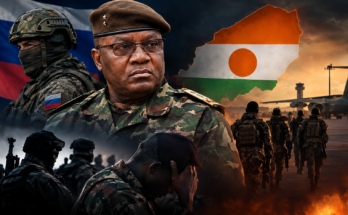
The current crisis in Mali traces its roots to the 2021 coup, when Colonel Assimi Goita’s military junta dismantled French military cooperation, expelled international peacekeeping forces (MINUSMA), and turned to the Wagner Group—now operating under Russian state control—for security. Western observers cautioned that this shift would create a dangerous power vacuum. The junta dismissed these concerns as interference, but the April offensive has confirmed their worst predictions.
Far from serving as an effective counter-insurgency force, Wagner’s presence in Mali has proven insufficient. The group’s failure to hold Kidal, a historic stronghold of Tuareg resistance, underscores the inadequacy of their strategy. The insurgents, rather than being subdued, have demonstrated remarkable adaptability, coordination, and resilience. By trading French logistical support and regional expertise for Russian firepower, the junta has gained little beyond a false sense of security. Meanwhile, the Islamist-Tuareg coalition driving the offensive has emerged as a formidable adversary, uniting forces that have long been at odds to exploit the junta’s perceived weakness.
Algeria’s Dilemma: A Regional Crisis at Its Doorstep
For Algeria, Mali’s unraveling is more than a distant conflict—it is an immediate threat to national security. The two nations share a long, porous border that has long served as a conduit for arms trafficking, drug smuggling, migrant flows, and militant recruitment. Algerian policymakers recognize all too well that instability in Mali does not remain confined; it spreads, metastasizes, and ultimately threatens Algeria’s own stability.
The irony of Algeria’s current position is stark. Once a key mediator, Algiers played a pivotal role in brokering the 2015 Algiers Peace Agreement between Bamako and Tuareg factions. However, the agreement’s collapse in early 2024—following the junta’s formal withdrawal—was a deliberate snub that Algerian officials took personally. Tensions escalated further in March 2025 when Algerian forces intercepted a Malian drone near the shared border, an incident that triggered a diplomatic rupture with Bamako and its allies in Burkina Faso and Niger, all members of the Russia-aligned Alliance of Sahel States.
Algeria now faces an impossible reality: it lacks the leverage to influence Mali’s trajectory, cannot collaborate with a junta that views it with hostility, and cannot afford to ignore the crisis. The consequences of inaction—including the establishment of militant sanctuaries along Algeria’s southern border—pose an existential risk to its internal security. While Algerian Foreign Minister Ahmed Attaf has publicly reaffirmed support for Mali’s territorial integrity and condemned terrorism, such declarations cannot replace the diplomatic channels that no longer exist.
The United States’ Absence Leaves a Dangerous Void
The Sahel’s descent into chaos is also a story of American disengagement. Under pressure from Moscow-aligned governments in the region, the U.S. significantly reduced its counter-terrorism presence in West Africa, leaving a void that has been filled by both Russian military contractors and Islamist networks. The latter have expanded their influence by providing rudimentary governance, imposing taxes, and recruiting in areas abandoned by the state—filling the power vacuum with alarming efficiency.
The unfolding tragedy in Mali serves as a stark warning to Washington. Military partnerships, intelligence sharing, and sustained counter-terrorism efforts are not peripheral to regional stability—they are its foundation. Their absence does not create neutrality; it invites occupation and escalation.
Three Possible Futures for Mali
The junta now faces three potential paths forward. The first involves negotiating a political settlement with Tuareg factions, trading territory for temporary peace—a move that could halt the military collapse but at a steep cost. Alternatively, the junta could intensify its military campaign, doubling down on Russian air and ground support to reclaim the north, though success is far from guaranteed. The third scenario, already underway, involves a series of tactical retreats and public assertions of legitimacy, a strategy that risks turning Bamako itself into a contested battleground.
For Algeria, each of these trajectories carries profound risks. The Sahel’s implosion is no longer a distant concern—it is unfolding at its border, demanding an urgent and effective response.