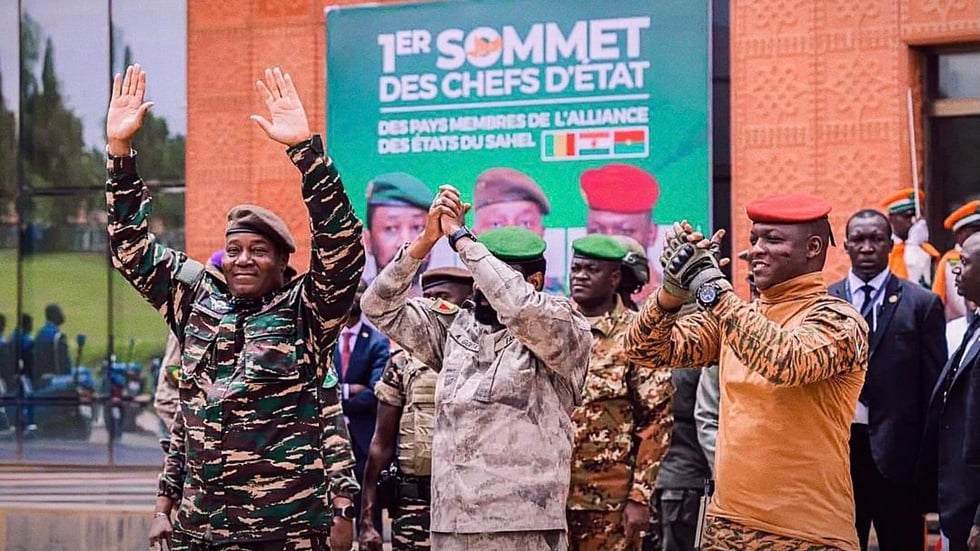
In the unpredictable landscape of geopolitics, timing can mean the difference between stability and crisis. The recent decision by the Alliance of Sahel States (AES)—comprising military-led governments in Mali, Burkina Faso, and Niger—to sever ties with the Economic Community of West African States (ECOWAS) now appears less like a bold move for autonomy and more like a risky miscalculation with escalating consequences.
As violent extremist groups such as Boko Haram and the Islamic State West Africa Province (ISWAP) continue to destabilize West Africa, unity among regional nations should be the cornerstone of any effective response. Instead, the AES bloc’s withdrawal has introduced fragmentation—an approach that, in matters of security, is not just ineffective but potentially catastrophic.
The AES justified its exit by accusing ECOWAS of serving as an extension of neo-colonial influence, particularly under French dominance. While historical grievances are valid, rejecting a regional security framework without establishing a strong, locally driven alternative weakens rather than strengthens sovereignty. True independence requires resilience, not isolation.
Russia’s limited promise as a security partner
Moscow has emerged as a potential replacement for ECOWAS in providing security support, but the realities on the ground tell a different story. Russia’s engagements in Africa have consistently followed a transactional model—support is contingent on mutual benefit and shifts when interests diverge. This pattern has been observed globally and offers no long-term guarantee for the Sahel states.
Recent coordinated attacks by insurgents across key Malian cities, including Bamako, Sevare, Mopti, Tessalit, Gao, Kati, and Kidal, have exposed critical weaknesses in the region’s defense. The anticipated protection from external alliances has proven unreliable, and the muted response from Burkina Faso and the Niger further raises concerns about the AES’s operational cohesion.
ECOWAS’s historic role in regional stability
The ECOWAS Monitoring Group (ECOMOG) demonstrated the power of collective action under Nigeria’s leadership during crises in Liberia and Sierra Leone, restoring stability despite imperfect execution. The bloc also intervened decisively in The Gambia, where former President Yahaya Jammeh’s refusal to accept electoral defeat was swiftly addressed, preventing a deeper political crisis.
These examples highlight a fundamental truth: West Africa’s security challenges do not respect borders. Instability in one nation inevitably spills over, affecting neighboring countries. Mali’s turmoil cannot be contained within its borders, nor can Burkina Faso’s unrest remain isolated. The Sahel’s security is inherently interlinked, demanding a unified rather than fragmented approach.
The path to true sovereignty: self-reliance over dependency
While some point to Iran as a model of resilience, the lesson lies not in defiance but in capacity-building. A strong defense strategy must prioritize domestic military strength, intelligence capabilities, and technological innovation. External partnerships can provide temporary support, but lasting sovereignty depends on internal resilience.
The Sahel nations must develop homegrown solutions, including local intelligence networks, rapid-response units, and cross-border early warning systems. These measures, combined with renewed collaboration with ECOWAS, can restore stability without surrendering autonomy. The goal is a balanced approach—one that blends independence with interdependence.
A strategic recalibration for the Sahel
For the AES states, the way forward involves two critical steps:
- Invest in indigenous security infrastructure: Strengthen local defense systems, community-based protection, and regional rapid-response capabilities to reduce reliance on external actors.
- Re-engage ECOWAS constructively: Return to the negotiating table not as supplicants but as partners, advocating for reforms that address concerns about external influence while reinforcing collective security.
ECOWAS, for its part, must address perceptions of being overly influenced by foreign powers, improve governance, and reaffirm its commitment to serving African interests. The bloc’s strength lies in its unity, and its failure to adapt risks leaving member states vulnerable.
The Sahel does not need isolation—it needs alignment. A return to ECOWAS, not as a concession of weakness but as a recognition of shared destiny, offers the best path to survival. The alternative—continued division—risks ceding control to a common enemy that respects no borders or flags.
In the end, the choice for the Sahel is clear: reunite under a framework that prioritizes regional solidarity and homegrown resilience, or face the growing threat of instability alone.