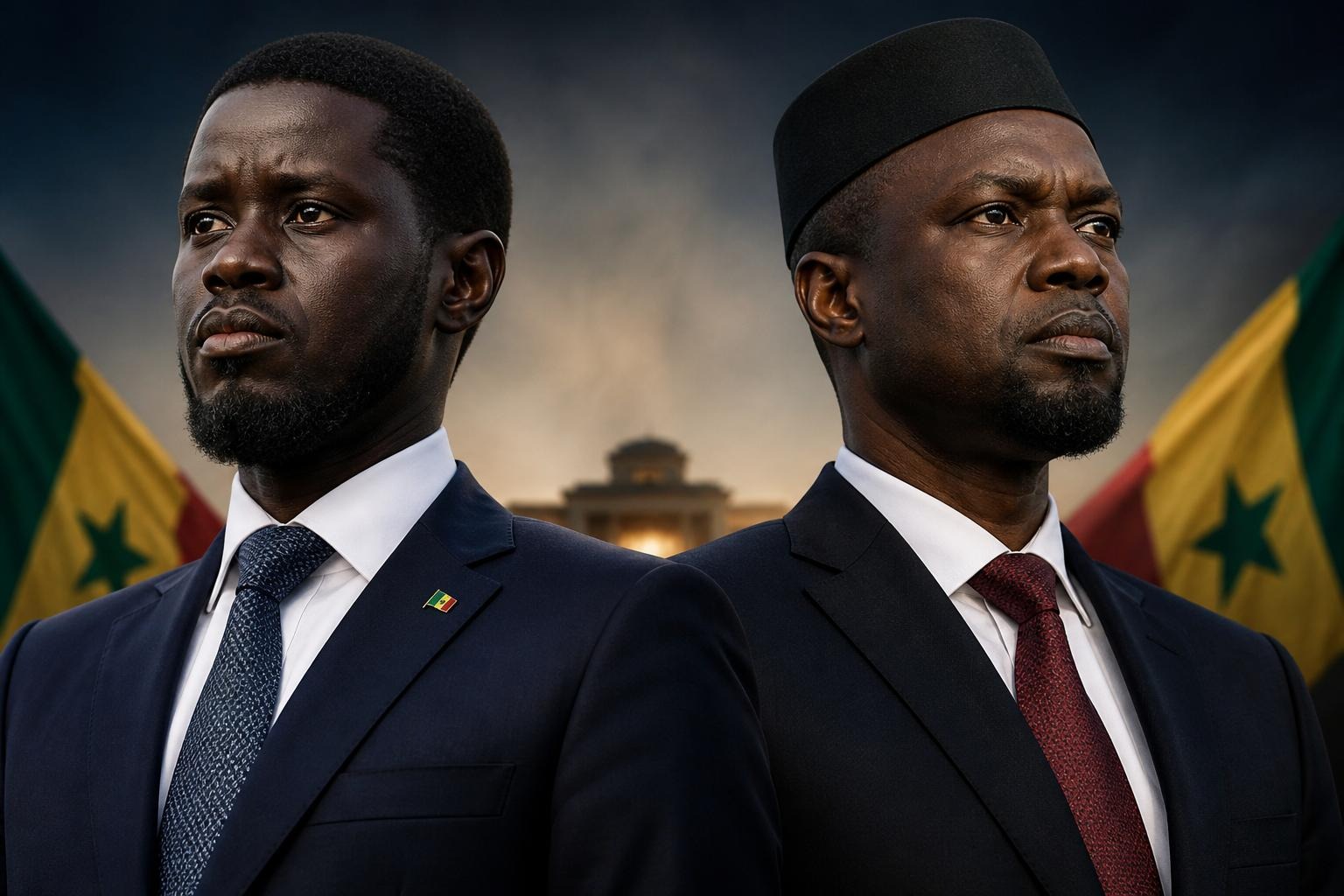
The early days of political harmony are fading as realpolitik takes hold at the highest levels of the Senegalese government. During the weekend of May 2 and 3, 2026, a significant shift occurred in the dynamic between President Bassirou Diomaye Faye and Prime Minister Ousmane Sonko. By publicly addressing his differences with the Pastef party and expressing his readiness to separate for the sake of national interests, the head of state challenged the long-held image of an inseparable duo.
A pivotal weekend of political clarification
A single remark during a national press interview ignited a firestorm. While the official narrative previously depicted a unified team—a mentor and disciple working in lockstep—the tone has shifted. President Faye demonstrated unexpected firmness when asked about the friction between government policy and the aggressive rhetoric of Pastef leaders.
He reminded the public that he had officially distanced himself from the party to represent all of Sénégal. His assertion that his ultimate responsibility is to the citizens, rather than partisan logic, sent shockwaves through the political landscape of Dakar. By stating he would not hesitate to part ways if party interests conflicted with his state vision, he definitively marked his territory.
The challenge of Ousmane Sonko’s influence
To understand these tensions, one must look at the administration’s origins. Having been elected on the promise that “voting for Diomaye is voting for Sonko,” the President has had to navigate the constant media presence of his Prime Minister. The charismatic leader of Pastef has maintained his role as a party chief, often holding rallies and making statements that bypass the official communications of the Palace.
- Strategic differences: Divergent views on national debt and international relations have surfaced, with the Prime Minister favoring radical change while the President adopts a more diplomatic approach.
- Administrative appointments: Tensions have risen over the President’s preference for technocrats versus party pressure to reward loyal activists.
- Contrasting styles: The fiery nature of Ousmane Sonko stands in sharp contrast to the calm, institutional gravity Bassirou Diomaye Faye seeks to project.
Is a political split on the horizon?
While a formal separation may not be immediate, it is now a clear political possibility. The President appears to recognize that establishing his legacy requires him to lead independently. Although the Prime Minister’s circle attempts to frame these developments as a simple division of labor, the President’s message indicates a deeper shift. He has signaled that the presidency will not be held captive by any specific interest group.
This transition places Sénégal in a period of institutional uncertainty. Historical precedents of executive tension raise concerns about potential government paralysis. If a split occurs, President Faye will face the daunting task of governing without the full mobilization of the Pastef machine, potentially requiring him to seek new alliances or rely on executive decrees.
The stakes of executive autonomy
The primary challenge for Bassirou Diomaye Faye is to maintain international confidence in Sénégal‘s stability while proving his leadership to the public. National opinion is currently split. Many young supporters remains devoted to Ousmane Sonko‘s charisma and may view this shift as a betrayal. Conversely, those who prioritize legal and institutional stability welcome a president who fully embraces his executive powers.
The President is engaged in a high-stakes game of political chess. He must assert his authority without sparking a social crisis that political opponents could exploit. The core issue is no longer the personal relationship between the two men, but whether the state structure can sustain two distinct centers of power.
Conclusion: A new era of statehood
The current landscape suggests an end to political idealism. Governance is less about brotherhood and more about the exercise of power. Bassirou Diomaye Faye has reaffirmed that the Constitution grants him specific powers that he is now determined to use. While the partnership was essential for winning the election, it now appears to be a hurdle in governing. Sénégal is entering a mature phase where the interests of the state must outweigh the party, a boundary the President has now clearly defined.