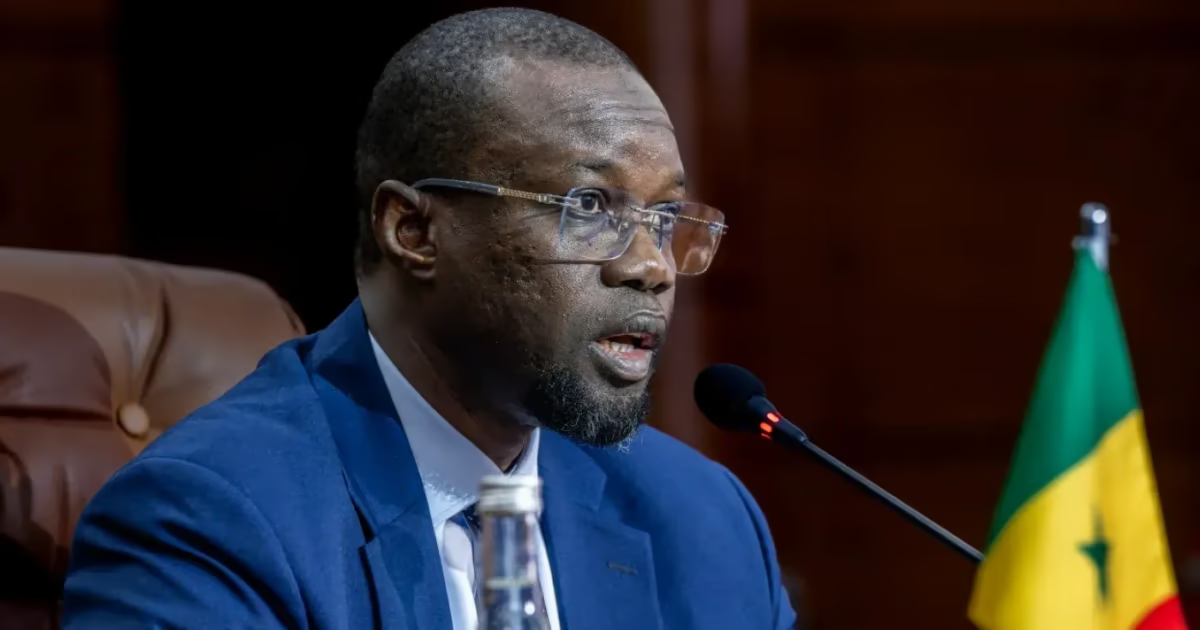
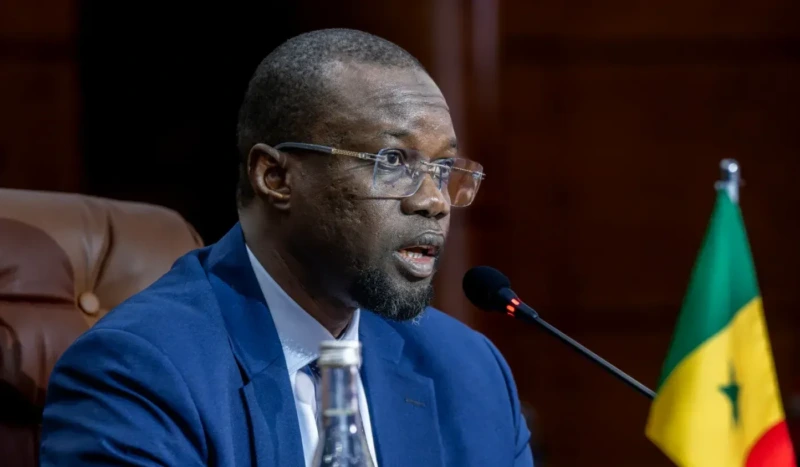
Recent high-level judicial appointments in Senegal have sparked intense debate about their potential influence on the country’s political future. Political analyst Mamadou Wane, known as “Mao,” argues that President Bassirou Diomaye Faye’s moves are part of a calculated strategy to prevent Ousmane Sonko from contesting the 2029 presidential election—a gamble that may severely underestimate the resilience of the Senegalese people.
a strategic shift in the judiciary
The July 13, 2023 presidential decree reshaping Senegal’s judiciary—particularly the appointments of magistrates to the Constitutional Council and the Saint-Louis Court of Appeal—marks a decisive turning point. According to Mao Wane, President Faye is reviving elements of the neo-colonial order by placing loyalists of the former regime in pivotal roles, with the apparent goal of politically sidelining Ousmane Sonko ahead of 2029.
The analyst highlights that two key appointees, Ousmane Diagne and Serigne Bassirou Guèye, have longstanding conflicts with Sonko. Diagne, now president of the Constitutional Council, faced criticism from Sonko for allegedly delaying accountability measures and shielding powerful figures from justice. Guèye, appointed as Advocate General at the Saint-Louis Court of Appeal, is accused by Sonko of manipulating an investigation report years ago to frame him on politically motivated charges.
While Mao Wane refrains from judging Diagne hastily, he questions Guèye’s suitability for judicial office after such allegations: “It’s unacceptable for a magistrate to resort to such tactics. Once trust is broken, it cannot be restored.”
neo-colonial restoration or democratic backslide?
Wane characterizes the current political maneuvering as a form of revisionism: an attempt to reverse democratic gains and restore an outdated system. He warns that the government’s push to sideline Sonko—through judicial and legislative means—ignores the deep roots of Senegalese civic engagement. “Those who believe they can erase Sonko from the political map forget that the Senegalese people have a history of defiance. The 2021–2024 struggle proved that mass mobilization can topple even the most entrenched regimes,” he states.
The sociologist points out that the 2023 judicial appointments reflect a broader effort to rebuild a centrist political bloc using former officials from the previous coalition. “What we’re seeing isn’t just a change in leadership—it’s a return to an old order,” he asserts. “But this time, the public won’t be fooled.”
sonko’s enduring influence and the rise of a new politics
Despite the reshuffle, Sonko’s party, the PASTEF, remains a dominant force. Mao Wane notes the unprecedented demand for party membership cards as evidence of Sonko’s enduring appeal. “No other movement in Senegal today matches the PASTEF in organization, activism, or leadership,” he says. “The people have chosen a path—one rooted in justice, sovereignty, and resistance.”
He underscores that the Senegalese population has reached a new level of political maturity, forged through the 2000 and 2012 transitions and the three-year resistance movement of 2021–2024. “The public now understands how to challenge power structures. They’ve learned how to force reversals—no matter the cost. Any attempt to sideline Sonko will only strengthen the resolve of his supporters,” he concludes.