Key takeaways
- Dates: July 13th and 14th, 2026, at the Grand Théâtre National Doudou Ndiaye Coumba Rose in Dakar
- First edition: Premier national forum dedicated to Senegal’s sustainable and inclusive blue economy
- Key stakeholders: Autonomous Port of Dakar, National Agency for Maritime Affairs (ANAM), Ministry of Maritime Economy
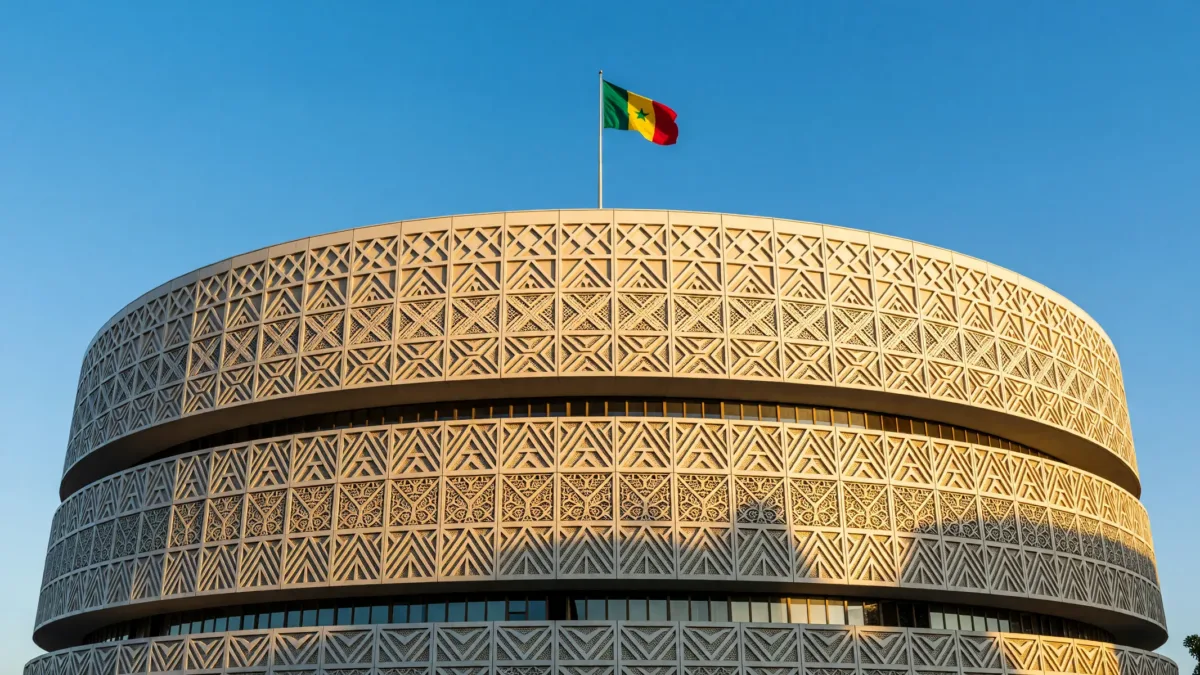
This weekend, Senegal is hosting its inaugural National Forum on Sustainable Maritime Transport and Logistics within the blue economy framework. The significant event unfolds at the Grand Théâtre National Doudou Ndiaye Coumba Rose in Dakar, held under the distinguished patronage of President Bassirou Diomaye Faye and the Minister of Fisheries and Maritime Economy.
This crucial initiative brings together major stakeholders from Senegal’s maritime sector, including the Autonomous Port of Dakar and the National Agency for Maritime Affairs (ANAM). The forum’s primary goal is to forge a comprehensive national strategy for sustainable and inclusive maritime development.
A strategic sector for West Africa
For Senegal, a coastal nation striving to enhance its position as a regional logistics hub, the blue economy holds immense strategic importance. The Autonomous Port of Dakar, whose active involvement in this forum is particularly noteworthy, stands as a cornerstone of West Africa’s maritime infrastructure.
This gathering aligns with a broader regional drive among African coastal nations seeking to optimize the utilization of their marine resources while upholding critical environmental imperatives. Port logistics, sustainable maritime transport, and the conservation of oceanic ecosystems are central themes of the discussions.
Unprecedented institutional mobilization
The forum’s organization under the patronage of President Bassirou Diomaye Faye and the Ministry of Maritime Economy underscores the Senegalese state’s high priority for the maritime sector. This inaugural event aims to lay the groundwork for a structured national policy.
The selection of the Grand Théâtre National Doudou Ndiaye Rose, an iconic venue in the capital, highlights the symbolic significance of this gathering. The Ministry of Maritime Economy has been instrumental in coordinating the engagement of various public and private stakeholders across the sector.
Senegal’s maritime context
Senegal boasts an Atlantic coastline stretching over 700 kilometers and an extensive maritime exclusive economic zone. The nation is actively pursuing the modernization of its port infrastructure and the expansion of its maritime industry amidst intensifying regional competition.
This initiative is part of a broader context where the Senegalese government is implementing numerous sectoral reforms to strengthen its strategic maritime position.
An inclusive blue economy model
The forum strongly emphasizes the inclusive aspect of the blue economy, seeking to integrate coastal communities and artisanal fishers into the overarching maritime development strategy. This approach aims to harmonize economic growth with the preservation of traditional sea-based livelihoods.
COSEC, alongside public institutions, is actively involved in shaping this vision. The ultimate objective is to establish a maritime development model that benefits all segments of Senegalese society, extending beyond purely industrial stakeholders.
Implications for France and Europe
For France, a long-standing economic player and significant trade partner in Senegal, this forum signals the increasing maturity of African maritime strategies. French companies within the maritime and logistics sectors are closely monitoring the evolution of these policies, which are reshaping regional dynamics.
The European Union, involved in numerous maritime cooperation programs with West Africa, is also tracking these developments intently. The growing prominence of Senegalese ports is reconfiguring trade flows between Africa and Europe, impacting maritime routes and logistical partnerships.
This inaugural national forum represents a pivotal step in structuring Senegal’s blue economy. The outcomes of the two-day discussions are expected to guide future investments and sector reforms in the years to come.