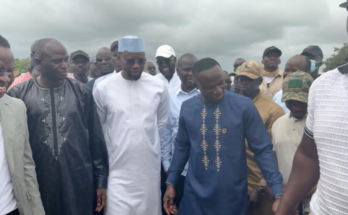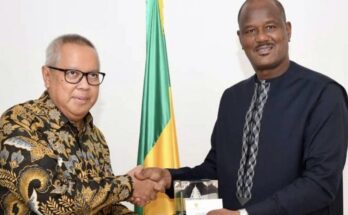
The political landscape in Senegal is currently animated by a significant public statement that resonates far beyond activist circles. Lansana Gagny Sakho, a seasoned technocrat long affiliated with the movement led by Prime Minister Ousmane Sonko, has openly voiced his remorse regarding his previous commitment to the government leader. Sakho contends that he would never have joined this political dynamic if he had foreseen the direction the nation’s economic management would take. His sharp remarks signify a notable shift in the relationship between the executive branch and some of its former allies.
A distancing directly targeting economic governance
Lansana Gagny Sakho’s message transcends a mere stylistic disagreement. The former senior official explicitly criticizes an approach that, in his view, is hindering Senegal’s economic progress. His critique is direct, holding the Prime Minister accountable for the challenges the country currently faces. Implicitly, this condemnation aligns with the perspective of several observers of the Senegalese economic climate since spring 2024: a slowdown in certain indicators, pressure on public finances, and persistent questions from technical and financial partners regarding the clarity of fiscal policy.
This public declaration emerges amidst ongoing debates in Dakar concerning debt sustainability and the review of public accounts. The government, which itself has highlighted a more deteriorated financial inheritance than initially disclosed, now faces scrutiny over its own capacity to rectify the situation. Therefore, criticism originating from a former political comrade carries particular symbolic weight, disrupting the image of unity projected by the ruling coalition since the victory of President Bassirou Diomaye Faye.
A political signal to the ruling coalition
Lansana Gagny Sakho’s chosen words convey a palpable sense of disillusionment. By asserting that he would not have followed Ousmane Sonko had he anticipated the unfolding of events, the former ally casts his statement as both a personal and political repudiation. Such a rupture is not trivial in a political sphere where the African Patriots of Senegal for Work, Ethics and Fraternity (Pastef) built their ascent on robust militant discipline and a proclaimed cohesion around their leader’s figure.
This action is likely to fuel internal discussions within the presidential movement. For several months, various voices, including intellectuals and technical cadres who supported the change in March 2024, have expressed reservations about the government’s methods. Criticisms range from the confrontational communication style to the perceived slowness of structural reforms promised during the campaign. Lansana Gagny Sakho’s declaration now crystallizes these reservations, giving them an identifiable public face.
A test for presidential camp cohesion
The actual impact of this public statement remains to be assessed. From a strictly political standpoint, Lansana Gagny Sakho does not command the electoral weight comparable to that of the ruling party. However, the resonance of his words extends beyond his individual person. It reveals a climate where internal divisions are becoming audible, and where the demand for economic results is emerging as the primary criterion for evaluating government action. Investors, donors, and regional partners are closely monitoring these signals.
The response from the presidential camp, or its silence, will be closely scrutinized. Ousmane Sonko, known for his direct communication style, possesses numerous channels for rebuttal. Yet, a verbal escalation with former associates risks reinforcing the perception of a government on the defensive. Fundamentally, the question at hand transcends the Prime Minister’s individual role: it concerns the ruling coalition’s ability to absorb internal criticism without fragmenting. In the coming weeks, the manner in which the executive directs its economic and budgetary policy will provide the most tangible answers to these challenges.