Persistent gaps in women’s political representation
Despite being hailed as a beacon of democracy in Africa, Senegal continues to grapple with significant challenges in gender representation within its decision-making bodies. Recent data reveals a stark imbalance: only 18 women lead municipalities out of 558, while just 3 preside over departmental councils out of 43. These figures come alongside a concerning trend in legislative elections, where female representation in the National Assembly dipped from 44.2% to 41% in the November 2024 polls, with women heading only 13% of candidate lists.
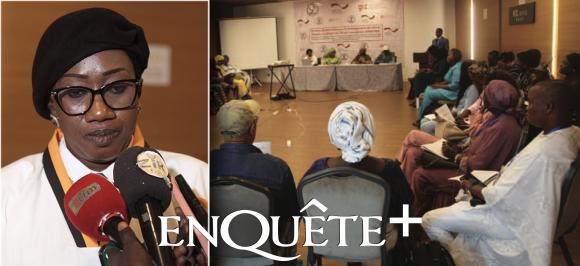
The Réseau des femmes leaders pour le développement (RFLD), a pan-African feminist network, has taken up this issue through an intensive two-day seminar focused on boosting women’s political participation in Senegal. Bator Seck, the organization’s Senegal focal point, emphasized that while Senegal has made strides with its 2010 parity law, the 2001 Constitution guaranteeing gender equality, and ratification of international human rights conventions, structural barriers continue to hinder women’s access to power.
Cultural, financial and media obstacles
Seck highlighted the multifaceted nature of these challenges: “These figures are far from mere statistics. They reflect deep-rooted structural obstacles, cultural resistance, and persistent inequalities in political financing, media visibility, and decision-making spaces. Yet Senegalese women are the backbone of this nation—they lead communities, drive local economies, champion social causes, educate, innovate, mobilize, and build peace. The question is no longer whether women are capable of governance, but why political systems continue to restrict their leadership access.”
The RFLD’s afrofeminist initiative
The seminar brought together 30 Senegalese women leaders—parliamentarians, party heads, local officials, activists, and civil society leaders—representing diverse generations, political affiliations, and social backgrounds. Their shared mission: to develop strategies that will fundamentally transform women’s political participation in Senegal. “During this gathering, we will share experiences, analyze challenges, and build solidarity networks capable of influencing public policies and electoral processes,” Seck stated. “We firmly believe democracy cannot be complete when women remain underrepresented in decision-making spheres. Senegal’s political future must be built with women, not just for them.”
The RFLD’s work extends beyond Senegal, as part of the Afrofeminist Initiative for Human Rights Development in Francophone West Africa program, supported by SEA-T and GIZ. The organization combines legislative advocacy, community organizing, local initiative funding, and open data use to defend women’s rights, sexual and reproductive health, civic space, and climate justice.
Building confidence and skills for leadership
Maman Diouf Fall, representing the Ministry of Family and Social Solidarity, underscored another critical challenge: self-confidence among women engaged in public life. “Many women possess the necessary skills and legitimacy but hesitate to fully occupy leadership spaces due to social pressures, persistent stereotypes, and the lack of structured support,” she noted. She emphasized the need for quality training programs in political leadership, public speaking, negotiation, governance, and strategic management to equip women for increasingly demanding political environments.
Fall also stressed the importance of technical skill development in policy analysis, project management, digital tools, community mobilization, and monitoring-evaluation—capabilities now essential for credible leadership. She pointed out that training opportunities often exclude rural women and those in vulnerable areas, where many are deeply engaged in their communities but lack access to capacity-building initiatives concentrated in urban centers.
The Ministry has implemented several programs to strengthen women’s and girls’ capacities, including leadership training, citizenship education, human rights awareness, and psychosocial support for vulnerable groups. These efforts contribute to women’s economic, social, and political participation while supporting community initiatives against child marriage, gender-based violence, and promoting girls’ education.
Fall concluded: “Beyond legal frameworks and commitments, our collective responsibility is to create conditions for women’s full, free, and effective participation in public life. This requires continuous social transformation, community sensitization, leadership development, and mentorship programs to guide young women toward decision-making spaces.”