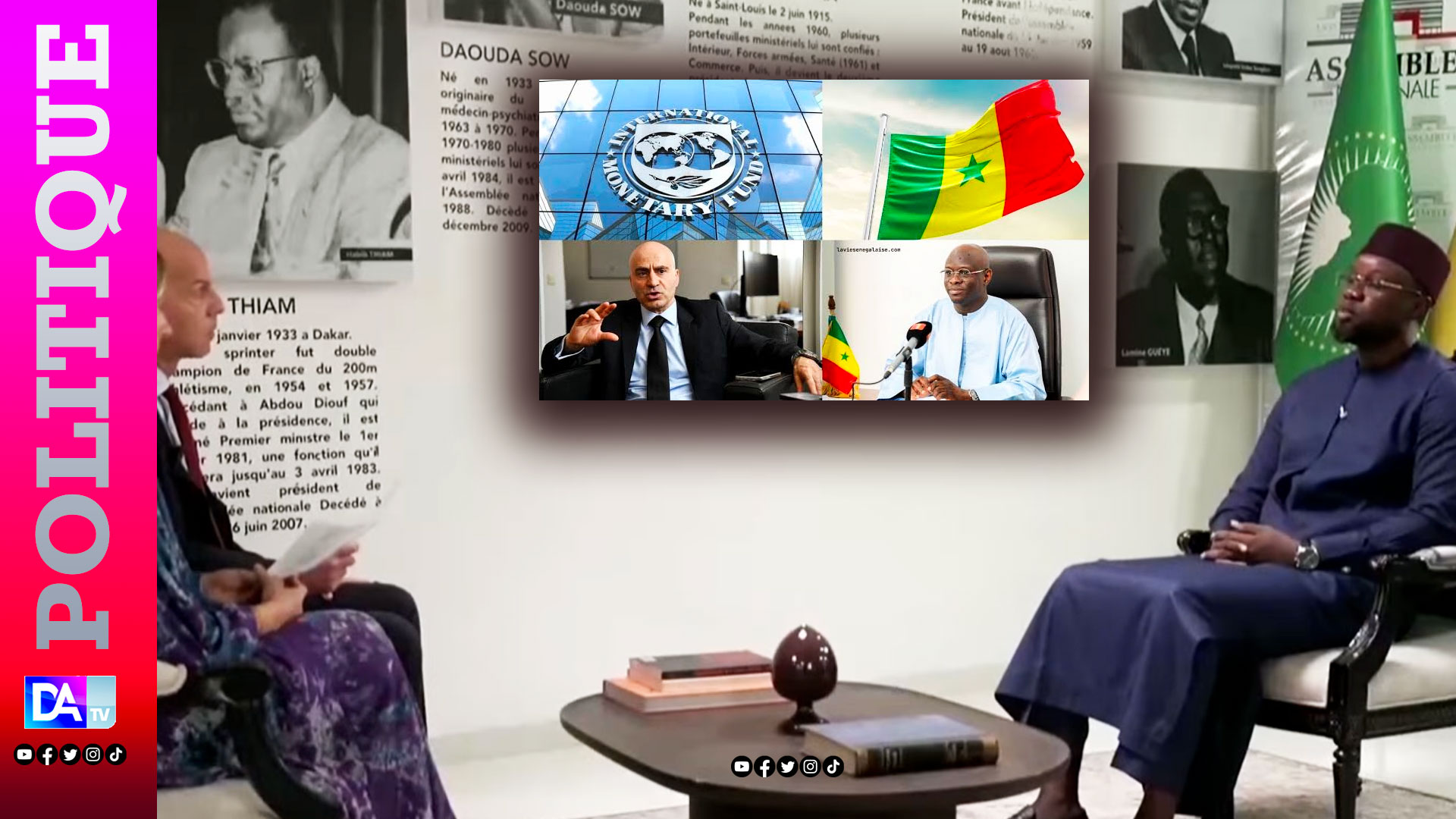
Speaking candidly about Senegal’s debt management and the upcoming International Monetary Fund mission to Dakar, Ousmane Sonko offered an unvarnished assessment of his two years as Prime Minister while drawing clear red lines for the government of Al Aminou Lo. On the question of potential debt restructuring, the National Assembly president first rejected any dogmatic stance. “We are not locked into absolute positions. We will examine the situation with lucidity,” he stated. However, he quickly recalled that as Prime Minister, he firmly opposed any disorderly restructuring, arguing that “the conditions were not even met, since the country was not in default and was meeting its commitments.” He intends to uphold that line from the National Assembly. “If a decision were taken that sacrifices our options for systemic and structural change in favor of short-term ratios, we will not accept it,” he warned, promising to use “the powers of the National Assembly to say no.”
On his own record regarding debt, Sonko was straightforward. When confronted with criticism that he continued to rely on international lenders despite his rhetoric on economic sovereignty, he defended the choice of transparency. “We chose to start from a solid foundation and not hide numbers, because that would have caught up with us sooner or later,” he explained, citing the precedent of the Greek debt crisis. “In all countries around the world, debt is refinanced; it is renewed,” he added, claiming orthodox management of maturities.
The question of odious debt proved to be the most revealing moment of the interview. Pressed on why he had not demanded outright cancellation of debt he himself had called odious, Sonko acknowledged his institutional limits. “I did not have all the levers. The powers of the Prime Minister are extremely limited in this country,” he conceded, distinguishing his positions as party leader from his actual room for action as head of government. He also stated that he had never disagreed with President Diomaye Faye on this matter, noting that during their last discussion, the president had “confirmed that the line had not changed.”
But it was on the future that Sonko was most closely watched. Recognizing that this debt is “partly odious,” he called on the current executive to show political courage. “Courage is needed to raise that debate,” he said, expressing hope that the government “will take its responsibilities to discuss cancellation of part of this debt.” The injunction also serves as a consistency test for an administration of which he was, until recently, the driving force.