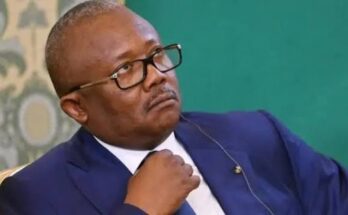
The era of political theatrics and campaign slogans has undeniably concluded. A moment of national reckoning has arrived. One cannot passively observe the profound economic, social, and reputational damage allegedly inflicted upon the Republic by Prime Minister Ousmane Sonko.
What the current administration portrays as a «transparency operation» concerning a supposed hidden debt is, in fact, being widely viewed as the most significant reputational setback and gravest financial misstep in Senegal’s post-independence history. Driven by persistent political animosity and a perceived need to discredit previous leaders, Prime Minister Ousmane Sonko has allegedly sacrificed Senegal’s international standing on the altar of global markets. By dramatically presenting unconsolidated figures prior to any legal validation, the government has not merely audited the past; it has, in the eyes of many, jeopardized the nation’s future.
Listening to these figures being presented with the casualness of a commentator, one might cynically seek an explanation. Perhaps, for a moment, he believed he was merely offering his opinion as a political party leader without the full reins of power. Did he imagine himself still on a neighborhood rally stage, addressing an adoring crowd, tragically forgetting that he is no longer an opposition figure devoid of responsibilities, but the Prime Minister of the Republic of Senegal? This perceived «eternal opponent» syndrome, an inability to embrace the role of a statesman, is said to have led to irreparable actions. When one holds the levers of state, every utterance carries immense financial weight. A reported unfamiliarity with financial mechanisms has, according to critics, turned his words into a potent weapon against the national economy.
The perceived damage to Senegal’s sovereign reputation and national brand is a significant concern.
For decades, through successive democratic transitions, Senegal diligently built its international credibility through impeccable financial diplomacy and a respected sovereign signature. Yet, in a single press conference, allegedly fueled by resentment, Ousmane Sonko is accused of undermining this vital national asset.
Declaring before global cameras that the Senegalese state had misrepresented its accounts is seen as an act of hostility against the vital interests of the nation. No responsible leader deliberately sabotages their own country’s creditworthiness. Allegedly, in an effort to harm past political rivals, the Prime Minister has inadvertently damaged present-day Senegal.
This perceived signal of panic reportedly triggered downgrades from international rating agencies. By diminishing Senegal’s financial profile, the actions of Prime Minister Ousmane Sonko have made access to capital more challenging and weakened the nation’s appeal to foreign investors.
Macroeconomic challenges: the cost of perceived governmental inexperience
Political oversight, it appears, carries a steep price. Current economic indicators present a stark and concerning picture for Senegal’s sovereignty.
Growth forecasts have been significantly downgraded, plummeting from 6.7 % to a mere 2.2 %. This represents an evaporation of over four percentage points of national wealth, attributed by critics to what they describe as disastrous government communication.
Furthermore, the suspension of a $1.8 billion program with the International Monetary Fund (IMF) has reportedly plunged Senegal into an unprecedented crisis of confidence.
To bridge the financial void allegedly created by its own actions, the government is now resorting to more expensive and riskier borrowing mechanisms. This, observers suggest, is the stark reality behind promises of radical change.
Real economy struggles: businesses falter, investments decline, and unemployment rises
While a commitment to hard work, private initiative, and entrepreneurial spirit is vital, the nation’s real economy currently faces severe challenges.
New business creation has reportedly fallen by over 30 %. A climate of fear and uncertainty appears to have stifled investment and dampened entrepreneurial drive.
The freezing of domestic debt payments has severely impacted Small and Medium-sized Enterprises (SMEs), artisans, and construction companies. A lack of liquidity has led to widespread layoffs. In an environment where unemployment hovers near 23 %, thousands of Senegalese are facing job losses and economic hardship.
Even the academic sector is not immune. Universities and training institutions are reportedly enduring the repercussions of a budgetary policy that, critics argue, sacrifices the future of the nation’s youth.
Social distress and regional decline: RNU data reveals stark reality
Beyond the statistics lies the profound suffering of Senegalese families.
Data from the Registre National Unique (RNU) indicates an alarming increase in social vulnerability and poverty, with a growing number of households falling into precarious situations.
The nation’s debt service now stands at 5,500 billion FCFA. This significantly limits the state’s operational capacity and places a heavy burden on the cost of living for citizens.
A call to action for the Senegalese people.
It is imperative for the Senegalese people to acknowledge the situation. The narrative of a «hidden debt» appears to have become a convenient excuse to obscure a lack of tangible results. Faced with an apparent inability to fulfill their pledges, the current leaders are perceived as governing while constantly looking to the past.
A great nation cannot be effectively governed by resentment, conspiracy theories, and political showmanship. Senegal, many believe, deserves more than perpetual improvisation.
Given an unemployment rate approaching 23 %, a decline of over 30 % in business creations, and rising poverty, the Senegalese populace must fully grasp the implications of this style of governance.
A movement of «Jambaars» (brave ones) is emerging to advocate for rigor over perceived amateurism, economic patriotism against alleged sabotage, and national interest above political maneuvering.