Senegal’s political rift: the evolving relationship between president Faye and prime minister Sonko
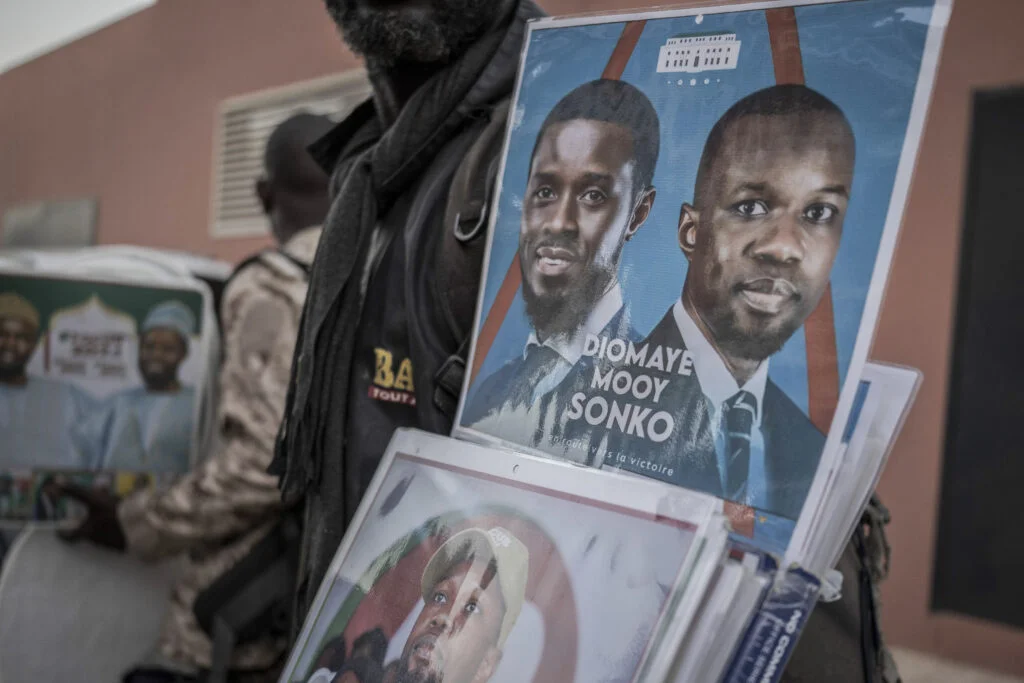
On Friday, May 22, Ousmane Sonko’s dismissal from his role as Prime Minister sent ripples through Senegal’s political landscape, signaling a potential crisis. For months, Sonko had characterized their dynamic as a “soft cohabitation”—a paradoxical term given his deep historical ties and shared political origins with President Bassirou Diomaye Faye. Both men emerged from the same political sphere, displaying profound closeness as recently as 2024.
A bond once thought unbreakable
The journey of these two political figures, once considered “brothers” and close companions in both their activism and personal lives, began with immense promise. For a significant period, they embodied a partnership whose paths seemed destined to intertwine. Their connection started during their student years, later solidifying at the ENA (National School of Administration). Subsequently, they pursued identical careers as tax and property inspectors. In 2014, their shared ideological and political vision led them to co-found PASTEF, the African Patriots of Senegal for Work, Ethics, and Fraternity party. By 2022, Bassirou Diomaye Faye assumed the role of its Secretary-General, while Sonko set his sights on the presidential election.
The radiant, triumphant smiles of March 24, 2024, remain etched in memory. They had achieved the seemingly impossible. Their resounding victory felt like a vindication, a successful gamble to reach the highest echelons of state power. This ascent, however, was arduous, improbable, and nearly obstructed by former President Macky Sall’s tenacious grip on power. Both men had endured imprisonment in the Cap Manuel jails, their political futures appearing sealed. Yet, within days, the tide turned. Public outcry swelled, international journalists descended on Dakar, and Sall, facing immense pressure, was forced to concede.
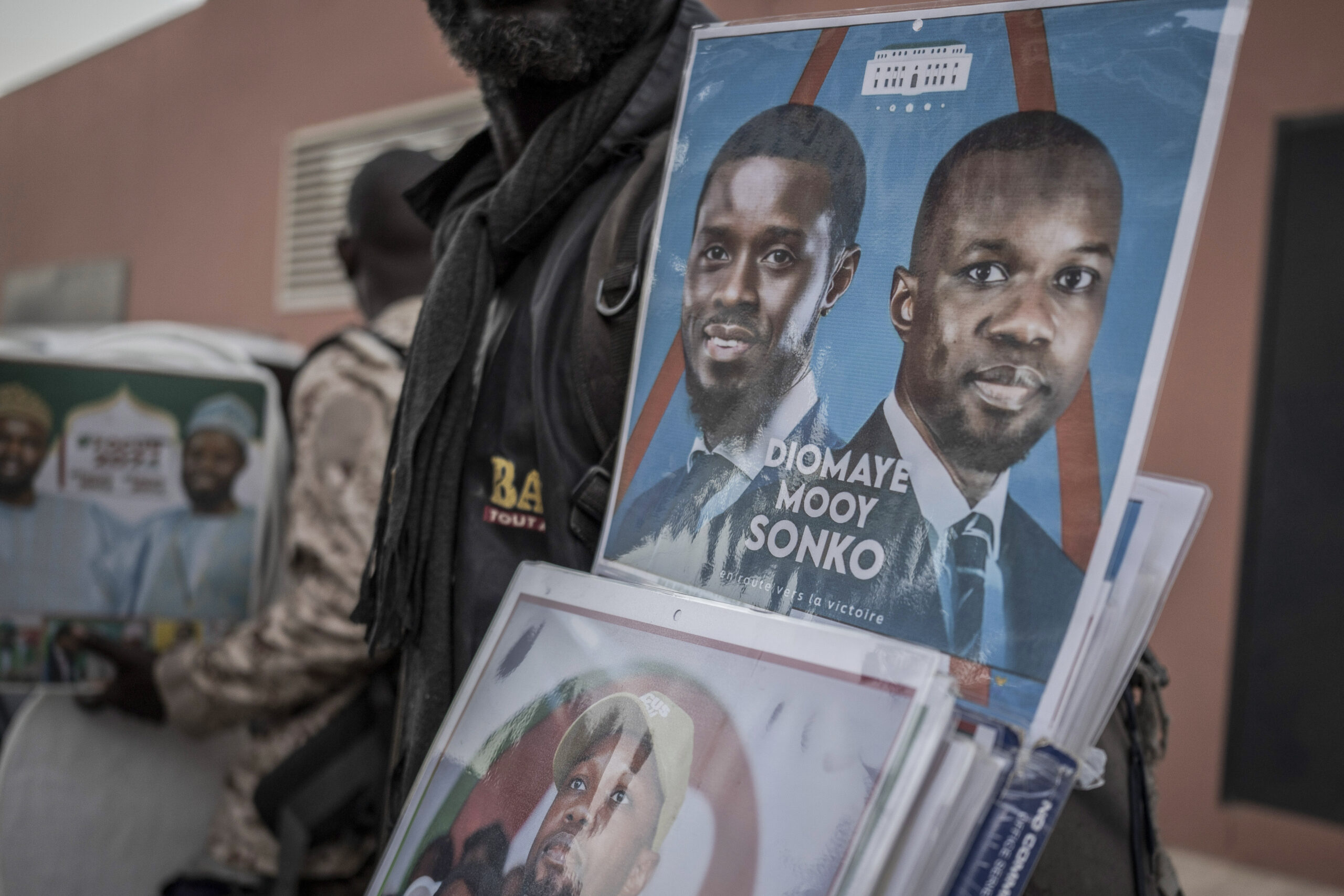
Following their release, the two launched a lightning-fast campaign under the powerful slogan: “Diomaye mooy Sonko, Sonko mooy Diomaye” [Diomaye is Sonko, Sonko is Diomaye]. With Ousmane Sonko’s candidacy invalidated, he strategically chose his most loyal collaborator for the nation’s highest office.
The victory was decisive and undeniable. Nothing, it seemed, could sever the bond between the two men. However, many believed that the true victor of the presidential election was Sonko, not Faye, who was largely unknown to the broader public at the time.
It is important to acknowledge Ousmane Sonko’s significant political impact since 2019, when he surprised many by emerging as the third-place candidate in the presidential race. Despite facing legal battles, including the Sweet Beauty affair, he maintained widespread popularity, particularly among Senegal’s youth. He became a symbol, an idol. Over the years, he cultivated a unique political and emotional connection with a segment of the Senegalese population, fueled by a narrative of radical change, resistance, and a call for true alternation in power.
In this context, Diomaye Faye’s path seemed challenging. Without the popular endorsement carried by Sonko, he likely would not have ascended to the presidency. Yet, he embraced the immense responsibility of the office.
Political tandems in Senegal: a recurring pattern of dissolution?
Senegalese political partnerships, often characterized by strong, seemingly unshakeable loyalties, have historically struggled to withstand the pressures of power. This pattern has been a notable feature of Senegal’s political landscape.
A prime example is the alliance between Léopold Sédar Senghor and Mamadou Dia. These companions, who had worked together since the late 1940s to forge an independent Senegal, found themselves at odds. After the collapse of the Mali Federation in August 1960, Senghor became President and Dia, President of the Council. Initially seen as complementary, their differences grew over the organization of power, economic policies, and relations with France. The institutional crisis of December 1962 culminated in Dia’s arrest, accused of an attempted coup, and his subsequent imprisonment for over a decade.
The partnership between Abdou Diouf and Moustapha Niasse, a pairing initially envisioned by Senghor, also frayed within mere months.
However, it was arguably under Abdoulaye Wade’s presidency that conflicts of loyalty and political imprisonments resurfaced with particular intensity. Wade and Idrissa Seck had championed the call for change (sopi) together. Seck, long considered Wade’s heir apparent, saw their relationship deteriorate, leading to his political marginalization and eventual incarceration in 2005 over the Thiès construction projects affair. He was acquitted months later, prompting thousands to flood the streets of Dakar, chanting “Idi,” as if a father had betrayed his son.
The separation between Faye and Sonko, at first glance, aligns with these historical precedents. Yet, their initial configuration was unique: the individual holding electoral legitimacy was not necessarily the one who commanded the greatest political capital.
Emerging fault lines
Undoubtedly, some of the underlying disagreements between the two leaders remain unseen. As Abdou Diouf recounted in his memoirs, the influence of inner circles often plays a significant, yet underestimated, role in political dynamics.
Beyond the initial imbalance of political capital, Faye and Sonko, frequently prompted by the media to affirm their friendship, ultimately succumbed to animosity.
Resentments and grievances had steadily accumulated over the past two years.
First, there was the question of methodology. Several observers noted tensions concerning the implementation of campaign promises: the pace of reforms, the handling of figures from the previous regime, and judicial reform. In essence, the extent of the change expected by the militant base remained a constant point of contention. Sonko publicly voiced his impatience on several key issues.
Discussions surrounding national debt, the relationship with the IMF—from which Sonko reportedly wished to distance himself—the allocation of political funds, and broader economic strategy gradually crystallized differing visions for governance. Beneath these disagreements lay a more profound divergence: should the government pursue immediate, radical rupture, or should it navigate and compromise with institutional and international constraints?
The first public display of this growing rivalry likely occurred during Ousmane Sonko’s “Tera Meeting” on November 8, 2025, at the Léopold Sédar Senghor stadium. The term “tera,” borrowed from units of measurement, aimed to emphasize the exceptional and unprecedented scale of the mobilization. Buses from across the country and popular marches converged on the capital, drawing considerable attention from the press and observers.
The fervor and mobilization capacity demonstrated that day served as a powerful reminder that the movement’s political capital largely remained concentrated around Ousmane Sonko.
Officially presented as an assessment of the first eighteen months in power, a political clarification, and a relaunch of the PASTEF project, the rally was, in reality, a clear demonstration of political strength.
The message was undeniably received at the highest levels, and a response was swift. Faye chose to reinforce the “Diomaye Président” coalition by entrusting a central role to Aminata (Mimi) Touré. This decision was widely interpreted, and likely correctly so, as a political signal of the president’s growing autonomy.
A former Prime Minister under Macky Sall and later an opponent, Mimi Touré is a controversial figure among some PASTEF militants, who criticize her past association with the previous regime and her perceived late adherence to the project of rupture.
Nonetheless, Faye sought to demonstrate that he was not subservient to his Prime Minister.
For several months, Faye appeared constrained from fully embodying the presidency, seemingly cohabiting with a Prime Minister who himself harbored presidential aspirations. This created an untenable equation.
During this period, Sonko and his supporters often asserted their perceived superiority, reminding others of the debt owed to them: notably, in Pascal Boniface’s book Les maîtres du monde, it was Sonko who was featured, not Faye.
What lies ahead?
Sonko’s dismissal from his prime ministerial duties was confirmed. On May 22, he expressed a sense of relief on Facebook, mentioning his return to sleep at his home in Keur Gorgui.
However, this relief proved short-lived.
The President of the National Assembly, El Malick Ndiaye, resigned from his position, and Sonko, leading the majority party with 130 out of 165 deputies, promptly succeeded him on May 26.
He has effectively returned to an opposition role, a position in which he previously excelled and built much of his popularity.
This new configuration, however, ushers in an unprecedented scenario: a president potentially deprived of his primary political support, facing a Parliament now controlled by his former ally. Such a dynamic raises concerns about unprecedented tensions between the executive and legislative branches in Senegal.
Will Diomaye Faye successfully assert his legitimacy without Sonko? The outcome remains uncertain. Will Sonko seek to impeach him? That question is now open for speculation.
Yet, this fratricidal duel risks overshadowing the nation’s pressing challenges: public health, economic stability, and particularly the urgent need for youth employment.
Two years after the political transition, several announced reforms remain incomplete or delayed, fueling growing expectations among the populace. Beyond the conflict between the two men, it is the social needs—the youth, the voters, a population grappling with employment, purchasing power, and the crisis in public services—that stand to bear the brunt of this political turmoil.
Did Senegal truly need this political crisis? The question is certainly worth asking.