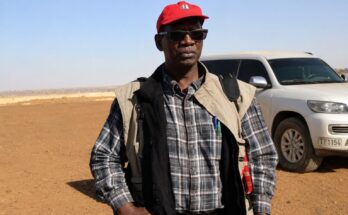
Prime Minister Ousmane Sonko has launched a bold political offensive, addressing both his allies and critics in a series of high-profile public appearances. As leader of the Pastef party, Sonko is sharpening his rhetoric against opposition figures while also challenging some of his own allies within the governing coalition. This shift unfolds amid contrasting interpretations of the power dynamics between the government and President Bassirou Diomaye Faye, a relationship closely watched across West Africa.
Consolidating political control in Dakar
The assertive tone adopted by Sonko in recent weeks contrasts sharply with the cautious approach he maintained in the early months of his tenure. He is publicly addressing grievances against both former regime figures and civil society leaders, accusing them of covert maneuvers. Observers suggest this strategy aims to reclaim media space and reinforce his dominance within the ruling coalition. By directly engaging his militant base, Sonko is reinforcing his party’s political capital, particularly among urban voters and young people.
The reassertion of his rhetoric aligns with the legislative elections of November 2024, which solidified Pastef’s presence in the National Assembly. Sonko’s emphasis on the “break with the past” resonates with voters who expect sweeping reforms, reinforcing his legitimacy as a transformative leader.
Internal fractures within Pastef’s government ranks
Sonko’s recent statements come at a sensitive moment. Several of his closest allies, integral to Pastef’s rise, have been sidelined in key government and administrative positions. This exclusion has fueled internal discontent, with some party veterans perceiving a dilution of the movement’s original agenda in favor of presidential compromises they view as overly accommodating.
The tensions remain subtle but palpable. Longtime party figures, who have kept a low profile since taking office, now see their influence waning in favor of technocratic appointments aligned with the presidency. By speaking directly to his supporters, Sonko is reinforcing the idea that the ideological core of the government remains rooted in Pastef’s principles. This move serves a dual purpose: reassuring disillusioned militants while sending a clear message to the presidential palace.
Regional implications of Senegal’s leadership struggle
The quiet power struggle between the Prime Minister’s office and the presidency is drawing attention from regional capitals. Senegal plays a stabilizing role in a West Africa grappling with Sahelian instability and the evolving structure of the Economic Community of West African States (ECOWAS). Any fracture at the top of Senegal’s government could ripple across diplomatic efforts, particularly in mediation with juntas in Mali, Burkina Faso, and Niger.
For investors and international partners, the coherence of Senegal’s executive leadership is critical. Ongoing negotiations with the International Monetary Fund (IMF) on debt sustainability—amid revelations of deteriorating public accounts inherited from the previous administration—demand a unified government voice. Sonko’s public statements, often seen as personal assertions, risk obscuring the official narrative on fiscal reforms and the structural changes outlined in the Senegal 2050 vision.
Despite these challenges, Sonko holds significant advantages. His parliamentary majority, strong appeal among the under-30 demographic, and control over the party apparatus grant him unusual leverage for a head of government. The question now is whether this verbal offensive signals an impending cabinet reshuffle, a programmatic repositioning, or simply a consolidation of his authority within his own political movement. What is clear is that the sequence initiated by Ousmane Sonko marks a turning point in Senegal’s political landscape.