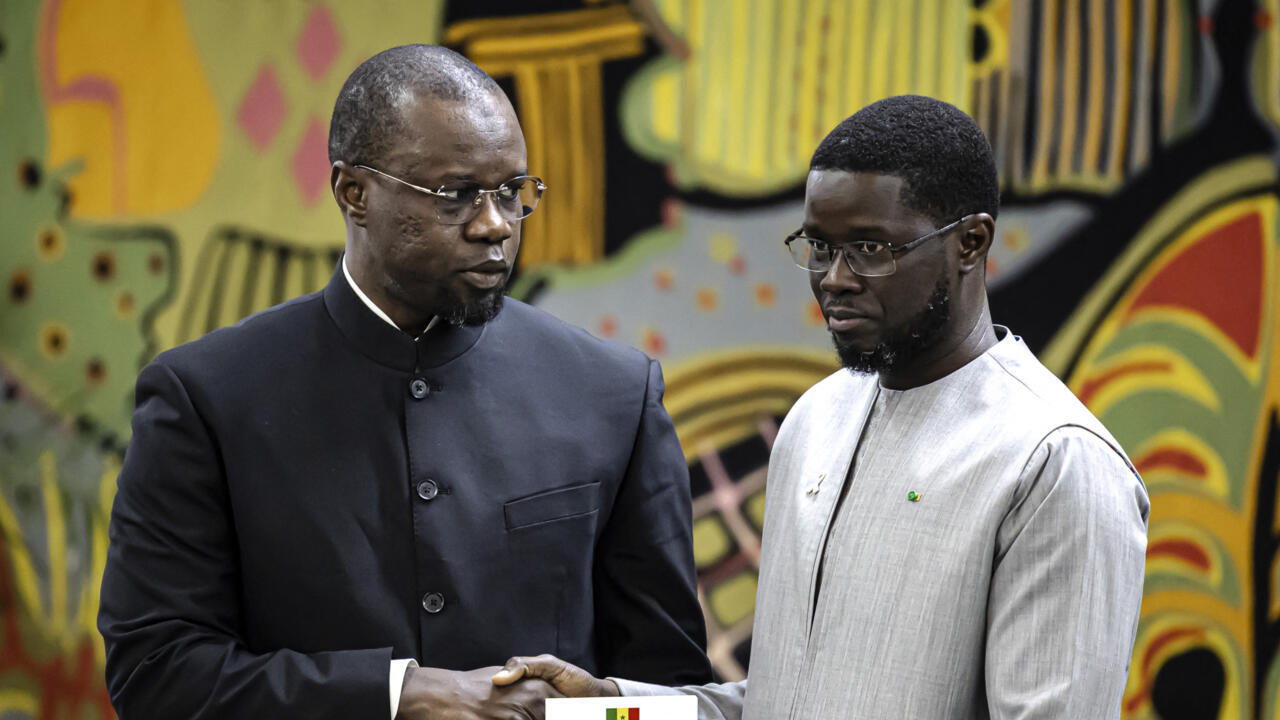
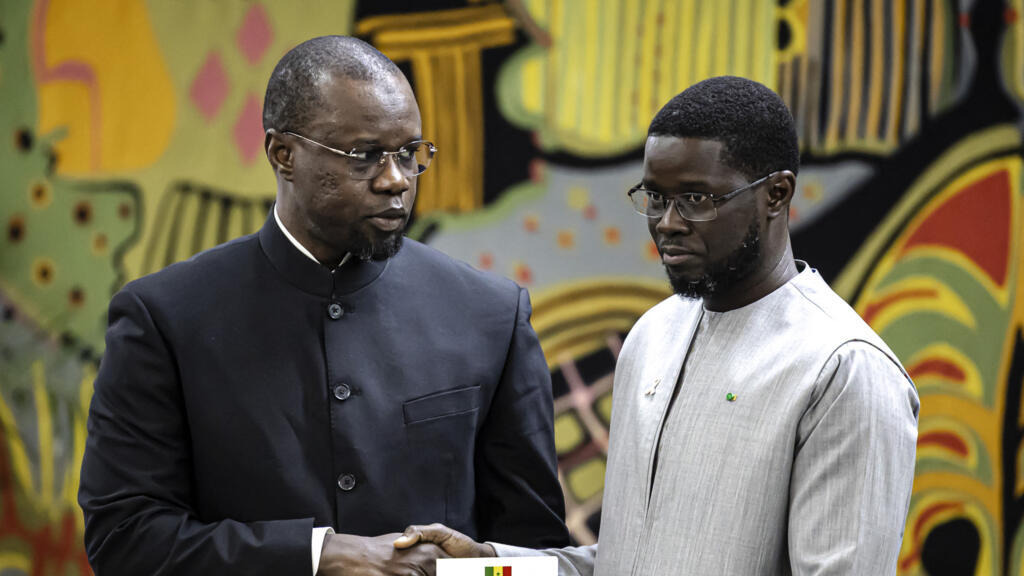
A significant political restructuring is currently underway in Senegal, following President Bassirou Diomaye Faye’s decision on Friday, May 22, to relieve his long-time ally, Ousmane Sonko, and his cabinet of their duties. This dramatic development saw the former Prime Minister swiftly reinstate his parliamentary mandate on Sunday. Simultaneously, Malick Ndiaye, who presided over the National Assembly, tendered his resignation. The election for the new Assembly President is now set for Tuesday, with Ousmane Sonko widely tipped as a strong contender. These events collectively point towards an impending power struggle between the executive and legislative branches.
An Inevitable Political Parting
Many political observers believe this split between Faye and Sonko was a foregone conclusion. The very structure of the Faye-Sonko leadership inherently contained a fundamental and unresolvable contradiction. This wasn’t necessarily due to a deficit of talent from either individual, nor were their political visions radically divergent. Instead, the core issue lies in the unitary nature of executive power within a republic. As history across the African continent, from leaders like Nkrumah to Sankara, or Modibo Keïta to Laurent-Désiré Kabila, illustrates, shared leadership at the highest echelons, involving two wills of equal strength, almost invariably culminates in the ousting of one or the downfall of both.
Indeed, this current political divorce is the culmination of several months of escalating tensions between the two men, who ascended to power in April 2024 on a wave of immense popular hope. The initial cracks in their partnership reportedly emerged last July, when Ousmane Sonko first spoke of a “problem of authority,” suggesting that the President was not adequately defending him against political attacks. The definitive break came just hours after a National Assembly session where the former government head publicly challenged several presidential decisions, notably regarding the management of political funds, openly declaring that the President had “made an error.”
Executive vs. Legislative: A High-Stakes Confrontation
The central question now facing Senegal’s political landscape is whether the former Prime Minister will assume the role of the President’s chief opponent. With his undeniable popular appeal, Ousmane Sonko represents a significant challenge to Bassirou Diomaye Faye. The next phase of this power struggle is expected to unfold within the legislative chamber. Political science academics warn of a substantial risk of governmental gridlock, particularly at a time when the executive is preparing to introduce a series of institutional reforms. Key legislative proposals concerning constitutional amendments, the Constitutional Court, political parties, and the establishment of an independent national electoral commission are all slated for upcoming debate in the National Assembly. Such a scenario would severely constrain the head of state’s operational capacity.
This unfolding drama pits Pastef, the party predominantly controlled by Ousmane Sonko, against the Coalition Diomaye Faye président. This effectively sets the Executive against the Legislative in a no-holds-barred contest for power, with a clear focus on the municipal elections in 2027 and, more critically, the presidential elections in 2029. This political uncertainty has generated widespread doubt, anger, and dismay among many “Pastefistes,” especially the younger generation of Senegalese who had placed their faith in the Faye-Sonko duo and now feel adrift.
Is Ousmane Sonko Poised for Victory?
The test of strength has begun, and it could ultimately swing in Ousmane Sonko’s favor. Geopolitical analysts underscore an undeniable political reality in Senegal: Pastef commands a dominant position on the national stage, bolstered by an exceptional activist network, a highly engaged youth base, and a powerful narrative honed during years of opposition to the previous Macky Sall regime. Within this dynamic, Sonko remains the central figure. Even when previously constrained by legal obstacles or excluded from presidential ballots, the public’s aspirations for change consistently gravitated towards him.
While President Faye holds the advantage of institutional legitimacy, his former Prime Minister maintains formidable popular and militant legitimacy. In any future political or electoral contest, this widespread public support could very well prove to be the decisive factor.
Related Posts