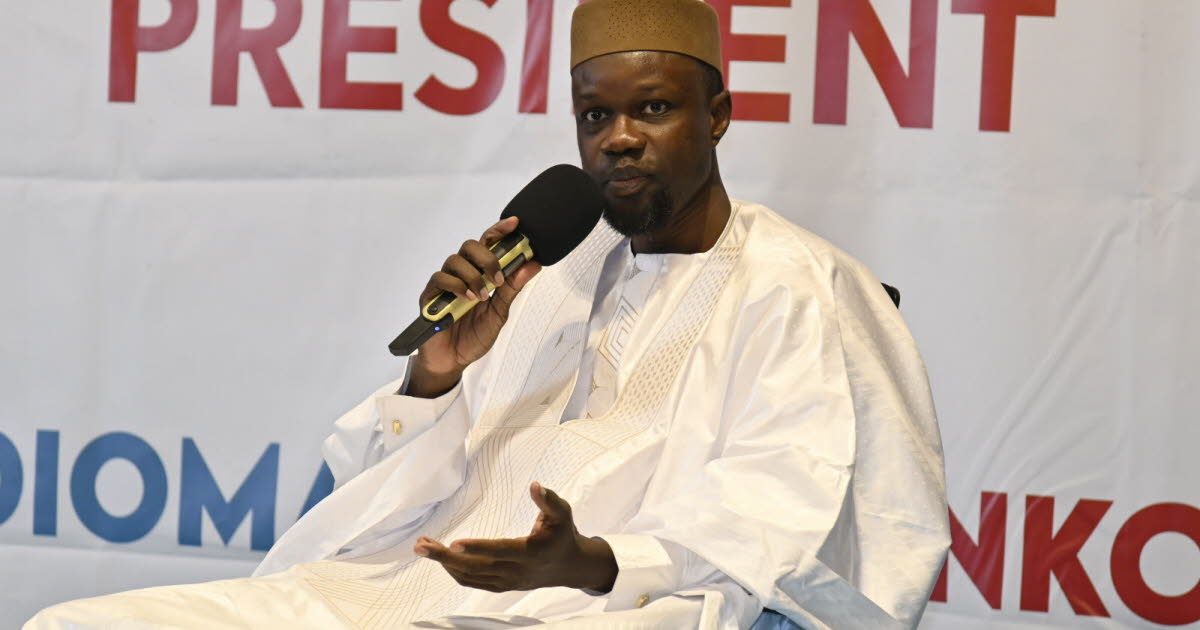
In a bold parliamentary address, Senegal’s Prime Minister Ousmane Sonko has forcefully rejected Western pressures regarding the enforcement of a recent law criminalizing same-sex relationships in the predominantly Muslim West African nation.
The controversial legislation, passed in early March and ratified by President Bassirou Diomaye Faye on March 31, significantly toughens penalties for homosexual acts, increasing prison sentences from five to ten years. This move comes amid a surge in anti-LGBTQ+ sentiment and a wave of arrests for alleged homosexuality in Senegal.
The Prime Minister’s remarks, delivered during a session with lawmakers, underscored Senegal’s defiance against what he described as a ‘tyranny’ emanating from Western nations attempting to impose their values on the rest of the world. ‘There is a sort of tyranny at play,’ Sonko declared. ‘Eight billion people inhabit this planet, yet a small Western bloc—despite internal debates unresolved—uses its media dominance and resources to force its ideals upon others. On what grounds?’
He went on to criticize vocal reactions from abroad, particularly in France, stating, ‘If those countries have chosen to embrace such practices, that is their concern. But we will not accept lessons from them—absolutely not.’ His statements reflect a growing sentiment in Senegal that views Western criticism of the law as an affront to national sovereignty and cultural identity.
No room for compromise
In a firm rebuttal to international calls for a moratorium on the law’s application—including a mid-May op-ed by a group of thirty African-origin personalities published in a French newspaper—Sonko made it unequivocally clear: ‘There will be no moratorium.’ He emphasized that any country, whether in Asia, Africa, or the Arab world, that refrains from criticizing Senegal’s stance only reinforces its resolve. ‘If the law needs further strengthening, it will be strengthened,’ he asserted.
Sonko also directed the judiciary to ensure the law’s ‘total, impartial, and flawless’ enforcement, framing its primary objective as curbing the ‘proliferation of homosexuality’ in the country. His remarks highlight the government’s unwavering commitment to the legislation, which resonates strongly with a significant portion of the Senegalese population and has been a longstanding political promise for the ruling camp.
Cultural and political undercurrents
Same-sex relations remain widely stigmatized in Senegal, where they are viewed as a moral and social deviation. The government’s decision to escalate legal repercussions against LGBTQ+ individuals has been met with both domestic approval and international condemnation. For the Prime Minister, the law represents not just a legal measure but a cultural stand against what he perceives as Western imperialism in matters of societal norms.
The hardening of stances on this issue underscores a broader trend in Senegal, where traditional values and religious beliefs play a central role in shaping public policy and societal attitudes. As debates rage on, the government’s firm position signals a determination to uphold its interpretation of morality and sovereignty, regardless of external pressures.