South Africa is under international scrutiny after a brutal mob attack on a foreign national in Durban left one man dead and the nation grappling with the specter of escalating xenophobic violence. The incident, which unfolded in the city center, has triggered an urgent response from the African Commission on Human and Peoples’ Rights (ACHPR), warning Pretoria that inaction could constitute a crime against humanity.
Durban mob violence sparks African Union condemnation
The fatal attack occurred on October 22, 2026, when a foreign man in his 30s or 40s was beaten to death by a crowd of about 50 people. According to South African authorities, the victim was targeted while walking along a public road and succumbed to his injuries at the scene. While his nationality remains undisclosed, the circumstances surrounding his death have ignited debates about the rising tide of anti-immigrant sentiment sweeping across the country.
The African Commission on Human and Peoples’ Rights swiftly condemned the killing, stating that the circumstances could meet the threshold of crimes against humanity—a claim that carries significant legal weight. This declaration places South Africa’s government under intense pressure to address the systemic failures that allow such violence to persist.
South Africa faces reckoning over systemic xenophobia
The murder in Durban is not an isolated incident but part of a broader pattern of hostility toward foreign nationals, particularly migrants from other African countries. The ACHPR has urged the South African government to acknowledge this crisis and implement a robust, state-led response to combat xenophobia and its consequences.
The commission’s intervention underscores a critical legal principle: while xenophobic violence may not automatically qualify as a crime against humanity without meeting stringent international criteria, the failure to prevent or punish such acts can still constitute a breach of a state’s obligations under human rights law. Pretoria now faces a dual challenge—addressing public concerns about immigration while upholding constitutional protections for all residents.
Government response under the spotlight
The South African Human Rights Commission mirrored the ACHPR’s stance, labeling the Durban killing as a potential crime against humanity and demanding immediate, impartial justice. The constitutional right to life, the commission emphasized, applies to every individual within South Africa’s borders, regardless of nationality or immigration status. This legal obligation compels the government to act decisively to prevent further violence.
The judicial outcome of the Durban case will serve as a litmus test for South Africa’s commitment to the rule of law. A thorough investigation and successful prosecution could deter future mob justice, while inaction risks normalizing impunity and emboldening further attacks.
Immigration tensions fuel nationwide unrest
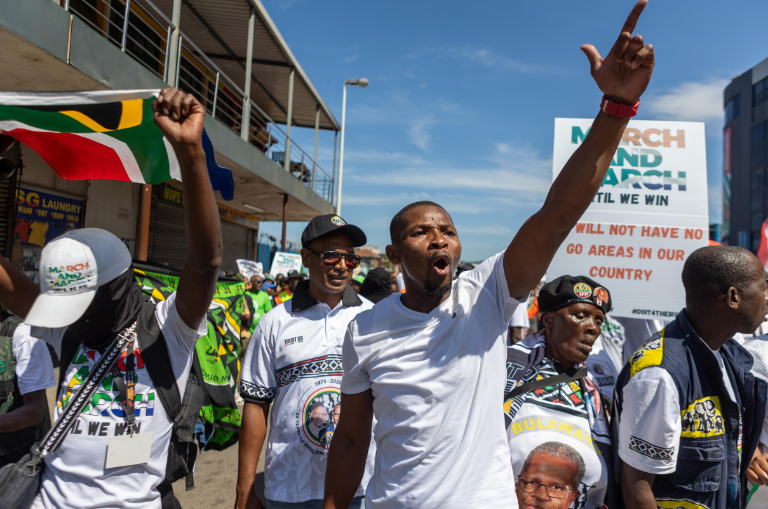
Durban, South Africa’s third-largest city, has become a flashpoint in the country’s simmering immigration crisis. Grassroots movements have intensified calls for the expulsion of undocumented immigrants, blaming foreigners for economic hardship, crime, and pressure on public services. While socioeconomic challenges are real, vigilante violence cannot be justified—and the state must distinguish between legitimate policy debates and unlawful aggression.
Protests against migrants in Durban have escalated into looting, property destruction, and mob attacks, revealing a dangerous shift from political mobilization to collective violence. Human rights advocates warn that allowing such behavior to persist undermines the very fabric of a democratic society built on equality and justice.
Panafrican solidarity tested by rising xenophobia
The Durban tragedy also raises uncomfortable questions about the future of pan-African unity. The continent’s history of anti-apartheid solidarity, where many African nations supported South Africa’s liberation struggle, now contrasts sharply with the violence faced by migrants in the country. How can the vision of a united Africa thrive when citizens are attacked based on nationality?
The ACHPR’s appeal transcends mere condemnation—it calls for a fundamental rejection of hate speech, the protection of vulnerable communities, and the enforcement of the rule of law. For Durban’s victim, justice delayed would be justice denied. For South Africa, the path forward demands courage, accountability, and an unwavering defense of human dignity.