
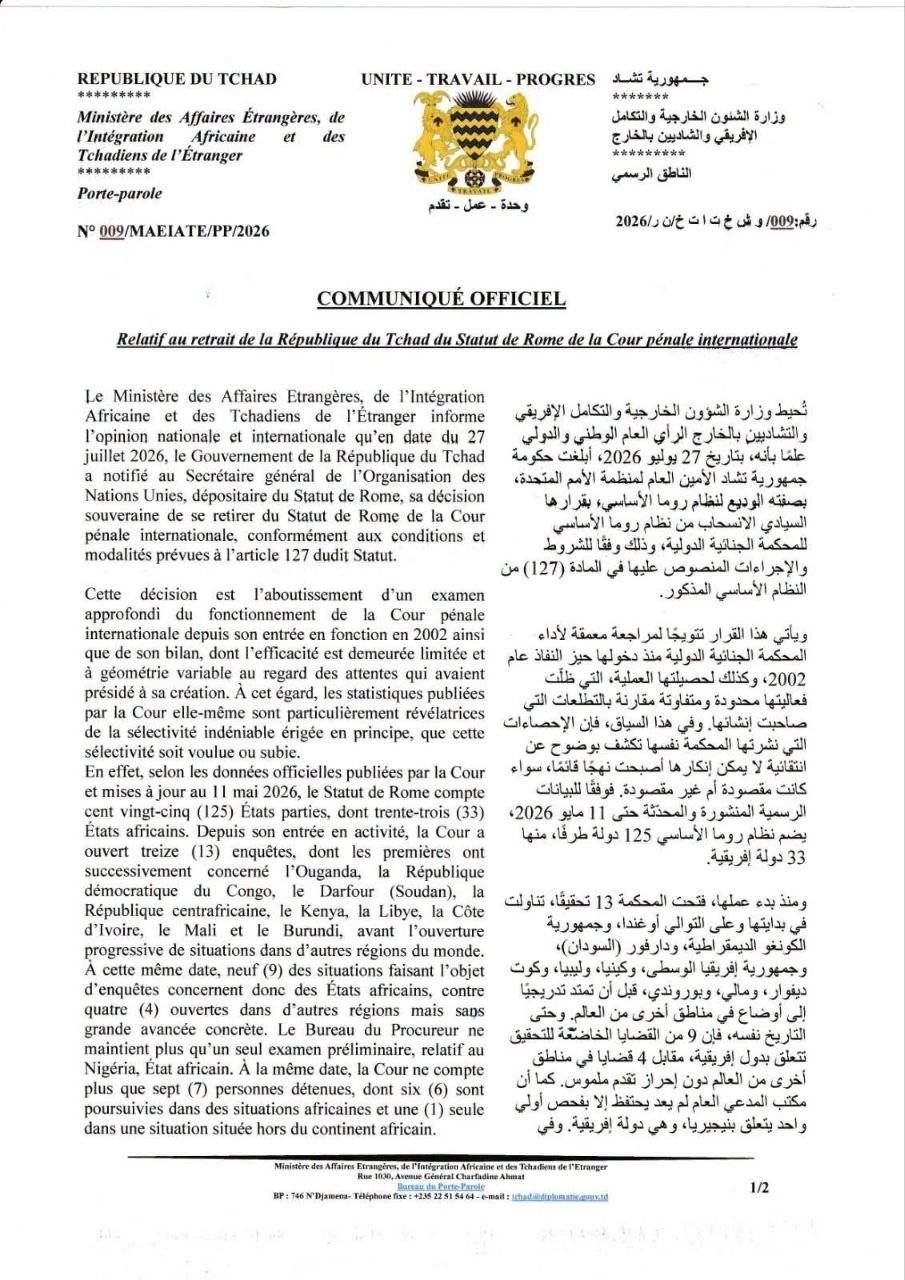
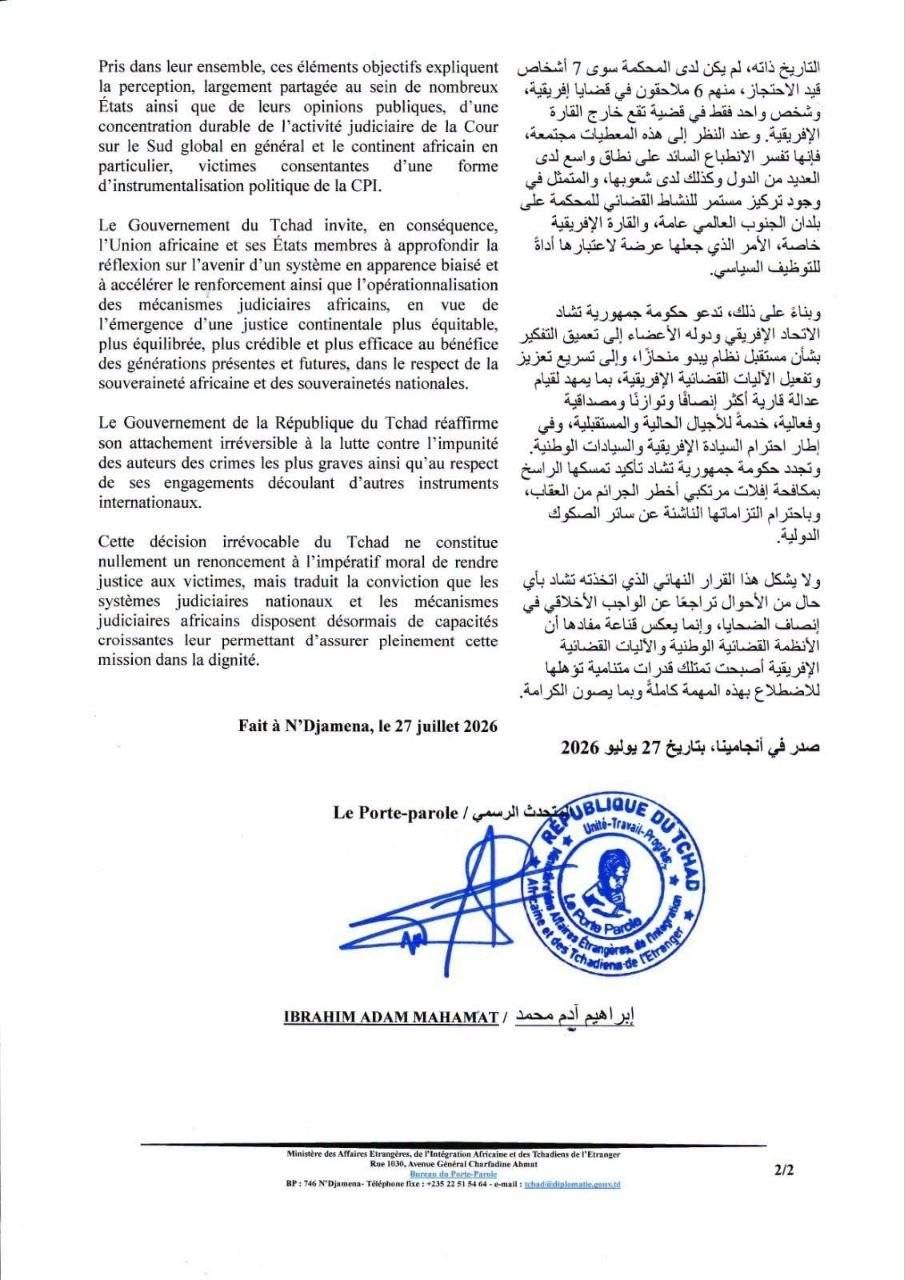
The Chadian government has formally initiated the process of withdrawing from the International Criminal Court (ICC), marking a significant shift in its international legal commitments. In a letter submitted to the United Nations in New York, N’Djamena announced its decision to exit the Rome Statute, the treaty that established the court’s authority. This bold diplomatic move underscores growing tensions between African nations and international judicial bodies, particularly regarding perceived imbalances in global justice.
Why N’Djamena is turning its back on La Haye
The Chadian authorities have sharply criticized the ICC for what they describe as a systematic bias against African states. In their official statement, the government accused the court of being ineffective and failing to address global injustice equitably. The argument centers on the perception that the ICC disproportionately targets leaders and actors from Global South countries while overlooking crimes committed elsewhere. This withdrawal aligns with a broader trend among African nations questioning the court’s neutrality and its role in international law.
What this means for justice in Chad
The withdrawal from the ICC has immediate implications for the Chadian population, particularly those seeking recourse for grave human rights violations. Historically, the court operated as a last-resort safeguard when national judiciaries lacked the capacity or willingness to prosecute crimes such as war crimes, crimes against humanity, or genocide. By severing ties with the ICC, Chad removes this critical layer of international oversight, placing the burden entirely on its domestic justice system.
Civil society organizations have raised concerns that this decision could weaken protections for victims. Without the threat of ICC intervention, documenting abuses and ensuring witness safety may become even more challenging. The government argues that Chadian courts are now fully capable of handling such cases, but this claim hinges on the country’s ability to reform its judicial institutions.
The sovereignty gamble and its risks
The Chadian government’s move is framed as a reassertion of national sovereignty, rejecting what it views as foreign interference in domestic affairs. However, this strategic shift carries potential diplomatic and economic consequences. Western partners and international donors often tie financial aid to commitments on human rights and the rule of law. Additionally, the presence of independent legal recourse is a key factor in attracting foreign investment and fostering long-term stability.
While the African Union has previously criticized the ICC, member states remain divided on how to respond to such withdrawals. Chad’s decision to take a definitive stance risks isolating it within the continental bloc, even as it resonates with growing anti-colonial and anti-hegemonic sentiments across the Sahel and West Africa.
Can Chad’s judiciary fill the void?
The government has pledged to strengthen local institutions, but this will require substantial reforms. Key challenges include increasing funding for courts, guaranteeing judicial independence, and establishing robust witness protection programs. The one-year transition period outlined in the Rome Statute will be critical. During this time, the ICC retains jurisdiction over crimes committed before the withdrawal notice, but cooperation from Chad may dwindle.
For the people of Chad, the success of this transition will be measured not in diplomatic halls but in the streets and courts of N’Djamena. Will victims find justice within their own country’s legal system? The answer will define the legacy of this controversial decision.