As Gabon strives to establish a progressive Fifth Republic, its media landscape is grappling with an unprecedented crisis. The erosion of print journalism, the precarious state of digital platforms, a severe shortage of advertising revenue, restricted access to public information, and the steady vanishing of many news titles collectively threaten not just the economic viability of media organizations but also the fundamental integrity of our democratic system.
Certain silences carry more weight than public disputes, and the current quietude around the economic struggles of Gabonese media is precisely one of them. While the nation’s focus remains fixed on ambitious development projects, infrastructural advancements, upcoming political milestones, and broader economic goals, a vital pillar of democratic society is quietly eroding, largely unnoticed.
Indeed, a democracy deprived of robust media inevitably becomes a monologue. When those in power are left to hear only their own perspectives, the potential for a profound detachment from societal realities grows alarmingly.
print journalism: reflecting a quiet decline
The plight of print media vividly demonstrates this gradual deterioration. There was a period when newsstands buzzed with activity, serving as genuine hubs for public discourse. Newspapers were eagerly anticipated, consumed, and discussed.
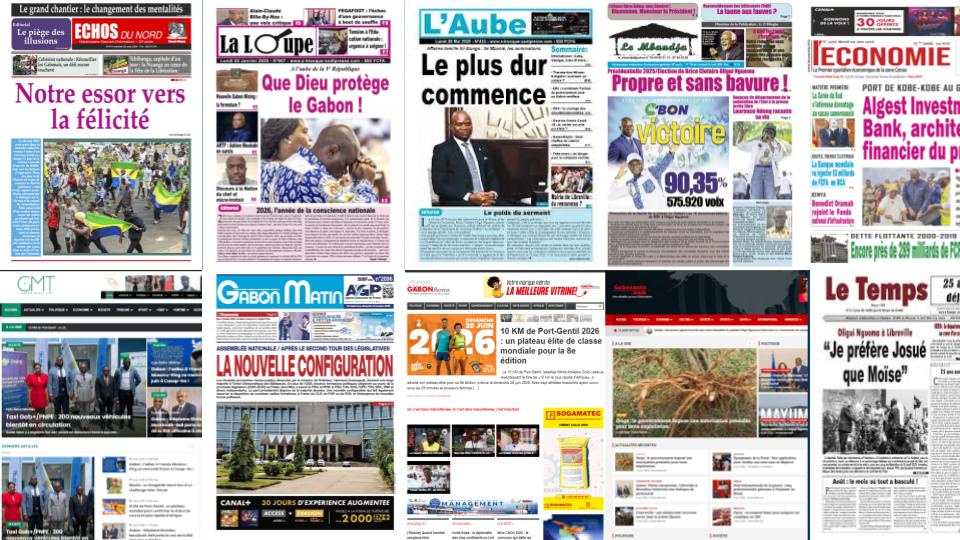
Publications such as La Loupe, L’Aube, and Échos du Nord navigated far more challenging eras. Their critical reporting occasionally prompted officials to label them as antagonistic or symbols of entrenched opposition. Yet, these publications persisted, found buyers, and consistently enriched national debate.
Today, an ironic twist of fate sees these very issues become sought-after rarities, collected by readers who yearn for a time when print journalism commanded a significant presence in the public sphere. This trend extends beyond mere economics; it carries profound political implications. The closure of a newspaper signifies more than just a business failing; it represents the silencing of a vital public voice.
a stark symbol of regression
The trajectory of Gabon Matin offers a poignant case study worthy of national consideration. For decades, this government-backed daily stood as an enduring institution within Gabon’s media environment. After years as a daily publication, it transitioned to a bi-weekly format, then experimented with a weekly edition during the transitional period.
Currently, the newspaper is absent from physical newsstands, its distribution predominantly digital. While officially framed as an adaptation to technological shifts, it begs the question: can anyone genuinely believe this transformation is purely an editorial decision? The simpler truth is that the sector’s widespread economic challenges spare no one, not even media outlets that have historically benefited from state support.
where are the promised media sector reforms?
Another critical question remains unanswered. For years, there has been consistent discussion within the media sector regarding support mechanisms intended to facilitate its restructuring. Substantial funds were referenced, announcements were made, and expectations were high. However, on the ground, publishers continue to grapple with existential struggles.
Many are now scrutinizing the tangible outcomes of these initiatives. The true measure of public policy lies not in rhetoric but in its demonstrable impact, and the current observations are deeply concerning.
digital media: struggling for sustainability
The state of digital media offers little comfort. While Gabon’s online landscape boasts a proliferation of platforms and websites, the reality behind this apparent vibrancy is stark. Few possess structured editorial teams, identifiable physical headquarters, or transparently disclose the identities of their publication directors or journalists. Within this challenging environment, a handful of outlets valiantly strive to uphold rigorous professional standards despite meager resources. Yet, even these dedicated entities confront an economic equation that borders on the impossible. Private advertising is increasingly scarce, digital revenue streams remain meager, and operational costs continue to climb. Furthermore, access to significant institutional advertising campaigns often remains restricted to a select few established players.
a fragile press undermines democratic foundations
This issue transcends mere economic concerns; it directly impinges upon the very mechanics of democracy. How can pluralism genuinely exist when media outlets are fighting for their lives? How can a diversity of opinions be assured when news organizations are steadily vanishing? How can high editorial standards be maintained when newsrooms operate under perpetual precarity?
An economically vulnerable press inherently becomes susceptible to external influences, pressures, and compromises. Conversely, a robust democracy demands precisely the opposite: independent, resilient, credible media capable of operating without the monthly dread of financial collapse.
media disappearance: a collective democratic failure
The irony is profound. The very authority tasked with regulating the media sector may soon find itself overseeing a landscape stripped of its essential components. What purpose does regulation serve when the entities it governs cease to exist? What value does a legal framework hold if the businesses intended to operate within it can no longer survive? What becomes of the pluralism enshrined in our statutes when independent voices progressively fall silent? These questions demand serious consideration, for what hangs in the balance is not merely the future of journalism, but Gabon’s fundamental capacity to sustain a dynamic, diverse, and democratic public sphere.
revitalizing media: essential for democratic discourse
The moment has arrived to confront this reality head-on. The media crisis is not a niche concern for journalists or publishers alone; it impacts the entirety of society. A nation that permits its media to wither inevitably diminishes its public discourse, and a weakened public debate invariably erodes the strength of democracy itself.
Gabon stands at a crossroads: it can continue to passively witness the sector’s gradual decline, or it can finally commit to a comprehensive overhaul of its media economy. This reform must be anchored in principles of transparency, equity, pluralism, and economic sustainability. Ultimately, a democracy’s demise isn’t solely marked by the closure of newspapers; it also begins its decline when they are simply allowed to perish.