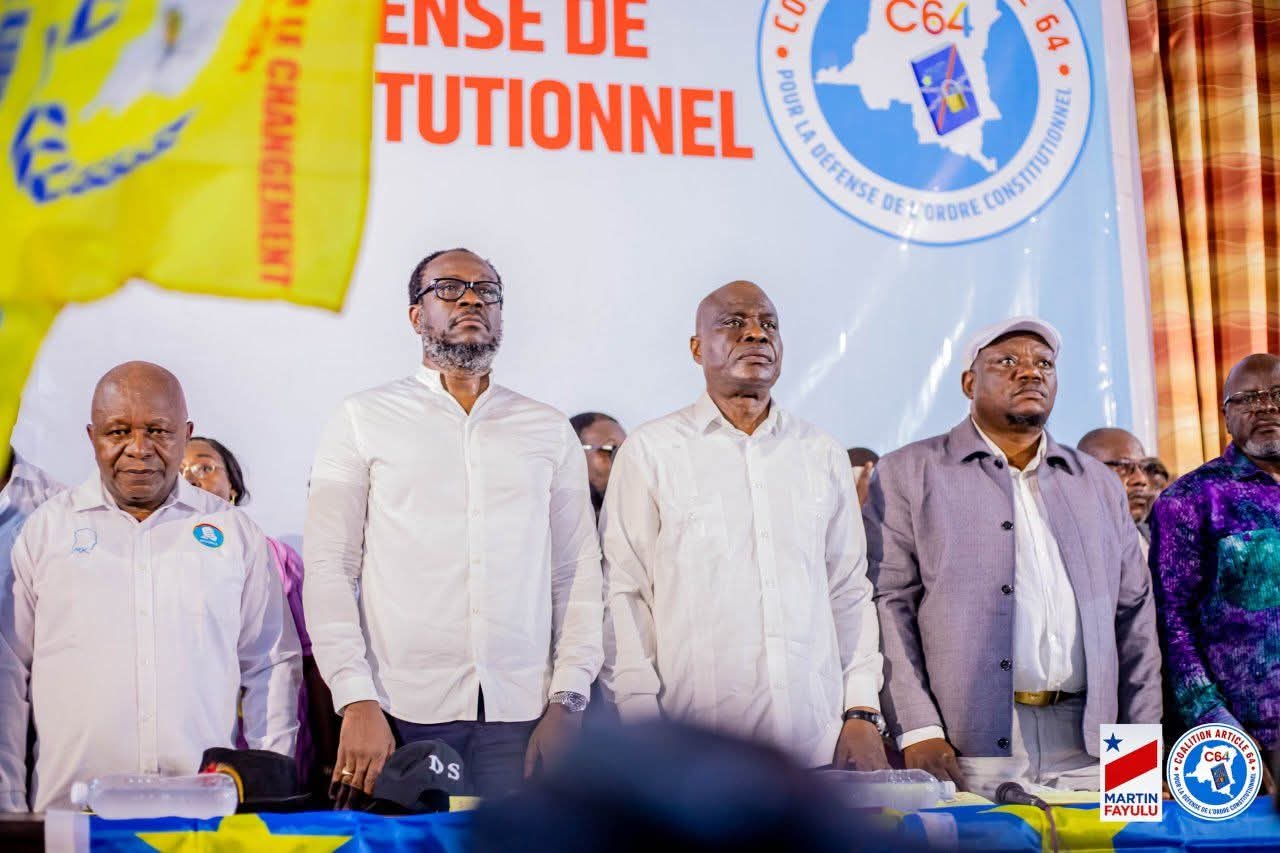
The Democratic Republic of Congo (DRC) witnessed a dramatic slowdown on June 3 as citizens heeded calls for a nationwide shutdown to protest President Félix Tshisekédi’s potential constitutional amendment allowing a third term. The capital, Kinshasa, which typically teems with activity, ground to a near halt as businesses shuttered their doors in solidarity with the opposition movement.
Organized under the banner of the C-64 coalition, a powerful alliance of political opponents and civil society leaders, the protest marked a bold challenge to the president’s political ambitions. The coalition’s influence was evident in the widespread adherence to the strike, signaling strong public resistance to the proposed constitutional changes.
Constitutional revision hinges on political power dynamics
While the opposition celebrates this initial victory, analysts caution that persuading President Tshisekédi to abandon his third-term bid may require far greater pressure. The president, determined to extend his stay in office, has strategically bypassed constitutional constraints by pursuing a referendum route, aiming to legitimize his ambition through popular participation—a tactic familiar in African politics where electoral outcomes rarely defy entrenched power structures.
In a counter-move, pro-government factions are mobilizing support, with influential religious leaders scheduled to stage a counter-protest on June 5 to demonstrate backing for the constitutional amendment. The outcome of this standoff will ultimately hinge on which side commands greater political leverage.
A leader repeating past mistakes?
President Tshisekédi’s determination to alter the constitution contrasts sharply with the country’s pressing crises. Eastern DRC remains embroiled in a security vacuum, with armed groups exploiting the instability, while the deadly Ebola outbreak continues to claim lives. Critics argue that instead of addressing these existential threats, the president’s focus on a third term exacerbates the nation’s fragility.
Calls for an inclusive national dialogue have gone unanswered, despite appeals from prominent religious figures who urged immediate action to resolve the DRC’s multifaceted challenges. The president’s inaction raises questions about his priorities—whether he believes his political survival is secure or if he remains oblivious to the consequences of his decisions.
History offers a cautionary tale: a decade ago, Tshisekédi himself led opposition against Joseph Kabila’s attempts to extend his mandate. Public pressure ultimately forced Kabila to retreat, paving the way for a controversial successor who failed spectacularly. The parallels today suggest a nation caught in a cycle of unlearned lessons, where power dynamics dictate outcomes rather than democratic principles.