Togo has unequivocally become the latest stage for an intense geopolitical competition between France and Russia. Through a complex interplay of crisis diplomacy, security accords, and soft power initiatives, both global powers are actively vying for the allegiance of this strategically vital state nestled on the Gulf of Guinea.
Within the discreet corridors of power in Lomé, a delicate diplomatic balancing act is underway. For decades, Togo maintained a reputation as a steadfast and understated partner to France in West Africa. Today, however, it stands as the focal point of a significant struggle for influence between Paris and Moscow. As French influence has visibly waned across the Sahel region, following successive diplomatic ruptures with nations like Mali, Burkina Faso, and Niger, France is now striving to secure its strategic positions along the Atlantic coastline. Conversely, Russia, buoyed by its recent successes in neighboring Sahelian countries, is methodically advancing its agenda in Lomé with a well-established blueprint.
France’s belated diplomatic resurgence
The urgency of the situation has evidently resonated in Paris. In April 2026, the French Minister of Foreign Affairs undertook an official visit to Lomé – a move of considerable significance, marking the first time a French diplomatic chief had visited Togo in over two decades.
Acknowledging that moral pronouncements alone are no longer sufficient to retain historical allies, France has chosen to recalibrate its strategy. The new approach prioritizes concrete investments with substantial social impact. To counter the simmering anti-French sentiment across the region, Paris is championing modernity and human development. This renewed commitment is exemplified by the funding for a new university hospital and the establishment of a state-of-the-art artificial intelligence center in Lomé, signaling France’s intent to reposition itself as an indispensable future partner for Togolese youth and its emerging elite.
The Africa Corps looms over the security landscape
However, on the paramount issue of security, Moscow appears to have gained a distinct advantage. Confronted with a growing jihadist threat emanating from its northern Savanes region, Togo is actively seeking swift and pragmatic solutions.
In 2025, Lomé and Moscow formalized a comprehensive military cooperation agreement. This strategic alignment paves the way for the potential deployment of the Africa Corps, the official Russian state structure that has succeeded the paramilitary Wagner Group. For the Togolese government, the primary objective is to secure operational support and military hardware to fortify the northern parts of the country, where the operational methodologies of the French army are frequently perceived as overly cumbersome or encumbered by political conditions.
Beyond arms: the contest for infrastructure, soft power, and economy
The Kremlin’s strategic ambitions extend far beyond the military domain. Russia has set its sights on Togo’s most valuable asset: the deep-water port of Lomé, a crucial logistical artery and a unique facility within the sub-region. Moscow aspires to transform this port into its primary gateway to the Sahelian hinterland. Ambitious infrastructure projects are already under consideration, including the construction of a railway and a pipeline connecting Lomé to Burkina Faso. This initiative aims to solidify a corridor of influence, linking the Gulf of Guinea to the military-led regimes of the Sahel.
Simultaneously, Russia is deploying a particularly aggressive soft power strategy designed to captivate public opinion and civil society:
- Education: A substantial increase in university scholarships offered for study in Russia.
- Culture: The establishment of Russian language centers and the organization of various cultural events and concerts across Lomé.
- Information warfare: The widespread dissemination of sovereignist and anti-Western narratives, which resonate favorably with segments of the population.
Faure Gnassingbé: the master of the balancing act
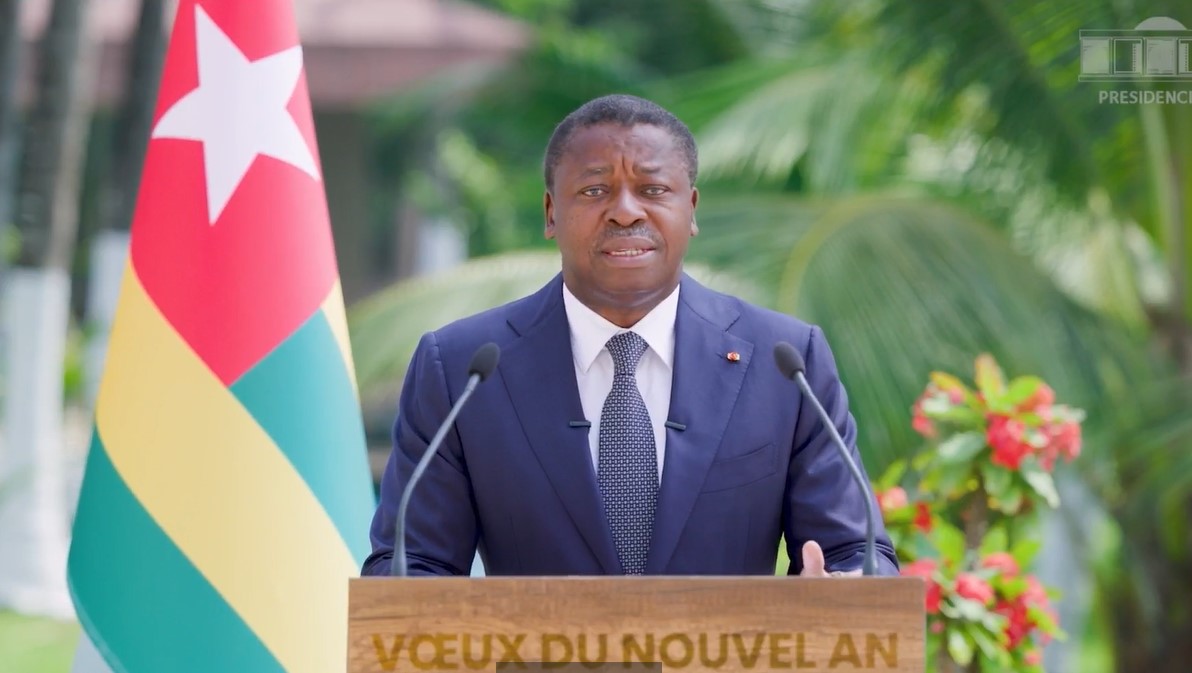
Faced with this dynamic contest among formidable suitors, Togolese President Faure Gnassingbé demonstrates remarkable political pragmatism. Far from committing to a single side, he is skillfully leveraging this rivalry to maximize benefits for his nation. The head of state continues to actively participate in France-Africa summits, diligently nurturing his country’s relationships with Western powers, while simultaneously making meticulous preparations for his anticipated visit to the upcoming Russia-Africa summit in October.
“The inherent danger in such a strategy is the potential for Togo’s purely national interests to be relegated to the periphery of a global confrontation that ultimately transcends its immediate concerns,” cautions a seasoned political analyst specializing in the region.
By deliberately positioning itself at the intersection of these two distinct global visions – Moscow’s pragmatic security approach coupled with its decolonial discourse, and Paris’s historical ties alongside its development assistance – Togo has emerged as a crucial laboratory for the evolving power dynamics across the African continent. This high-stakes diplomacy, akin to walking a tightrope, will inevitably entail a long-term cost of dependence that Lomé must ultimately confront.