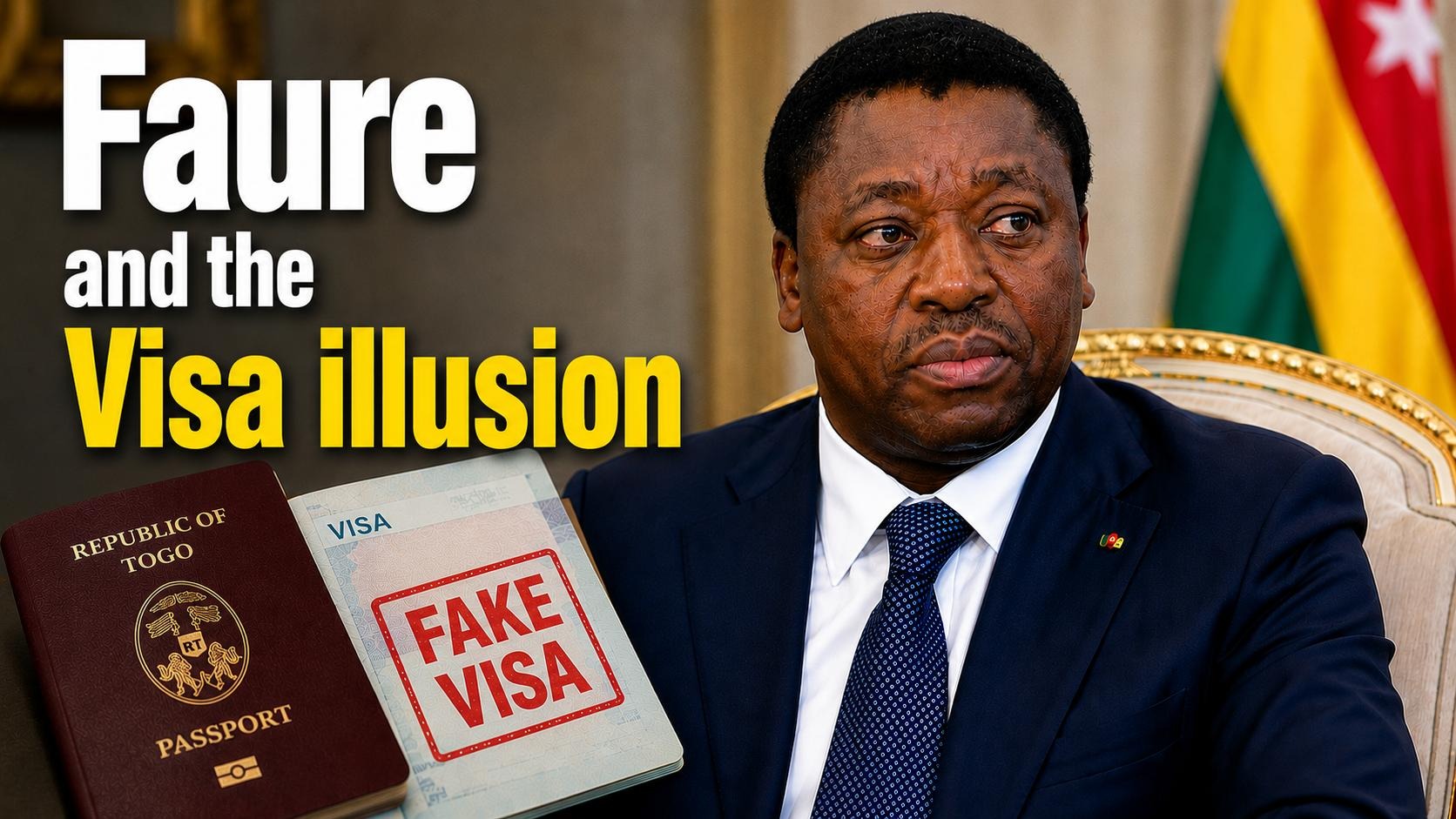
The announcement of visa-free entry for all African nationals to Togo, presented as a bold step toward African unity, conceals a far more restrictive reality. While Lomé celebrates this measure as a triumph of openness, scrutiny reveals a carefully calibrated strategy blending political optics with stringent digital oversight.
Behind the headlines: The visa waiver in practice
The Togolese government’s decision to waive entry visas for African passport holders appears, at first glance, to align with progressive regional integration efforts. Eligibility is broad—any African national with a valid passport may enter—but the conditions impose a bureaucratic hurdle that undermines the promise of unrestricted access.
Under the new system:
- Entry duration: Visitors are limited to a 30-day stay, regardless of purpose.
- Entry points: The waiver applies theoretically to all land, air, and sea borders.
- Pre-travel obligation: Travelers must register online via voyage.gouv.tg at least 24 hours before arrival.
- Mandatory form: A digital travel declaration must be completed, replacing the traditional visa stamp.
What seems like a progressive policy is, in effect, a rebranding of visa requirements. The online registration functions as a de facto electronic travel authorization, granting authorities full discretion to approve or deny entry under vague pretexts. Critics warn this mechanism could be weaponized to exclude journalists, activists, or dissidents by citing administrative deficiencies or security concerns.
The dual motives: Diplomacy and surveillance
President Faure Gnassingbé’s initiative serves a calculated dual purpose, addressing both domestic legitimacy and geopolitical positioning.
International image-building: Amid widespread condemnation of constitutional reforms that extend presidential term limits, the waiver announcement allows the regime to project an image of reformist leadership. By positioning Togo as an advocate of African unity, Lomé seeks to counterbalance criticism of its democratic backsliding.
Enhanced border control: The centralized digital registration system provides authorities with unprecedented data on travelers. Entrepreneurs, journalists, and influencers entering the country are automatically registered, enabling surveillance and profiling. The shift from physical to digital screening modernizes the state’s ability to monitor and restrict movement under the guise of efficiency.
Economic cynicism: A free market with invisible barriers
While the visa waiver eliminates traditional fees, it replaces them with an administrative burden that disproportionately affects professionals. Business travelers and media personnel, who anticipated seamless mobility for trade and collaboration, now face a cumbersome online process that delays entry and invites arbitrary scrutiny.
The regime’s approach reflects a paradox: it offers the illusion of openness while consolidating control. By removing visible barriers, it introduces invisible ones, ensuring that any perceived openness remains firmly within the state’s purview. In essence, the waiver is not a concession to freedom but a strategic adaptation of surveillance.
Ultimately, Togo’s visa waiver is less a gesture of goodwill than a calculated exercise in soft power. It exemplifies how modern governance can cloak restriction in the language of progress, proving that even in an era of digital transformation, the tools of exclusion evolve rather than disappear.